
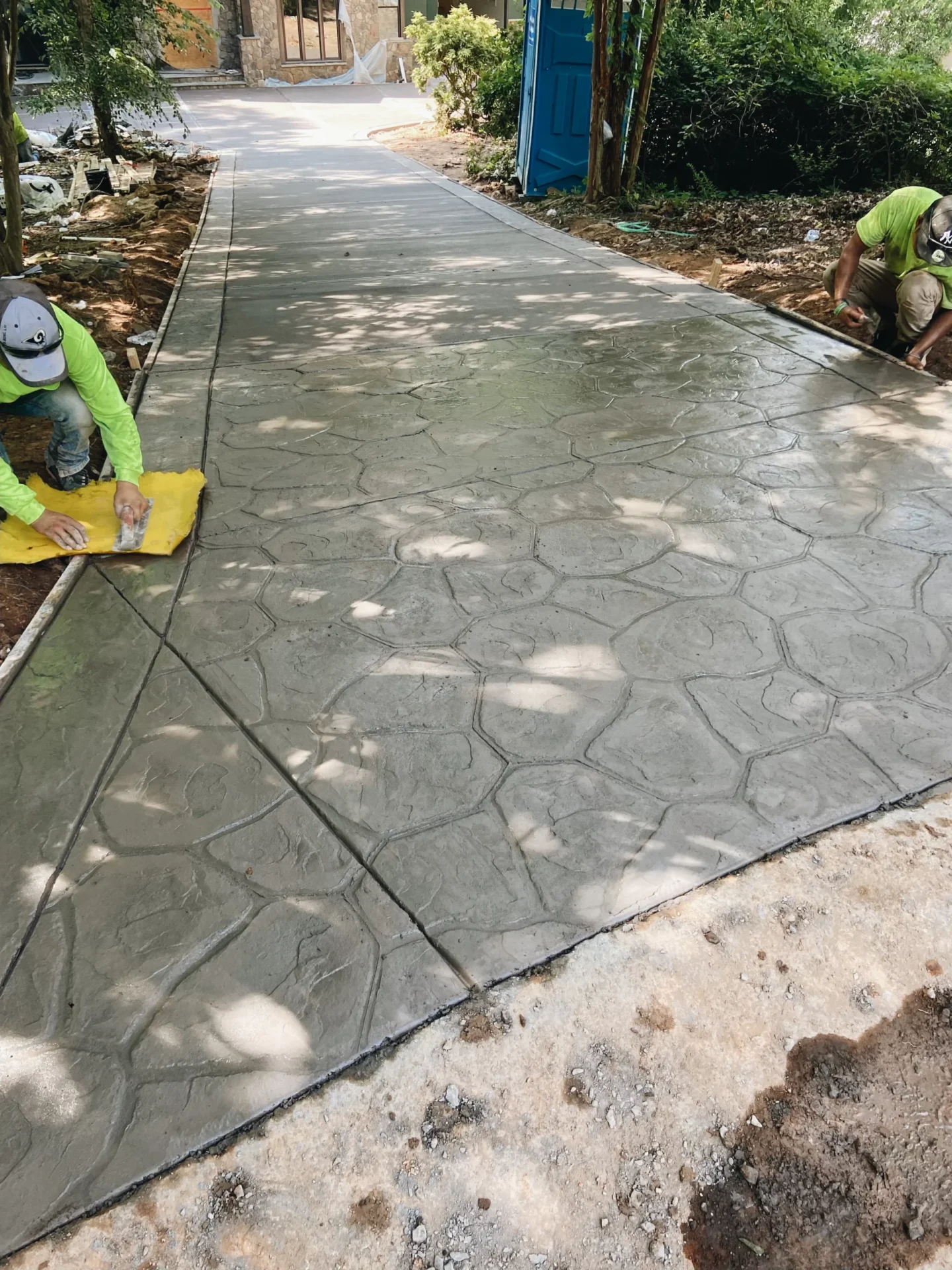
Ever wonder what sets stamped concrete apart from regular concrete? It’s not just about the looks—though stamped concrete does offer a stylish edge! When it comes to stamped concrete installation in Rock Hill, SC, you’re diving into a world of decorative concrete options. Unlike the standard, plain look of regular concrete, stamped concrete gives your surface a textured, patterned finish that can mimic natural stone, brick, or even wood. So, if you’re weighing stamped vs regular concrete for your project, it’s all about adding flair and durability!
Is Stamped Concrete More Expensive Than Regular Concrete?
Stamped concrete is typically more expensive than regular concrete due to the additional work involved in creating the decorative patterns and textures. Here’s a breakdown of the costs:
- Material Costs: Stamped concrete requires special molds, dyes, and additives to create intricate patterns and textures. This makes the material cost higher than plain, basic concrete, which is made with fewer ingredients.
- Labor Costs: Stamped concrete installation involves more skilled labor. The concrete must be poured, stamped, and then treated to achieve the desired finish. The stamping process takes additional time and precision, which increases labor costs. In contrast, regular concrete is quicker to pour and requires less skill, making the labor costs lower.
- Customization and Design: Stamped concrete offers a variety of designs, textures, and colors, giving you a custom look. The more complex the design, the more expensive the installation becomes. On the other hand, regular concrete is more standardized and lacks the intricate design features of stamped concrete.
Overall, stamped concrete is more expensive than regular concrete, with costs typically ranging from $8 to $20 per square foot, while regular concrete averages between $4 to $7 per square foot. The price difference will vary depending on the complexity of the design and your location, such as decorative concrete options in Rock Hill, SC.
How Long Does Stamped Concrete Last Compared To Plain Concrete?
Both stamped concrete and regular concrete are durable options for outdoor surfaces, but there are some differences in terms of longevity:
- Stamped Concrete: If properly installed and maintained, stamped concrete can last anywhere from 25 to 30 years. The lifespan of stamped concrete is mainly influenced by the quality of the installation, the thickness of the slab, and the application of sealers. Stamped concrete is more prone to surface wear and tear over time due to its decorative finish, so it may require periodic maintenance to maintain its aesthetic appeal.
- Regular Concrete: Plain concrete typically lasts around 30 years or more, with proper care. Since it lacks the additional textures and designs, it is generally less susceptible to surface damage from regular use. However, it can crack over time due to factors such as settling, weather, and heavy loads.
Both types of concrete are long-lasting when maintained correctly, but stamped concrete may need more attention to maintain its appearance and protect its surface from wear.
Does Stamped Concrete Require More Maintenance?
Stamped concrete generally requires more maintenance than regular concrete due to the added decorative elements. Here’s why:
- Sealing: Stamped concrete needs to be sealed regularly, typically every 2-3 years, to protect the surface from moisture, stains, and UV damage. The sealant helps preserve the design, color, and texture of the stamped surface. Without proper sealing, the concrete can fade, crack, or become damaged.
- Surface Care: Stamped concrete is more prone to wear on the surface, especially if it’s located in high-traffic areas. The texture of the concrete can trap dirt, and pressure washing or scrubbing may be required to keep it clean.
- Regular Concrete: Plain concrete, on the other hand, requires less frequent sealing and surface care. While regular cleaning is still important, plain concrete tends to maintain its integrity for longer without the need for regular maintenance or sealing.
If you’re looking for a low-maintenance option, regular concrete is a better choice. However, if you love the design possibilities of stamped concrete, be prepared to invest in ongoing maintenance to keep it looking its best.
Can Stamped Concrete Crack More Easily?
While stamped concrete is durable, it can be more prone to cracking compared to regular concrete, especially if it’s not properly installed or maintained. Here’s why:
- Stamped Concrete: The decorative patterns in stamped concrete can sometimes make it more vulnerable to cracking, particularly if the concrete was poured too thin or the reinforcement wasn’t properly done. The surface layer of stamped concrete can also become more susceptible to damage from heavy impacts or extreme temperatures. Additionally, the grooves and textures in stamped concrete can create weak points, making it more likely to crack if the foundation shifts.
- Regular Concrete: Plain concrete is generally more solid and uniform throughout, which reduces the risk of cracking. With proper reinforcement and installation, regular concrete can withstand more pressure and movement without cracking.
That being said, stamped concrete can still be just as durable as regular concrete if it is properly reinforced, sealed, and maintained. Cracking is not guaranteed, but it is more likely to occur without the right care.
Is Stamped Concrete Slippery When Wet?
One of the common concerns with stamped concrete is whether it becomes slippery when wet. The answer depends on the texture of the design and the finish applied to the surface:
- Stamped Concrete: Generally, stamped concrete has a textured finish that helps reduce slipperiness compared to smooth regular concrete. The texture and patterns—such as brick, stone, or slate—can provide additional traction, making it less slippery when wet. However, certain finishes, such as highly polished surfaces, can become slippery, especially in areas that receive a lot of rain or snow.
- Regular Concrete: Plain concrete can be slippery when wet, particularly if the surface is smooth. However, adding a non-slip texture or finish to regular concrete can improve traction and reduce slipperiness.
To enhance safety and prevent slipping, you can add a non-slip sealer or finish to stamped concrete or regular concrete surfaces, especially in areas like pool decks or walkways.
Which Option is Better For Patios or Driveways?
Both stamped concrete and regular concrete can work well for patios or driveways, but the best choice depends on your preferences, budget, and the overall look you’re trying to achieve.
- Stamped Concrete for Patios: If you’re looking to create an aesthetically appealing, custom patio, stamped concrete is an excellent choice. The ability to mimic natural stone, wood, or brick, along with various color options, makes stamped concrete a great option for patios. It adds visual interest and enhances the curb appeal of your property.
- Stamped Concrete for Driveways: Stamped concrete can also be used for driveways, but keep in mind that it requires more maintenance and care. Since driveways are subject to heavy traffic, stamped concrete may need to be sealed regularly to maintain its appearance. If you’re willing to invest in maintenance and prefer the aesthetic appeal of decorative designs, stamped concrete can be an attractive option.
- Regular Concrete for Patios or Driveways: If you’re looking for a durable, low-maintenance option, regular concrete is a solid choice. It’s perfect for functional spaces like driveways that need to withstand the wear and tear of vehicles. It’s also a more budget-friendly option compared to stamped concrete.
In summary, if appearance and design are your primary concern, stamped concrete is an excellent choice for patios and driveways. However, if you prioritize ease of maintenance and durability, regular concrete might be the better option.
Conclusion
When deciding between stamped vs regular concrete, it’s important to consider your aesthetic preferences, budget, and willingness to maintain the surface. Stamped concrete offers a high-end, customized look but requires more care and can be more expensive. Regular concrete is a more cost-effective, low-maintenance option, making it a great choice for driveways or other functional areas.
Need Help Choosing the Right Concrete? Reach Out for Professional Guidance!
At RyanCo Concrete Construction, we understand that making informed decisions about your home or business projects is important. If you need guidance on decorative concrete options, or any other legal concerns related to construction, our team is here to help. Contact us today for advice and assistance!
