
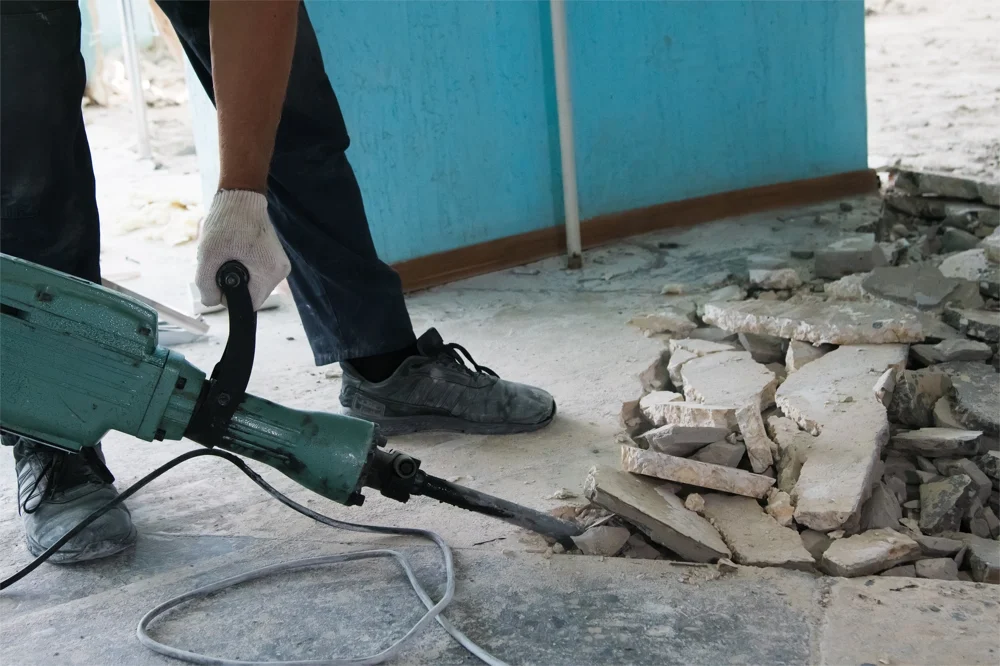
Concrete demolition can potentially affect nearby structures if the work is not planned and executed properly. However, experienced contractors use specialized equipment, site evaluations, and protective measures to minimize risk and perform demolition safely.
Every demolition project involves unique conditions. Factors such as concrete thickness, proximity to structures, soil conditions, and underground utilities influence the approach.
Understanding common concrete demolition safety risks helps property owners make informed decisions and choose qualified professionals for the job.
Can Breaking Concrete Crack Nearby Walls or Foundations?
Yes, breaking concrete can potentially crack nearby walls or foundations, especially if the concrete is connected to or very close to the structure. However, the risk depends on the condition of the surrounding building, the thickness of the concrete, the demolition method used, and how close the work is to the foundation or walls.
Why Nearby Structures May Be at Risk
Concrete demolition creates impact and vibration. When heavy tools are used aggressively, that force can travel through the ground or connected materials. If a slab is tied into a foundation, porch, garage, retaining wall, or steps, removing it without proper separation can place stress on nearby surfaces.
Potential risks include:
- Hairline cracks in masonry
- Chips along foundation edges
- Damage to attached steps or porches
- Cracked stucco or exterior finishes
- Movement in already weakened structures
- Separation where concrete meets the home
This is why concrete demolition safety risks should be evaluated before demolition begins.
Connected Concrete Needs Extra Care
Concrete is sometimes poured directly against a home’s foundation or connected to another slab. If a contractor starts breaking without checking these connections, the force may transfer to the structure.
For example, removing a concrete patio that touches the foundation may require saw-cutting a clean separation line first. This helps prevent the demolition from pulling, cracking, or chipping nearby concrete or masonry.
Existing Cracks Can Worsen
If a wall, foundation, or slab already has cracks, demolition may worsen the damage if precautions are not taken. Before work begins, contractors should inspect the surrounding area and note existing cracks or weak spots.
This step is important because it helps distinguish pre-existing conditions from new damage and allows the contractor to adjust the demolition method if needed.
How Safe Demolition Reduces Cracking Risk
Safe concrete demolition services use controlled methods rather than uncontrolled force. Depending on the project, contractors may use saw cutting, smaller breakers, hand tools, staged removal, or equipment designed to reduce unnecessary vibration.
For homeowners planning safe concrete demolition in Rock Hill, SC, the safest approach is to hire a contractor who understands how to work near foundations and structural surfaces without rushing the process.
How Do Contractors Protect Homes During Demolition?
Contractors protect homes during demolition by planning the work carefully, using the right equipment, controlling debris, separating connected concrete, and monitoring the surrounding structure throughout the job. Protection starts before the first piece of concrete is broken.
Site Inspection Before Demolition
A responsible contractor should inspect the work area and surrounding property. This may include checking:
- Foundation walls
- Exterior siding or brick
- Windows and doors
- Nearby steps or porches
- Retaining walls
- Drainage areas
- Landscaping
- Utility locations
- Access points for equipment
This inspection helps identify potential concrete demolition safety risks before they become problems.
Using Saw Cuts for Clean Separation
Saw cutting is often used when concrete touches or connects to another structure. A clean cut helps isolate the section being removed from the section that should stay in place.
Saw cuts may be useful near:
- Garage floors
- Driveway edges
- Patios against the home
- Sidewalks near porches
- Slabs connected to steps
- Concrete around foundations
This step can prevent unwanted cracking and create a cleaner finished edge.
Choosing the Right Demolition Tools
Not every job requires the heaviest equipment. In some cases, smaller tools are safer and more precise. Contractors may choose from:
- Concrete saws
- Electric jackhammers
- Hydraulic breakers
- Skid steer attachments
- Hand tools
- Mini excavators
- Controlled cutting equipment
The right tool depends on the location, concrete thickness, reinforcement, and nearby structures.
Protecting Windows, Siding, and Surfaces
Flying debris can chip siding, scratch surfaces, or break glass. Contractors may use barriers, plywood, tarps, or controlled work zones to reduce debris impact.
For safe concrete demolition services, protecting the home is not an afterthought. It is part of the project plan.
Managing Dust and Cleanup
Concrete demolition creates dust and small fragments. Dust control may involve wet cutting, water suppression, and cleanup during the job. This helps protect nearby surfaces and keeps the worksite safer.
Keeping Heavy Equipment Away From Vulnerable Areas
Heavy equipment should be used carefully around foundations, septic systems, landscaping, driveways, and underground utilities. Equipment weight and movement can cause damage if access is poorly planned.
For safe concrete demolition in Rock Hill, SC, experienced contractors consider both the demolition area and the path equipment will take to reach it.
Is Vibration From Demolition Dangerous to Structures?
Vibration from demolition can be dangerous to nearby structures if it is excessive, prolonged, or too close to vulnerable materials. However, when properly managed, vibration can usually be controlled enough to complete the work safely.
What Causes Demolition Vibration?
Vibration happens when impact tools or heavy machinery break concrete. The energy from repeated strikes can move through the slab, soil, and nearby structures.
Common vibration sources include:
- Jackhammers
- Hydraulic breakers
- Large machinery
- Repeated impact tools
- Breaking thick reinforced concrete
The stronger the impact, the more vibration may travel.
When Vibration Becomes a Concern
Vibration is more concerning when demolition occurs near:
- Older foundations
- Brick or masonry walls
- Retaining walls
- Basements
- Crawl spaces
- Concrete steps
- Attached patios
- Structures with existing cracks
- Poorly compacted soil
These situations require added caution because nearby materials may already be stressed or fragile.
Signs Vibration May Be Too Aggressive
During demolition, warning signs may include:
- New cracks appearing
- Existing cracks widening
- Loose masonry
- Shifting concrete edges
- Rattling windows or doors
- Excessive movement in nearby structures
If any of these occur, work should stop and the contractor should reassess the approach.
How Contractors Reduce Vibration Risks
Contractors can reduce vibration by:
- Saw-cutting concrete into smaller sections
- Using smaller tools near structures
- Removing concrete in stages
- Avoiding oversized breakers
- Working away from the structure when possible
- Separating attached concrete before breaking
- Monitoring nearby surfaces throughout the job
These methods are part of responsible safe concrete demolition services.
Why Experience Matters
A less experienced contractor may use too much force too quickly. An experienced team understands when to slow down, switch tools, or use a more controlled method.
Because vibration is one of the most important concrete demolition safety risks, homeowners should choose a contractor who treats it seriously. If you need safe concrete demolition in Rock Hill, SC, ask how the contractor plans to manage vibration before work begins.
What Precautions Should Be Taken Before Concrete Removal?
Several precautions should be taken before concrete removal to protect nearby structures, utilities, landscaping, and people on the property. Careful preparation is one of the best ways to prevent damage.
Inspect the Surrounding Area
Before demolition begins, the contractor should inspect everything near the concrete, including:
- Foundations
- Walls
- Windows
- Doors
- Porches
- Steps
- Fences
- Retaining walls
- Driveways
- Landscaping
- Drainage systems
This helps identify areas that need protection.
Document Existing Damage
It is smart to document existing cracks, chips, settlement, or structural concerns before the project starts. Photos can help both the homeowner and contractor understand the condition of the property before demolition.
This is especially useful if the concrete is near a foundation or older structure.
Locate Utilities
Before removing concrete, underground utilities should be identified. This may include:
- Water lines
- Sewer lines
- Gas lines
- Electrical lines
- Irrigation lines
- Drainage pipes
- Internet or cable lines
Utility location is one of the most important parts of managing concrete demolition safety risks.
Plan Equipment Access
The contractor should decide how equipment will enter and exit the work area. Poor access planning can damage lawns, driveways, fences, septic areas, irrigation systems, or nearby structures.
If access is tight, smaller equipment may be needed.
Choose the Right Demolition Method
The demolition method should match the project. For example:
- Saw cutting may be needed near structures
- Hand tools may be safer in tight areas
- Jackhammers may be appropriate for smaller slabs
- Hydraulic breakers may be used for thicker concrete
- Section-by-section removal may reduce risk
Safe concrete demolition services do not rely on one method for every job. The process should be adjusted to the site.
Control Dust and Debris
Dust and flying debris can create safety concerns. Contractors may use water, barriers, protective coverings, and controlled breaking methods to reduce mess and risk.
Keep People and Pets Away
Concrete demolition is not a safe activity to watch up close. Homeowners, children, pets, and visitors should stay away from the work zone until the area is cleared.
For homeowners considering safe concrete demolition in Rock Hill, SC, preparation is just as important as the actual removal.
Can Underground Utilities Be Affected During Demolition?
Yes, underground utilities can be affected during concrete demolition if they are not located and protected before work begins. This is especially important when removing driveways, patios, sidewalks, garage slabs, pool decks, or concrete near the home.
What Utilities May Be Under or Near Concrete?
Concrete may cover or sit near several types of utilities, including:
- Water supply lines
- Sewer lines
- Gas lines
- Electrical conduits
- Irrigation pipes
- Drainage lines
- Sump pump discharge lines
- Cable or internet lines
- Landscape lighting wires
Some utilities may be deeper underground, while others may be surprisingly close to the surface.
Why Utility Damage Is Serious
Damaging a utility line can cause major problems, such as:
- Water leaks
- Sewer backups
- Gas leaks
- Electrical hazards
- Flooding
- Service interruptions
- Expensive emergency repairs
- Safety risks for workers and homeowners
This is one of the most serious concrete demolition safety risks.
Utility Marking Before Demolition
Before digging or heavy demolition, utility lines should be marked whenever applicable. Public utility marking services can identify many lines, but they may not mark private lines such as irrigation, landscape lighting, or private drainage pipes.
Homeowners should tell the contractor about any known private lines or systems on the property.
Concrete Near Plumbing or Drainage
Concrete patios, driveways, and walkways may be near drainage pipes, downspout extensions, or sewer cleanouts. Removing concrete without checking these areas can damage pipes or create drainage problems later.
How Contractors Reduce Utility Risks
Contractors can reduce utility risks by:
- Asking about known utility locations
- Reviewing visible cleanouts, meters, and access points
- Calling for utility marking when needed
- Using careful cutting and removal near marked lines
- Avoiding deep digging without confirmation
- Using hand tools in sensitive areas
- Stopping work if unexpected lines are found
Experienced safe concrete demolition services know that what is under the slab matters as much as what is on top.
What Homeowners Should Do Before Demolition
Before the project starts, homeowners should share information about:
- Sprinkler systems
- Outdoor lighting
- Drainage pipes
- Septic components
- Recently installed utilities
- Old or abandoned lines
- Plumbing repairs
- Underground cables
If you are scheduling safe concrete demolition in Rock Hill, SC, clear communication can help prevent costly surprises.
Choose Careful Demolition That Protects Your Property
Concrete demolition can damage nearby structures if it is done without proper planning, equipment, and precautions. Breaking concrete creates vibration, debris, dust, and force that can affect walls, foundations, windows, utilities, and nearby surfaces.
The good news is that many risks can be reduced with professional safe concrete demolition services. Contractors can protect your home by inspecting the site, documenting existing conditions, locating utilities, saw-cutting connected concrete, choosing the right tools, controlling dust, and removing debris carefully.
Understanding concrete demolition safety risks helps homeowners ask better questions and choose a contractor who takes the job seriously. Whether you are removing a cracked driveway, old patio, damaged slab, or concrete walkway, safe planning is the key to protecting the rest of your property.
Plan Your Concrete Removal With RyanCo Concrete Construction
At RyanCo Concrete Construction in Fort Mill, SC, we understand that concrete removal is not just about breaking up old material. It is about protecting your home, your property, and the next phase of your project. If you need safe concrete demolition in Rock Hill, SC, our team can help you approach the job with care and confidence.
Contact RyanCo Concrete Construction today to discuss your concrete demolition or replacement project. We are here to help you remove old concrete safely and prepare your property for a stronger, cleaner result.
