
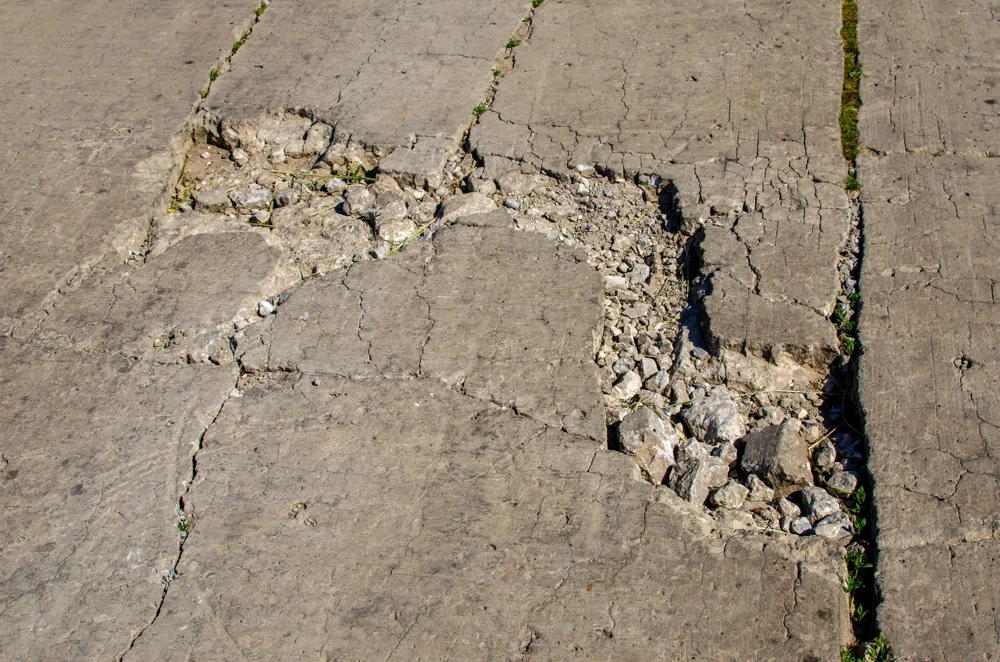
Structural cracks usually indicate movement, settlement, load stress, or failure beneath the slab. They deserve more attention than small surface cracks because they may continue growing and affect safety.
Watch The Crack Width
Hairline cracks are often caused by normal shrinkage as concrete cures. Cracks wider than one quarter inch may suggest movement, especially when the opening keeps expanding. Learning more about common causes of cracking can help property owners recognize when damage requires professional attention. See Cracking in Concrete: Causes and Solutions.
Look For Vertical Displacement
A height difference across a crack is a strong warning sign. It often means one part of the slab has settled, lifted, or lost support.
Uneven concrete creates trip hazards and can interfere with vehicle access, doors, drainage, and nearby structures. Filling the crack will not correct the underlying movement, and professional concrete repair may be necessary to restore safety and stability.
Track Changes Over Time
Mark the ends of the crack and measure its width periodically. Continued growth suggests active movement that should be inspected before repairs begin.
Can Cracked Concrete Be Permanently Repaired?
Some cracks can be repaired for many years, but no repair method is permanent when the underlying cause remains active. Successful cracked concrete repair depends on correct diagnosis, surface preparation, repair material, and site conditions.
Stable cracks may be sealed with epoxy, polyurethane, or cement-based products. These materials can restore appearance, reduce water entry, and protect the surrounding concrete.
Structural repairs may require more than filling an opening. Contractors may use stitching, reinforcement, slab lifting, drainage improvements, or partial replacement to address movement.
A durable repair addresses both the visible crack and the reason it formed. That is why an inspection should come before choosing a product or method.
Is It Cheaper To Repair Or Replace Concrete?
Repair is usually cheaper upfront because it uses less material, labor, and demolition. Replacement costs more initially but may offer better value when damage is extensive or likely to return.
When Repair Saves Money
Repair is often economical for isolated cracks, small chipped areas, minor spalling, or one settled panel. The surrounding concrete should remain strong and stable.
When Replacement Costs Less Over Time
Repeated repairs add up. If a slab needs frequent patching, leveling, and sealing, full replacement may reduce long-term spending.
Older concrete with widespread damage often has limited remaining life. Replacing it provides an opportunity to correct base preparation, grading, drainage, reinforcement, and thickness. This is especially important for aging concrete slabs that have reached the end of their service life.
Homeowners should compare the repair estimate with expected durability. A lower price is not a better investment if the problem returns within a short period.
What Types Of Cracks Require Full Replacement?
Full replacement is often recommended for cracks linked to severe settlement, heaving, widespread breakup, or major loss of structural support.
Multiple Intersecting Cracks
A network of cracks can divide the slab into unstable pieces. This pattern may indicate weak concrete, poor base support, excessive loads, or advanced deterioration.
Patching each line may not restore strength. Movement between the broken pieces can cause repair materials to separate quickly.
Cracks With Major Height Differences
Cracks where one side has risen or dropped significantly are difficult to repair reliably. Leveling may help intact slabs, but badly broken sections often need removal.
Deep Cracks Through The Entire Slab
A full-depth crack affects more than the surface. It allows water and debris to reach the base and may weaken the slab under traffic.
Cracks Near Failing Edges
Broken edges can spread when vehicles or equipment pass over them. If several edges are crumbling, replacement may provide safer and longer-lasting results.
Can Concrete Leveling Fix Cracked Slabs?
Concrete leveling can fix certain cracked slabs when the concrete remains strong enough to lift as one piece. It is commonly used for sidewalks, driveways, patios, garage floors, and other settled surfaces.
Mudjacking places a cement-based mixture beneath the slab. Polyurethane foam injection uses expanding material to fill voids and raise the concrete. Both methods aim to restore support and improve elevation.
Leveling does not erase existing cracks. The cracks may still need sealing after the slab is raised.
The method is less suitable when the concrete is badly fragmented, heavily spalled, or too thin to lift safely. It may also fail if poor drainage continues washing soil away.
An inspection should confirm whether the slab can move without breaking further. When successful, leveling can delay replacement and improve drainage, access, and safety.
How Long Do Concrete Crack Repairs Last?
Concrete crack repairs may last several years or much longer depending on the crack type, repair method, weather exposure, traffic, and underlying movement.
A sealed shrinkage crack in stable concrete can remain protected for many years. A repair over moving soil may reopen within months because the force causing the crack has not stopped.
Proper preparation strongly affects durability. Contractors must remove loose material, clean the opening, create the correct repair profile, and use a compatible product.
Flexible sealants work well for joints and cracks that experience minor movement. Epoxy can restore strength in certain structural cracks but may not tolerate continued shifting.
Routine inspection helps extend repair life. Small openings should be resealed before water penetrates the slab. Drainage should also move water away from the concrete.
Professional concrete repair is more dependable when the repair plan matches the actual failure instead of applying one product to every crack.
Does Repairing Concrete Increase Property Value?
Repairing damaged concrete can support property value by improving safety, function, appearance, and buyer confidence. Clean, stable surfaces create a better impression than cracked, uneven, or deteriorated slabs.
Driveways and walkways are among the first features visitors notice. Repairing visible damage can improve curb appeal and show that the property has been maintained. If a damaged driveway has deteriorated beyond repair, replacing it with a new concrete driveway may provide greater long-term value.
Safety improvements also matter. Buyers may view trip hazards, sinking sections, and drainage problems as future expenses or liability concerns.
Concrete work does not always produce a dollar-for-dollar return. Value depends on the location, severity of damage, repair quality, and overall condition of the property.
A poor patch with mismatched color or rough edges may reduce visual appeal. A professional repair should blend as well as possible and address the cause of damage.
When replacement is necessary, delaying the work can make nearby drainage, landscaping, or foundation issues worse. Timely action protects both the concrete and surrounding property features.
Key Takeaways
Repair cracked concrete when damage is stable, localized, and supported by a sound base. Replacement is usually better when cracks involve settlement, heaving, large height differences, widespread breakup, or repeated movement. Concrete leveling may restore certain settled slabs, but it cannot rebuild concrete that has lost structural strength. Compare upfront repair costs with expected service life before deciding. Proper diagnosis, preparation, drainage correction, and material selection determine repair durability. A professional evaluation can help property owners avoid temporary patches and choose the most practical solution for long-term safety and value.
Early evaluation also helps owners compare practical options before water, traffic, and soil movement turn a manageable crack into a larger and more expensive failure later. Homeowners can also learn more by reading Repairing Cracks in Concrete: From Small Gaps to Major Slab Damage.
Choose The Right Concrete Solution With RyanCo
RyanCo Concrete Construction helps property owners determine whether damaged slabs need repair, leveling, partial removal, or complete replacement. The team evaluates crack patterns, movement, drainage, base support, surface condition, and the age of the concrete before recommending a practical approach.
For dependable concrete repair in Rock Hill, SC, RyanCo focuses on solutions that address the source of damage rather than covering visible symptoms. A professional inspection can clarify the available options, expected service life, and likely costs, helping owners make a confident decision without committing to unnecessary work. To discuss your project or request an estimate, contact RyanCo Concrete Construction.
