
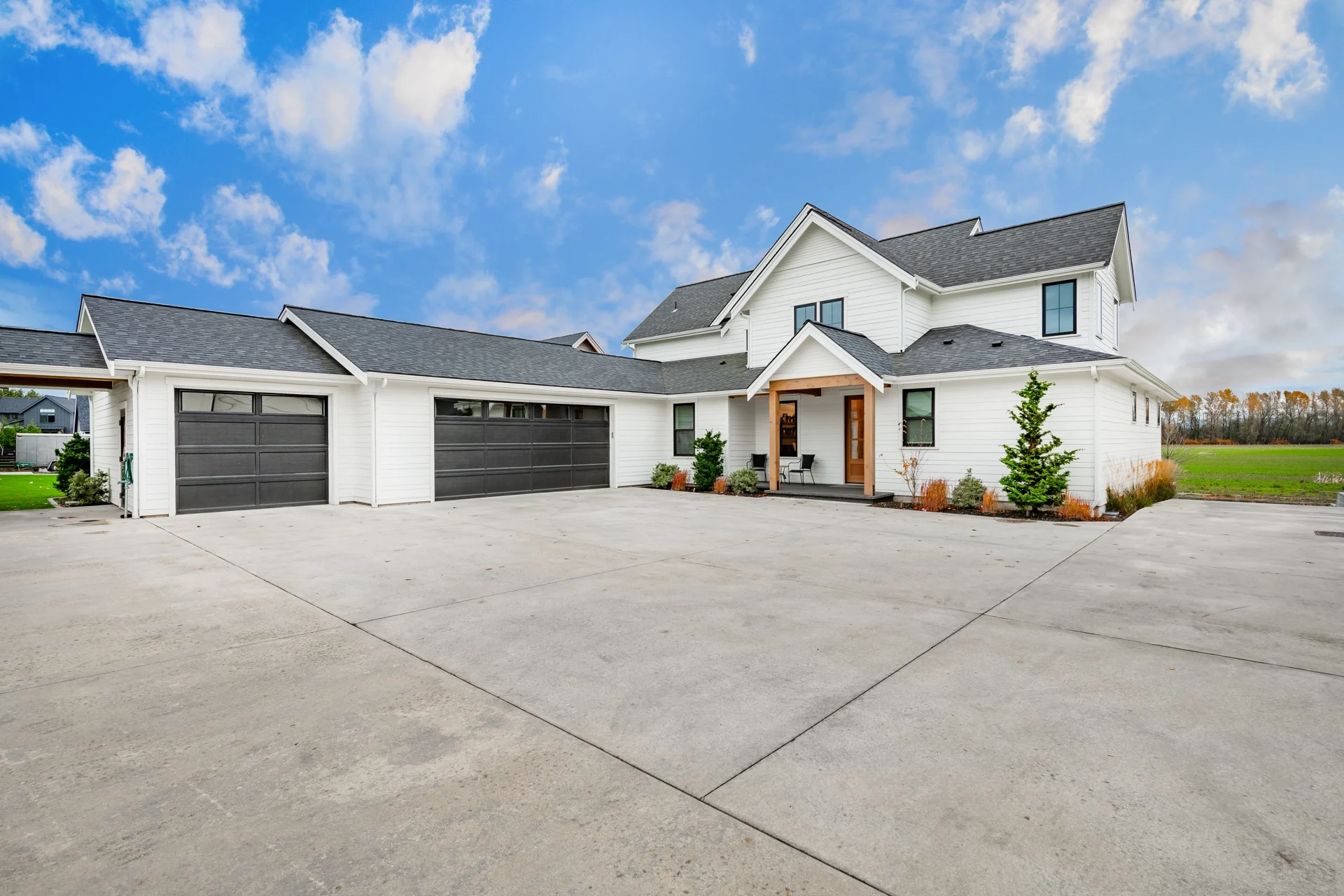
A standard residential concrete driveway takes three to seven working days to excavate, prepare, form, reinforce, pour, and finish.
Site Preparation
The first stage includes removing old pavement, excavating soil, and creating the correct depth. Crews then place and compact the stone base.
Poor soil, buried roots, drainage problems, or unexpected utility lines can extend preparation. In some cases, concrete demolition may be necessary before installation can begin.
Forming And Reinforcement
Forms establish the driveway shape, width, slope, and finished elevation. Reinforcement may include steel rebar, wire mesh, or fibers based on the project design.
This stage takes less than a day, but complicated layouts, curves, transitions, and drainage details require more planning.
Pouring And Finishing
Most residential driveways are poured in one day. The crew places, levels, consolidates, edges, joints, and textures the concrete before it begins setting. Professional concrete finishing techniques help create a durable and attractive surface.
The active construction period may end quickly, but safe use must wait until the concrete gains enough strength.
How Long Does Concrete Need To Cure Before Use?
Concrete begins hardening within hours, but curing continues for about 28 days.
Foot traffic is often acceptable after 24 to 48 hours when weather conditions are favorable. Heavy furniture, equipment, and vehicles require more time.
During curing, moisture must remain available so the cement can hydrate properly. Contractors may use curing compounds, plastic sheeting, wet coverings, or controlled watering to reduce moisture loss.
Hot, dry, and windy conditions can cause the surface to dry too quickly. Cold conditions slow strength development.
Avoid applying deicing chemicals, harsh cleaners, or heavy point loads during early curing. New concrete is strong enough for limited use before 28 days, but unnecessary stress can still cause damage. Applying a protective concrete sealer after the concrete has fully cured can also help extend its lifespan.
Can Concrete Be Poured In Cold Or Rainy Weather?
Concrete can be poured in cool conditions when proper materials and protective methods are used. Heavy rain, freezing temperatures, or unstable weather may require postponement.
Cold Weather
Cold temperatures slow setting and strength gain. If fresh concrete freezes before developing enough strength, internal damage may occur.
Contractors may warm the subgrade, adjust the concrete mixture, use accelerators, and cover the slab with insulated blankets. Frozen ground should never be used as a base because it can settle after thawing.
Rainy Weather
Light rain after finishing may be manageable if the surface is covered. Rain during placement or finishing can change the water ratio, weaken the surface, wash away cement paste, and affect texture.
The contractor must consider both current weather and the forecast. Delaying the pour is better than risking a damaged surface that requires future repair or replacement.
What Factors Can Delay A Concrete Installation Project?
Weather And Moisture
Rain can delay excavation, base compaction, pouring, and finishing. Saturated soil may need time to dry before it can support the slab properly.
Extreme heat also creates challenges. Crews may need to start earlier, use evaporation control, or divide the project into smaller sections.
Site Conditions
Limited access can slow equipment, demolition, hauling, and concrete delivery. Narrow gates, overhead lines, steep slopes, and nearby structures may require smaller machinery or additional labor.
Unexpected soft soil, old foundations, buried debris, or tree roots can also add preparation time.
Scheduling And Inspections
Some projects require permits, utility marking, or inspections before concrete is placed. Concrete trucks, pump equipment, and finishing crews must also be coordinated.
Changes to dimensions, colors, patterns, or drainage after work begins can disrupt the schedule. Confirming details before construction helps keep the concrete installation process efficient.
When Can I Drive On Newly Poured Concrete?
Passenger vehicles should stay off new concrete for at least seven days. Some contractors may recommend ten to fourteen days depending on slab thickness, weather, concrete strength, and vehicle weight.
Walking on the surface too early can leave marks. Driving too early can create cracks, edge damage, tire impressions, or joint failure.
Heavy trucks, moving vans, dumpsters, recreational vehicles, and construction equipment place much greater stress on the slab. These loads may need to wait 28 days or longer.
Keep vehicles away from unsupported edges even after the initial waiting period. Concrete edges are more vulnerable because they do not receive the same surrounding support as the slab center.
Property owners should also notify delivery drivers, contractors, and household members about the restricted area. If existing damage develops over time, concrete repair may be needed to restore the surface.
How Long Does A Concrete Patio Installation Take?
A basic concrete patio often takes two to five working days for excavation, base preparation, forming, reinforcement, pouring, and finishing. The patio still needs curing time before normal use.
Large patios with stairs, seat walls, curves, built-in features, or difficult grading need more time.
Preparing The Patio Area
Crews remove grass, soil, roots, and unsuitable material. They establish slope so water moves away from the house and does not collect on the finished surface.
The base must be compacted carefully. Patios installed over weak or poorly drained ground can settle, crack, or shift.
Finishing And Early Use
Broom-finished patios are generally faster than decorative surfaces. After placement, the slab is edged, jointed, textured, and cured.
Light foot traffic may be allowed after one or two days. Furniture should usually wait several more days, especially when legs create concentrated pressure.
Does Stamped Concrete Take Longer To Install?
Stamped concrete usually takes longer than standard broom-finished concrete because it requires color application, pattern placement, detailed finishing, washing, and sealing.
Crews must apply release agents, position stamping mats, press patterns consistently, and align each section before the concrete becomes too firm. Timing is critical because delays can create uneven impressions.
After curing begins, the surface may need washing to remove excess release material. A sealer is then applied when conditions are suitable.
Complex borders, multiple colors, custom patterns, and large areas require more labor.
A stamped patio or driveway may add several days to the overall schedule. The decorative result depends on careful timing, so rushing the work can affect pattern depth, color consistency, and long-term performance. Learn more about what to expect before starting a stamped concrete project.
Key Takeaways
Most concrete projects take two to seven working days for preparation, forming, pouring, and finishing, followed by a longer curing period. Foot traffic may begin after 24 to 48 hours, while passenger vehicles should usually wait at least seven days. Weather, soil, access, design complexity, inspections, and decorative finishes can extend the schedule. Stamped concrete often requires extra time for coloring, patterning, washing, and sealing. A realistic plan should separate active construction time from curing time so the new surface receives proper protection before normal everyday household use safely begins.
Plan A Smooth Concrete Project With RyanCo
RyanCo Concrete Construction helps property owners plan each stage of a driveway, patio, walkway, or decorative concrete project. The team evaluates access, grading, drainage, site preparation, finish requirements, and expected curing conditions before establishing a practical schedule.
For professional concrete installation services in Rock Hill, SC, RyanCo explains what to expect before, during, and after the pour. Clear scheduling helps owners arrange parking, deliveries, landscaping, and property access while protecting the new surface.
A careful installation should never be rushed simply to shorten the calendar. RyanCo focuses on proper preparation, dependable placement, detailed finishing, and curing guidance designed to support long-term performance. To discuss your upcoming project, contact RyanCo Concrete Construction.
