
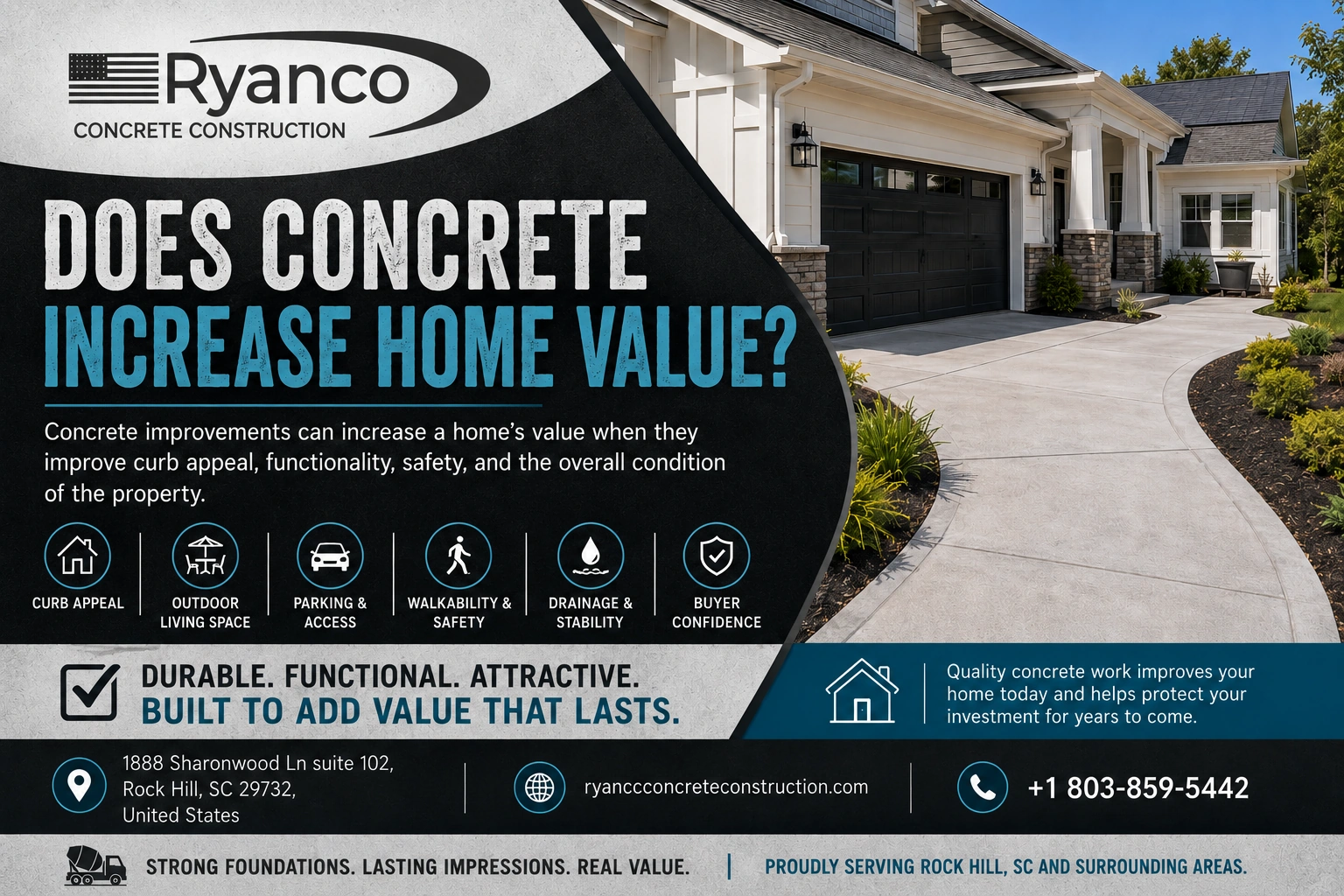
Concrete improvements can increase a home’s value when they improve curb appeal, functionality, safety, and the overall condition of the property. A clean driveway, usable patio, or well-placed walkway may make a home feel better maintained and more appealing to potential buyers.
The amount of value added varies from one property to another. A concrete project is more likely to provide a strong return when it replaces damaged or outdated surfaces, solves a practical problem, and matches the quality and style of the surrounding home.
Homeowners should not expect every project to produce a guaranteed dollar-for-dollar return. However, durable and professionally finished concrete features can make a property easier to use, more attractive, and more competitive when it is time to sell.
Does Concrete Increase Home Value?
Concrete can contribute to home value in several ways beyond the price of the material itself.
It may improve:
- Curb appeal
- Outdoor living space
- Parking and vehicle access
- Walkability around the property
- Drainage and surface stability
- Buyer confidence in the home’s maintenance
- The overall appearance of the landscape
A cracked, uneven, or heavily stained surface may make buyers wonder whether other parts of the property have also been neglected. In contrast, well-maintained concrete can create a cleaner first impression and help the home feel move-in ready.
Concrete may be especially valuable when an improvement corrects an obvious weakness. Replacing a deteriorated driveway, adding a safe walkway, or creating a functional outdoor seating area can have more impact than installing a decorative feature that does not solve a clear need.
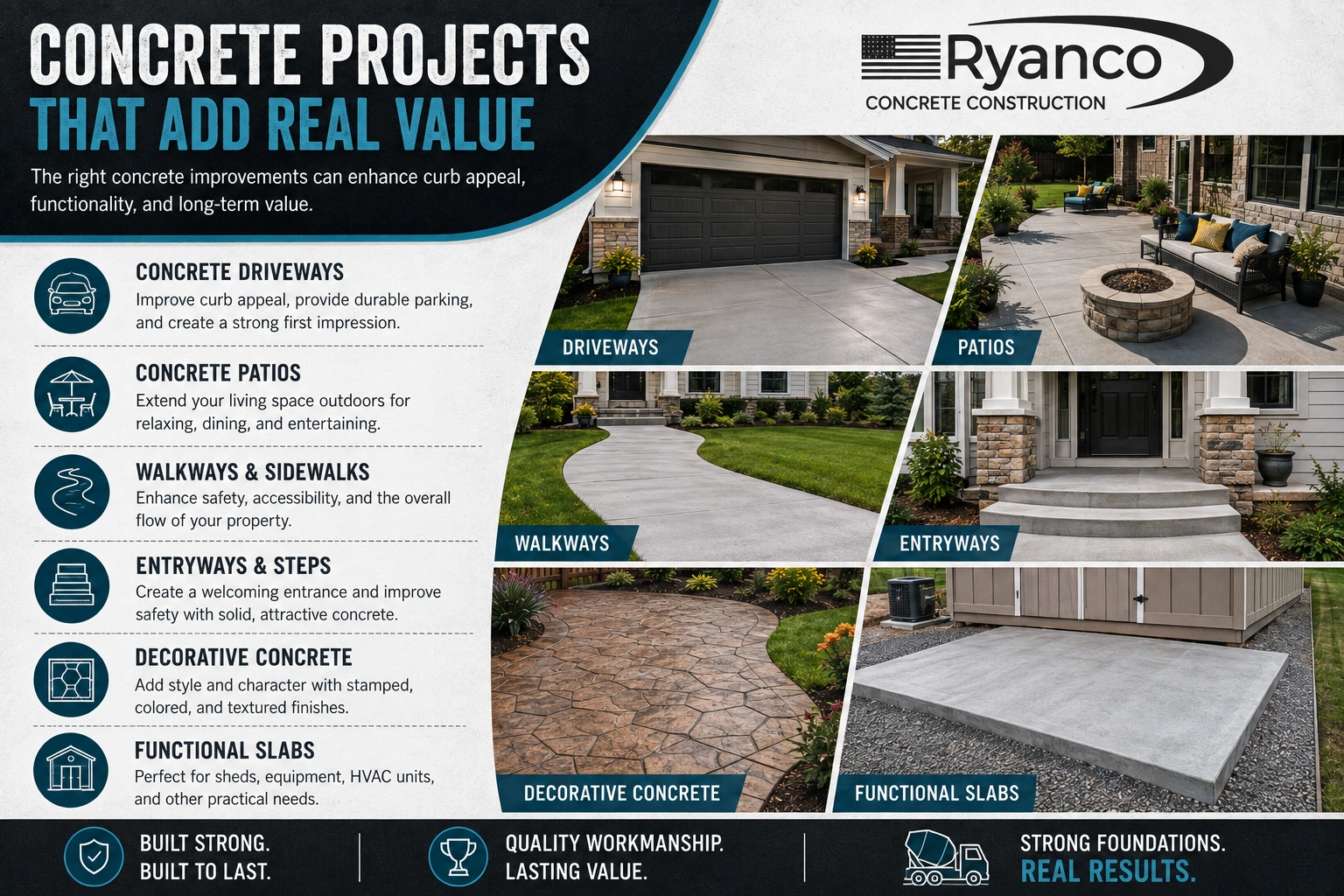
Which Concrete Projects Add the Most Value?
The most valuable concrete projects tend to combine practical use with visible improvement. Their return depends on the home, location, existing conditions, and what buyers in the area expect.
Concrete driveways
A driveway is one of the first exterior features visitors and buyers notice. A worn or broken driveway can reduce curb appeal, while a smooth, clean surface can make the property look more complete and better maintained.
A new driveway may add value by:
- Improving the home’s entrance
- Providing reliable off-street parking
- Reducing trip hazards
- Making vehicle access easier
- Replacing a damaged or unattractive surface
Homeowners considering this type of improvement can learn more about available options on the concrete driveways page.
Concrete patios
A patio can extend the usable living area of a home by creating a place for dining, entertaining, relaxing, or spending time outdoors.
Patios may be particularly appealing when they connect naturally to the home and yard. A simple, well-proportioned patio often provides more practical value than an oversized or highly customized design that may not suit every future buyer.
More information about outdoor concrete surfaces is available on the concrete patios page.
Walkways and sidewalks
Concrete walkways improve how people move between the driveway, front entrance, backyard, and other parts of the property. They can also reduce muddy paths and make outdoor areas feel more organized.
Walkways may add value by improving safety, accessibility, and visual flow. Their impact is often strongest when the property currently lacks a clear or stable route to an entrance.
Entryways and front steps
The front entry plays an important role in a buyer’s first impression. Damaged steps, uneven surfaces, or an awkward approach can make the home feel less inviting.
Replacing or improving the concrete around the entrance may strengthen curb appeal and make the property feel safer and more polished.
Decorative concrete features
Stamped, colored, or textured concrete can give patios, walkways, and other surfaces a more customized appearance.
Decorative concrete may improve value when the design complements the home’s architecture and landscaping. Highly specific colors or patterns may have a narrower appeal, so homeowners planning to sell should generally favor designs that are attractive without being overly personalized.
Functional slabs and utility areas
Concrete pads for sheds, outdoor equipment, trash storage, or other practical uses may improve the organization and usability of the property.
These projects may not create the same visual impact as a driveway or patio, but they can still add value by solving a specific functional need.
What Factors Affect the ROI of Concrete Improvements?
The return on a concrete project depends on more than the size or price of the installation. Several property-specific factors influence whether an improvement adds meaningful value.
The condition of the existing surface
Replacing severely cracked, sinking, or deteriorated concrete may provide a stronger return than replacing a surface that is still in good condition.
Buyers are more likely to notice a clear improvement when a project removes a visible defect or maintenance concern.
Neighborhood expectations
Home values are influenced by surrounding properties. In a neighborhood where most homes have finished driveways, patios, or walkways, a property without those features may feel incomplete.
At the same time, an unusually elaborate project may not provide a matching return if it exceeds what is typical for nearby homes.
The project’s usefulness
Concrete improvements usually add more value when they make everyday life easier.
A driveway that improves parking, a patio that creates usable outdoor space, or a walkway that provides safe access may appeal to a wider range of buyers than a purely decorative installation.
Design and placement
The size, shape, and location of a concrete feature affect how well it works with the property.
A patio should feel connected to the home rather than placed randomly in the yard. A walkway should create a clear path. A driveway should provide enough usable space without overwhelming the front landscape.
Good design supports both function and appearance.
Material and finish quality
Concrete that is mixed, placed, finished, and cured correctly is more likely to maintain its appearance and performance over time.
Poor-quality work may lead to premature cracking, uneven surfaces, drainage issues, or an inconsistent finish. These problems can reduce the value of the investment and create future repair expenses.
Drainage and site preparation
Concrete performs best when the surface and ground beneath it are properly prepared.
Water that collects near a slab or flows toward the home can create long-term problems. Stable base preparation, appropriate grading, and proper drainage help protect the surface and surrounding property.
Maintenance
Concrete is durable, but it is not maintenance-free. Cleaning, sealing when appropriate, addressing drainage problems, and repairing minor damage can help preserve its appearance.
Neglected concrete may gradually lose some of the visual and functional benefits that made the project valuable in the first place.
Timing
A project may offer a stronger return when it is completed before a surface becomes severely damaged.
Homeowners preparing to sell may also benefit from improving highly visible areas, but they should consider whether the project can be completed properly rather than rushing the work immediately before listing the home.
Are Concrete Driveways or Patios Better Investments?
Neither option is automatically the better investment. The strongest choice depends on the property’s current condition and the homeowner’s goals.
A driveway may be the better priority when:
- The current driveway is badly cracked or uneven
- Parking is limited
- Vehicle access is inconvenient
- The front of the home needs a visible curb appeal improvement
- Nearby homes generally have well-maintained driveways
A patio may be the better priority when:
- The property lacks usable outdoor living space
- The backyard has room for a practical seating or dining area
- The home is well suited to outdoor entertaining
- The existing driveway is already in good condition
- Buyers in the area value functional outdoor spaces
Driveways often have a broader practical role because nearly every homeowner needs safe and convenient vehicle access. Patios may provide stronger lifestyle appeal by expanding the way the property can be used.
In some cases, repairing the weakest feature offers the best value. A new patio may be attractive, but it may not offset the negative impression created by a badly deteriorated driveway. Homeowners should usually address visible damage and functional concerns before adding optional features.
How Quality Installation Impacts Long-Term Value
The value of a concrete improvement depends heavily on how well it performs after the project is finished.
Quality workmanship affects:
- Surface strength
- Drainage
- Crack control
- Appearance
- Slope and alignment
- Edge stability
- Long-term maintenance needs
A surface that looks good on the first day but develops drainage problems or major cracking soon afterward may become a liability rather than an asset.
Professional planning should account for the soil, base material, expected weight load, weather conditions, drainage patterns, and intended use of the surface. These details are less visible than the final finish, but they play a major role in durability.
The appearance of the finished work also matters. Consistent texture, clean edges, appropriate joints, and a design that fits the property can improve buyer perception. Sloppy or uneven work may have the opposite effect, even when the concrete is relatively new.
Quality installation does not mean concrete will never develop a small crack or show normal wear. It means the project is designed and completed to reduce avoidable problems and support reliable long-term use.
When Is It Worth Investing in New Concrete?
A concrete project may be worthwhile when it solves a clear problem, improves a highly visible area, or adds useful space that the property currently lacks.
It may be time to consider an upgrade when:
- Existing concrete has widespread cracking or settlement
- Uneven surfaces create a safety concern
- The home lacks dependable parking
- Mud, gravel, or drainage issues affect access
- An outdoor area is underused because it lacks a stable surface
- The front entry looks unfinished or poorly maintained
- Repairs would not provide a practical long-term solution
- The improvement is consistent with neighborhood standards
Homeowners should also consider how long they plan to remain in the home. A project can provide personal value through greater convenience and enjoyment even when the full financial benefit is not realized at resale.
Before committing to a major improvement, it is helpful to evaluate the existing surface, the intended use, site conditions, and the surrounding property. A professional assessment can help determine whether replacement, repair, or another option makes the most sense.
For homeowners in the Rock Hill area, local conditions, drainage, property layout, and neighborhood expectations may all influence which projects offer the most practical value. More local information is available on the Rock Hill location page.
FAQs
Does a concrete driveway increase home value?
A well-designed concrete driveway may improve home value by strengthening curb appeal, parking access, and buyer perception. Its impact is usually greater when it replaces a damaged, uneven, or unfinished surface. The exact financial return varies by property and local market conditions.
Is a concrete patio a good investment?
A concrete patio can be a worthwhile investment when it creates functional outdoor living space and fits naturally with the home and yard. Its value depends on the size, design, quality of installation, and how much buyers in the area value outdoor space.
Which concrete project usually has the best ROI?
Projects that address visible damage or solve practical problems often offer the strongest return. Driveways, walkways, entry areas, and patios can all add value, but the best choice depends on what the property currently lacks.
Does decorative concrete add more value than plain concrete?
Decorative concrete may increase visual appeal, but it does not always produce a higher return. A simple, attractive finish with broad buyer appeal may be a safer investment than a highly customized color or pattern.
Should I replace cracked concrete before selling my home?
Replacement may be worth considering when the damage is extensive, creates a safety issue, or noticeably affects curb appeal. Minor cracks may not always justify complete replacement, so the condition should be evaluated before deciding.
Can poor concrete work lower property value?
Yes. Uneven surfaces, improper drainage, premature cracking, or poor finishing can create maintenance concerns and weaken buyer confidence. Quality preparation and workmanship are important to the long-term value of the project.
Build Value That Lasts With RyanCo Concrete Construction
Concrete improvements can make a home more attractive, functional, and enjoyable, but the best investment is one that fits the property and solves a real need.
RyanCo Concrete Construction helps homeowners evaluate concrete projects based on site conditions, long-term use, and the overall goals for the property. Whether you are considering a driveway, patio, walkway, or another improvement, a professional assessment can help you decide which option offers the most practical value for your home.
