
A common rule of thumb is to wait about 28 days before applying many conventional sealers to new concrete, but that is not a universal requirement. The correct timing depends on the concrete, weather and curing conditions, surface moisture, and most importantly the specific sealer being used.
Some sealers are intended for adequately cured concrete and may call for a waiting period of roughly four weeks. Other products are specifically formulated as cure-and-seal materials and can be applied much earlier, sometimes shortly after finishing once bleed water has disappeared. Manufacturer requirements should therefore take priority over a general calendar rule.
For property owners trying to determine how long to wait before sealing concrete, the safest approach is to let the product requirements and actual condition of the slab guide the decision. Sealing too soon with an incompatible product can interfere with moisture movement, affect appearance, or prevent the sealer from performing as intended.
How Long Should You Wait Before Sealing Concrete?
For many traditional concrete sealers, waiting approximately 28 days after placement is a common recommendation because concrete continues curing and releasing moisture during its early life.
For example, PROSOCO recommends allowing new concrete to cure for 28 days before applying one of its protective treatments. Sika also provides products for which later sealing or additional sealing protection is applied after 28 days.
However, 28 days should not be treated as a rule for every product.
Some cure-and-seal products are specifically designed to be applied to very young concrete. SikaCem-101 Cureseal H2O, for example, is intended for newly poured concrete and can be applied after final finishing once the slab is firm enough to walk on and no bleed water remains. Other Sika sealing products have different minimum-age requirements.
That means a homeowner should not ask only, “How old is my concrete?”
You should also ask:
- What type of sealer will be used?
- Is it a cure-and-seal product or a later protective sealer?
- Does the manufacturer specify a minimum concrete age?
- Does the concrete need to be dry before application?
- Has the slab been cleaned and prepared correctly?
- Are weather conditions within the product’s application limits?
- Is there existing moisture, staining, or surface damage?
A driveway, patio, sidewalk, garage slab, and decorative concrete surface may also call for different products.
When in doubt, use the sealer manufacturer’s current technical data rather than relying on a generic waiting period found online.
Why Does Concrete Need to Cure Before Sealing?
Concrete does not finish developing the moment the surface becomes hard enough to walk on.
After placement, cement continues reacting with water through hydration. This process contributes to the concrete’s strength and durability over time.
New concrete also contains substantial moisture.
With many sealing systems, applying a coating before the slab reaches the condition required by the product can interfere with adhesion, appearance, or moisture movement.
The purpose of waiting is therefore not simply to follow a traditional number of days. It is to give the concrete enough time to reach the surface and moisture conditions required for the chosen sealer.
This is especially important for film-forming sealers and coatings that create a layer at the concrete surface.
If moisture becomes trapped or the substrate is not suitable for the product, possible results may include:
- Cloudiness
- Whitening
- Blushing
- Uneven color
- Poor bonding
- Peeling
- Bubbling
- Patchy appearance
- Reduced sealer performance
Penetrating sealers work differently from topical coatings, but they still have manufacturer requirements for concrete age, dryness, cleanliness, temperature, and application.
The main takeaway is simple: concrete curing and sealer applications need to work together.
What Factors Affect the Sealing Timeline?
The age of the concrete is only one part of determining readiness.
Type of Sealer
Different sealer chemistries have different installation requirements.
Some penetrate the concrete. Others create a film at the surface. Some products are designed specifically to assist with curing and sealing at the same time.
Because of these differences, two sealers used on the same new driveway could have very different recommended application dates.
This is why the product technical data sheet should always be checked.
Concrete Mix and Installation
Concrete mixture proportions, water content, slab thickness, finishing, and curing practices can all affect how the slab progresses after placement.
A surface that was properly placed and cured may reach suitable conditions differently from concrete that received excess water or experienced poor curing.
Weather
Temperature, humidity, wind, direct sunlight, and rainfall influence how quickly surface moisture changes.
Hot, dry weather can cause a surface to dry quickly even though moisture remains deeper within the slab. Cool or humid conditions may slow drying.
A sunny appearance does not automatically mean the concrete is ready for a particular sealer.
Rain and Surface Moisture
Many sealers require a clean, dry substrate.
Recent rainfall, irrigation, washing, or moisture moving through the slab may require additional drying time.
Applying a product to concrete that does not meet its moisture requirements can affect both appearance and performance.
Location of the Slab
An exposed driveway may dry differently from a shaded patio.
A garage slab may experience different ventilation and moisture conditions from an outdoor sidewalk.
Concrete surrounded by landscaping or poor drainage may also stay damp longer than a slab with good sun exposure and drainage.
Concrete Finish
Broom-finished, stamped, colored, polished, or exposed-aggregate concrete may require different sealing products and preparation.
Decorative concrete in particular may be sealed partly to protect or enhance appearance, making correct application conditions important.
RyanCo’s concrete finishing services include several different finish types, including broom, trowel, stamped, polished, and exposed aggregate, each of which can have different maintenance considerations.
What Happens if You Seal Concrete Too Soon?
Problems depend on the product and the condition of the slab.
An early application is not automatically wrong if the product is specifically designed for new concrete. Cure-and-seal materials are a clear example.
Problems are more likely when a sealer intended for cured or dry concrete is applied before the slab meets its requirements.
Moisture Can Affect Appearance
Trapped or migrating moisture can sometimes create a cloudy, whitish, or uneven appearance under certain topical sealers.
This is sometimes mistaken for efflorescence because both conditions may appear white or hazy.
The Sealer May Not Bond Properly
A surface that is too damp, contaminated, or otherwise unprepared can prevent certain products from adhering as intended.
That may eventually result in peeling, flaking, or irregular wear.
Color Can Look Uneven
Decorative concrete can make application problems especially noticeable.
Uneven moisture or inconsistent sealer absorption may produce darker, lighter, glossy, or dull areas.
Future Maintenance May Become Harder
A failed sealer may need to be identified or removed before a compatible replacement can be applied.
That can turn a preventive maintenance step into a larger surface-preparation project.
The best prevention is not simply “wait longer.” It is to use the correct sealer at the correct stage and follow its installation requirements.
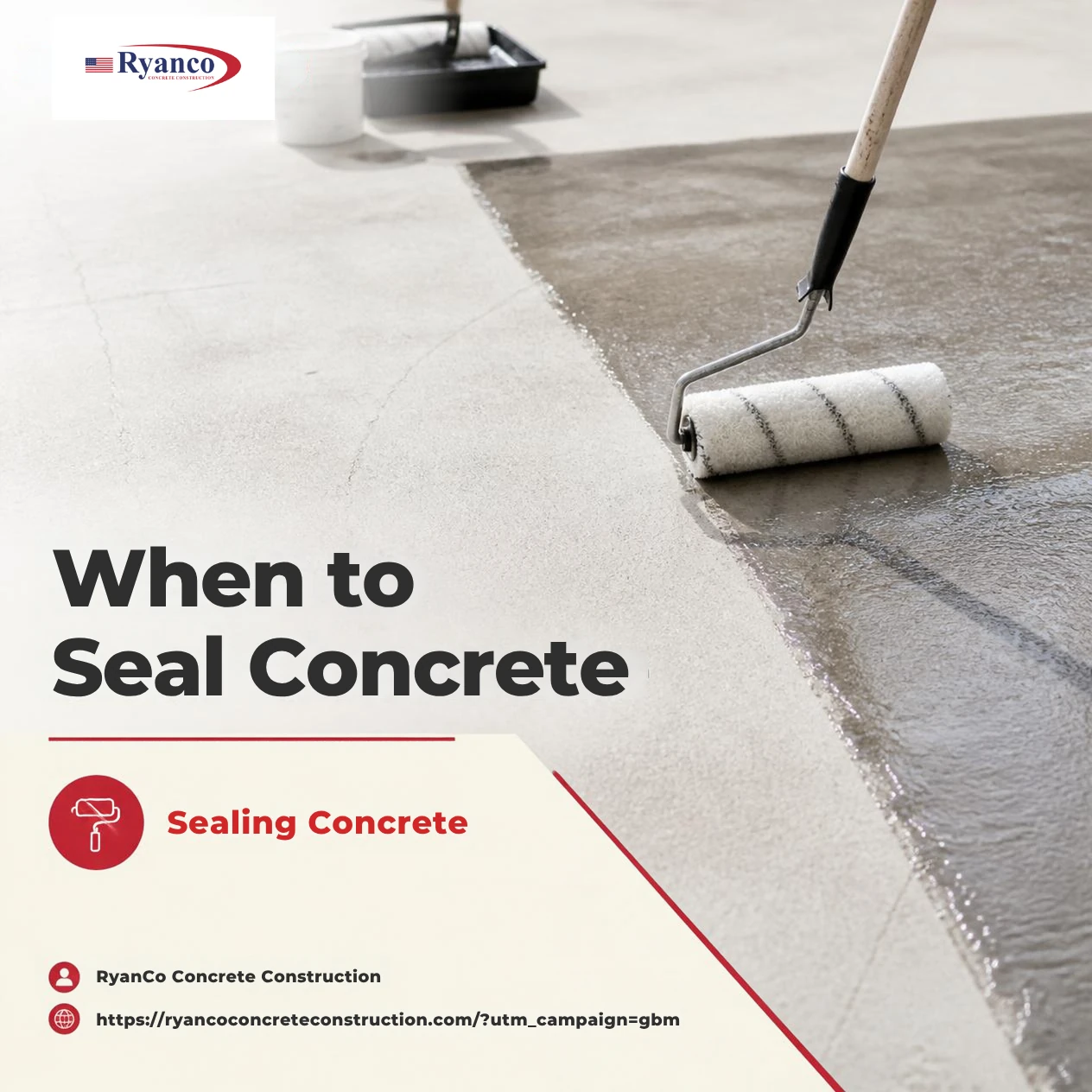
How Can You Tell When Concrete Is Ready for Sealing?
There is no reliable visual test that works for every sealer.
Concrete may look completely dry on top while still containing moisture below the surface. Likewise, a slab may be several weeks old but still not meet the application conditions for a particular product.
Start with the manufacturer’s technical data.
Check requirements for:
- Minimum concrete age
- Surface moisture
- Air temperature
- Concrete temperature
- Weather forecast
- Cleaning and preparation
- Previous curing compounds
- Existing coatings
- Required drying time after washing
- Application method
The surface should generally also be free from substances that could interfere with the treatment, such as dirt, oil, grease, incompatible coatings, or other contaminants when the product requires a clean substrate. PROSOCO, for example, specifies clean and dry surfaces for its treatment and warns that contaminants can interfere with penetration and performance.
Professionals may also use moisture-testing methods when the selected coating or project requires more precise confirmation.
For homeowners, the practical approach is not to invent a moisture test or guess from concrete color.
Instead, identify the exact sealer first and determine what that product requires.
What Are the Benefits of Sealing at the Right Time?
Properly timed sealing allows the protective treatment to perform under the conditions for which it was designed.
Depending on the product, sealing may help reduce penetration of moisture, oil, dirt, and other contaminants while making routine cleaning easier.
RyanCo’s current concrete sealing service specifically focuses on moisture protection, stain resistance, UV protection, easier maintenance, and protection of decorative finishes.
Correct timing can also help avoid unnecessary appearance problems associated with premature or incompatible application.
Potential benefits of appropriate sealing include:
- Reduced water penetration
- Improved resistance to oil and staining
- Easier routine cleaning
- Protection of decorative color or texture
- Reduced exposure to some weather-related deterioration
- More consistent surface appearance
- Longer usefulness of the protective treatment
Sealing still has limits.
A sealer does not repair significant cracks, rebuild spalled concrete, level uneven slabs, or correct poor drainage.
Existing defects should be evaluated before sealing rather than covered simply because the concrete has reached a certain age.
For Rock Hill property owners, this distinction can matter on driveways, patios, sidewalks, walkways, garage slabs, and decorative surfaces that experience different combinations of sun, rain, vehicle use, landscaping, and moisture.
The best sealing schedule is therefore based on both time and condition.
FAQs
Do you always have to wait 28 days before sealing concrete?
No. Around 28 days is a common requirement for many conventional sealing products, but some cure-and-seal products are designed for much earlier application. Follow the technical requirements of the specific product rather than assuming one waiting period applies to every sealer.
Can new concrete be sealed after only a few days?
Some products allow it. For example, certain sealers or cure-and-seal treatments are formulated for very young concrete. Other sealers require longer curing and drying periods, so the specific product instructions should determine timing.
What happens if concrete is sealed before it is ready?
Depending on the sealer, premature application can contribute to cloudiness, whitening, poor adhesion, peeling, or uneven appearance. The risk depends on moisture, substrate condition, and product chemistry.
Does concrete have to be completely dry before sealing?
Many sealers require dry concrete, but not every product has the same moisture requirements. Check the technical data sheet for the exact sealer being applied.
Does rain delay concrete sealing?
It can. If the chosen product requires a dry surface, rainfall or washing may mean additional drying time is necessary before application. Weather conditions during and after application may also matter.
Can you seal a driveway immediately after it is poured?
A conventional later-stage sealer generally should not be applied immediately unless its manufacturer specifically allows that use. However, certain cure-and-seal products are intentionally designed for application to newly placed concrete after finishing under specified conditions.
Should damaged new concrete be sealed?
Damage should be evaluated first. Sealing does not repair significant cracking, scaling, spalling, or surface weakness. Applying a sealer over deteriorated concrete can leave the underlying issue unresolved.
Does the type of concrete finish affect sealing?
It can. Broom-finished, stamped, colored, polished, and exposed-aggregate concrete may have different product and preparation requirements. The chosen sealer should be compatible with the finish.
Seal New Concrete at the Right Time With RyanCo Concrete Construction
Waiting to seal new concrete is not simply about counting days on a calendar. The correct timing depends on the concrete, curing conditions, weather, surface moisture, finish, and the specific sealing product being used.
At RyanCo Concrete Construction, we help property owners in Rock Hill and surrounding communities evaluate concrete surfaces and choose appropriate finishing and sealing approaches based on the condition of the project.
Whether your new concrete has recently been poured or has already had time to cure, our team can help determine when sealing is appropriate and what preparation may be needed before treatment.
The best result comes from matching the sealer to the concrete rather than applying a product simply because a certain number of days has passed.
