
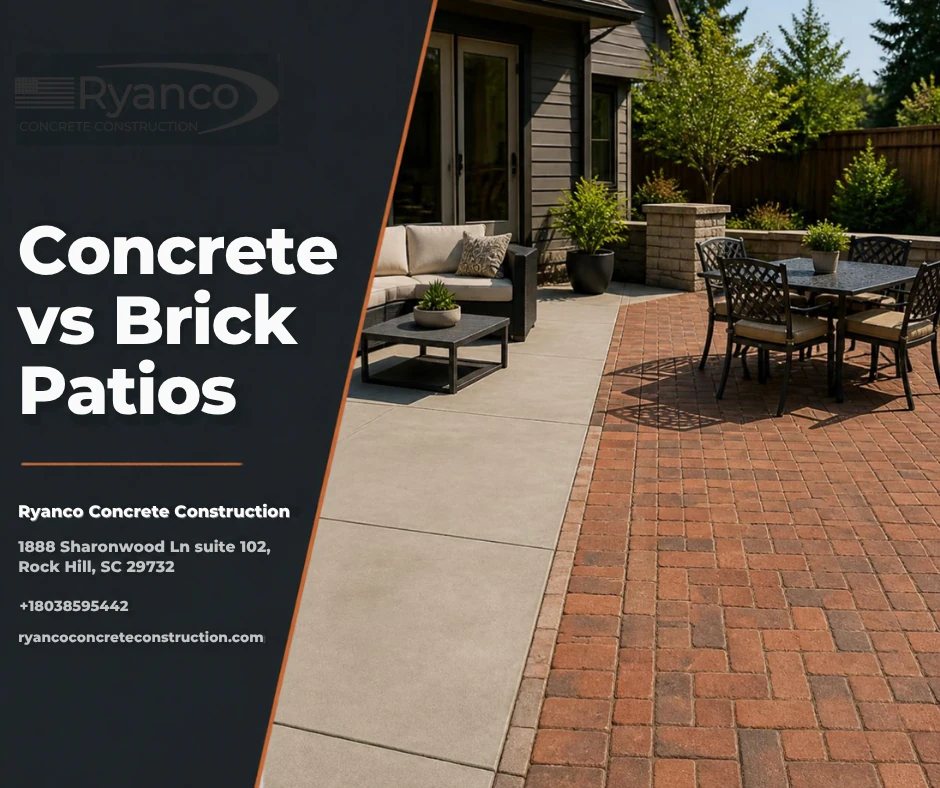
Choosing between a concrete patio and a brick patio usually comes down to a few practical questions: How much do you want to spend upfront, what style fits your home, how much maintenance are you willing to handle, and how important are easy repairs over time?
Concrete and brick can both create attractive, durable outdoor living spaces, but they behave differently. Concrete creates a continuous slab that can be finished in several ways, while brick patios are built from individual units installed over a prepared base. That difference affects appearance, maintenance, movement, repairs, and long-term ownership.
For homeowners comparing concrete vs brick patios, neither option is automatically better. The right choice depends on your budget, design preferences, property conditions, drainage, expected use, and how much ongoing maintenance you want to manage.
Concrete vs Brick Patios: What Is the Difference?
The biggest difference is how each patio surface is constructed.
A concrete patio is poured as a continuous slab. The area is excavated and prepared, forms are installed, concrete is placed, and the surface is finished. Control joints are added to help manage normal shrinkage and movement.
A brick patio is assembled from individual brick pavers. The bricks are typically placed over a compacted base and bedding layer, then fitted together in a selected pattern. Joint material helps stabilize the units while still allowing small amounts of movement.
Because concrete is rigid, the finished surface feels solid and continuous. Brick behaves more like a flexible system made from individual pieces. That can make localized repairs easier, but it also introduces more joints that may need maintenance.
Homeowners considering a poured surface can review Ryanco Concrete Construction’s concrete patio services to learn more about concrete patio options.
Which Patio Option Costs More Upfront?
Brick patios often cost more upfront than basic poured concrete because installation is usually more labor intensive. Individual bricks must be placed, aligned, cut where necessary, and fitted into the selected pattern over a properly prepared base.
Standard concrete is often more economical because a larger area can be poured and finished at once. However, decorative upgrades can narrow the cost difference. Stamped patterns, specialty colors, exposed aggregate, borders, and custom finishes can raise the price of a concrete patio.
The total project cost also depends on factors beyond the surface material. Excavation, access, grading, drainage, demolition, base preparation, steps, retaining features, curves, and site obstacles can all affect the final estimate.
Ask what each quote includes for preparation, drainage, base work, edging, finishing, cleanup, and long-term maintenance.
Which Material Is More Durable?
Concrete and brick are both durable when installed correctly, but they respond to movement and wear in different ways.
Concrete can provide a stable surface for many years when the subgrade, base, slab thickness, joint layout, curing, and drainage are appropriate. Because it is rigid, however, movement beneath the slab can contribute to cracking or settlement.
Brick patios distribute the surface across many individual units. If the base shifts slightly, the bricks may move without creating one large crack across the entire patio. However, uneven settlement can create low spots, loose units, or changes in alignment.
Durability also depends on how the patio is used. A simple seating area has different requirements than a space supporting a heavy outdoor kitchen, hot tub, fireplace, or other concentrated load.
Neither material should be evaluated in isolation. Base preparation, drainage, edge restraint, workmanship, and surrounding soil conditions often matter as much as the surface material itself.
How Do Concrete and Brick Compare in Maintenance?
Concrete generally requires less routine joint maintenance because it is poured as a continuous slab. Regular care may include cleaning, monitoring cracks and joints, removing stains, and resealing certain finishes when appropriate.
Brick patios have many more joints. Over time, joint material can wash out, weeds may grow in neglected areas, and individual bricks can become loose or uneven if the base shifts. Periodic sweeping, cleaning, joint maintenance, and resetting may be needed.
Brick can hide minor surface wear well because of its texture and color variation. Concrete may show stains, discoloration, or cracks more clearly, especially on lighter finishes.
Concrete may need less frequent attention overall, while brick may require more small maintenance tasks but offer easier localized corrections.
The better option depends partly on your maintenance preferences. Some homeowners prefer fewer joints and a more continuous surface, while others are comfortable with periodic brick maintenance in exchange for repair flexibility.
Which Option Offers More Design Flexibility?
Concrete and brick both offer strong design possibilities, but they create different looks.
Brick patios have a classic, patterned appearance. Homeowners can choose from different brick colors, sizes, laying patterns, and borders. Herringbone, running bond, basket weave, and other arrangements can create visual interest without changing materials.
Concrete offers design flexibility through finishing rather than individual units. A patio can have a simple broom finish, decorative border, exposed aggregate, color, texture, or stamped pattern. Stamped concrete can also create the appearance of brick, stone, slate, or other materials.
Brick may complement traditional or historic designs, while concrete can work with both traditional and modern properties depending on the finish.
Homeowners interested in more customized finishes can also review Ryanco Concrete Construction’s decorative concrete services for additional design options.
How Do Repairs Differ Between Concrete and Brick?
Repairability is one of the clearest differences between the two materials.
If a brick cracks, becomes stained, or settles unevenly, that individual unit can often be removed and replaced or reset. A small repair may involve only a limited section of the patio, assuming matching replacement bricks are available.
Concrete repairs are different because the surface is continuous. Small cracks can sometimes be sealed or repaired, but patches may remain visible because new concrete can differ in color and texture from the surrounding slab. Larger problems may require replacing a section.
Brick also offers easier access when work beneath the patio is needed. Individual units can sometimes be removed, the underlying area repaired, and the bricks reinstalled afterward.
However, easy surface repair does not eliminate the need to correct the cause. If poor drainage, erosion, or base failure created the problem, simply replacing a brick or patching concrete may only provide a temporary fix.
Which Patio Surface Handles Weather Better?
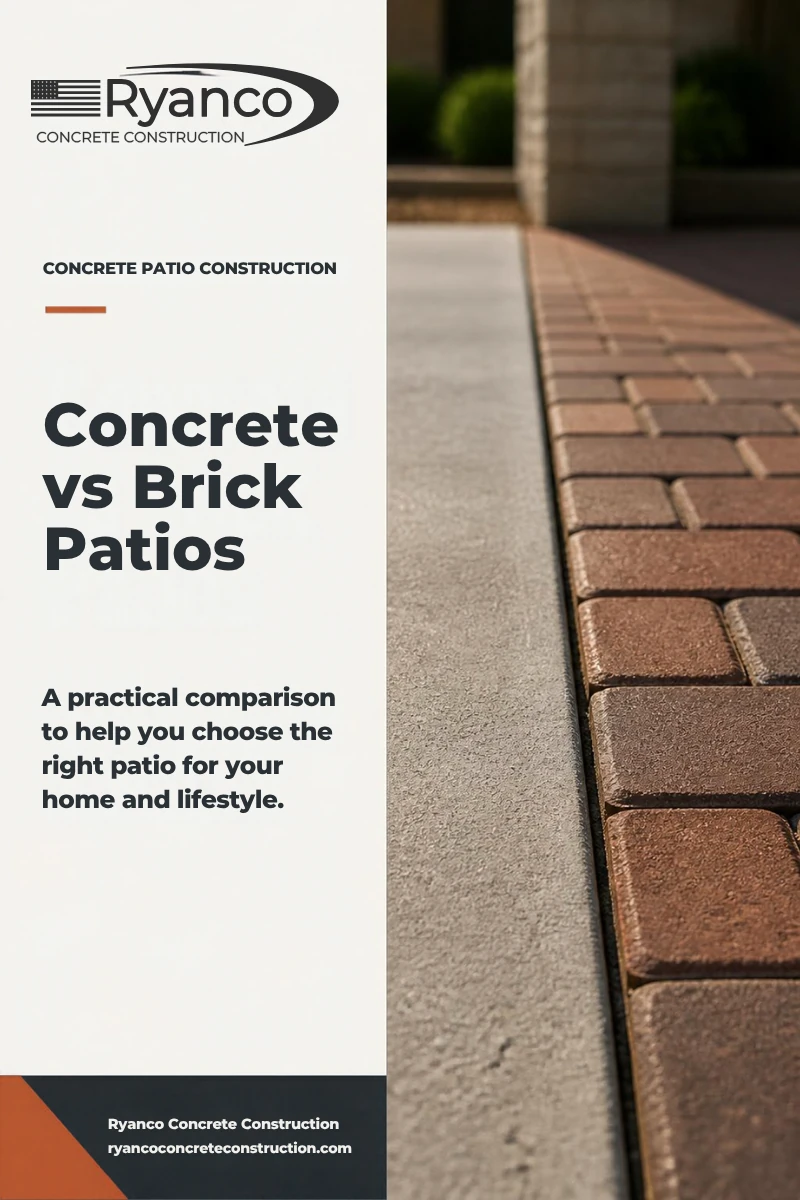
Weather affects both materials, but concrete and brick respond differently to temperature changes and moisture.
Concrete expands and contracts as temperatures change. Proper control joints help manage movement and give the slab planned locations to respond to normal stresses. Correct curing, drainage, and base preparation are also important to long-term performance.
Brick patios contain joints throughout the surface, which allows some movement between individual units. This flexibility can be helpful as temperatures and soil moisture change. However, those same joints can allow water, debris, and organic material into the system.
Heavy rain can create problems for either surface if the patio is poorly graded. Water that collects beneath or around the patio may contribute to erosion, settlement, and movement.
Proper slope, drainage, base preparation, and installation quality are essential for both concrete and brick patios.
How Do Concrete and Brick Compare for Long-Term Value?
Long-term value depends on what you expect from the patio and how you plan to use it.
Concrete can provide strong value for homeowners who want a durable, stable surface with relatively low routine maintenance. Decorative finishes can also provide a customized appearance without requiring individual units across the entire patio.
Brick may offer strong value for homeowners who prioritize traditional appearance and localized repairability. If a small area becomes damaged or uneven, individual bricks can often be reset rather than replacing a large section.
Initial price is only part of the calculation. Homeowners should also think about maintenance, repairs, expected use, design longevity, and how the patio fits with future plans for the property.
The better value is the one that matches your budget, maintenance expectations, style preferences, and site conditions.
What Are the Main Pros and Cons of Each Option?
Concrete offers a clean, stable, and relatively low-maintenance surface. It can be finished in many ways, works well for furniture and foot traffic, and creates a continuous patio area with fewer joints.
Its main tradeoffs are repair visibility and rigidity. Cracks can occur, and patched sections may remain noticeable. Concrete also generally requires more specialized work when larger areas need replacement.
Brick provides a classic appearance, many pattern options, and excellent localized repair flexibility. Individual units can be replaced or reset, making small corrections easier.
Its tradeoffs include more joints, greater potential for weeds or joint loss, and the possibility of uneven areas developing as the base moves. Brick installation can also be more labor intensive than standard poured concrete.
Neither list makes one material universally superior. The better choice depends on which advantages matter most to you and which maintenance or repair needs you are more comfortable managing.
How to Choose Between Concrete and Brick for Your Patio
If budget is your first concern, compare a basic concrete patio with the exact brick system you are considering. Avoid comparing basic concrete with premium brick or decorative concrete with an entry-level brick product because those are not equivalent options.
Next, think about appearance. Decide whether you prefer a continuous surface or the traditional look of individual masonry units. Consider how the patio will relate to your home’s exterior, walkways, landscaping, and other hardscape.
Maintenance is another important factor. Concrete generally means fewer joints and less recurring joint maintenance. Brick may need more routine attention, but individual pieces are easier to replace.
Then evaluate the property itself. Drainage, slope, soil stability, tree roots, access, nearby structures, and planned outdoor features can all influence the best choice.
For homeowners in Fort Mill, Ryanco Concrete Construction’s Fort Mill concrete services provide additional information about local concrete work and available residential options.
A good patio decision should account for how the space will actually be used. Dining areas, grills, furniture, fire features, steps, outdoor kitchens, and future additions can all affect design and construction requirements.
The best material is the one that fits your property, budget, maintenance expectations, and visual goals without creating unnecessary long-term problems.
FAQs
Is concrete cheaper than brick for a patio?
Basic poured concrete is often less expensive upfront than a professionally installed brick patio because brick installation requires more individual placement and labor. Decorative concrete can narrow the price difference, so the final comparison depends on design, preparation, and site conditions.
Does brick last longer than concrete?
Both materials can last for many years when installed correctly. Brick offers easier individual replacement, while concrete provides a continuous rigid surface. Drainage, base preparation, workmanship, maintenance, and soil movement often influence lifespan as much as the surface material.
Is brick easier to repair than concrete?
Brick is usually easier to repair locally because individual units can be removed, reset, or replaced. Concrete repairs may be structurally effective but can remain visible because new material may not perfectly match the existing slab.
Which patio needs less maintenance?
Concrete generally requires less routine joint maintenance because it has fewer joints. Brick patios may need joint material replaced, weeds controlled, or uneven units reset over time. Both surfaces still benefit from cleaning and regular inspection.
Can concrete look like brick?
Yes. Stamped concrete can be patterned and colored to create a brick-like appearance. The result will not behave exactly like individual brick pavers, but it can provide a similar visual style.
Should I choose concrete or brick for my patio?
Choose based on budget, appearance, maintenance preferences, repair priorities, and property conditions. If you prefer a stable, continuous surface with several finishing options, Ryanco Concrete Construction can help you evaluate whether a concrete patio fits your space and long-term plans.
