
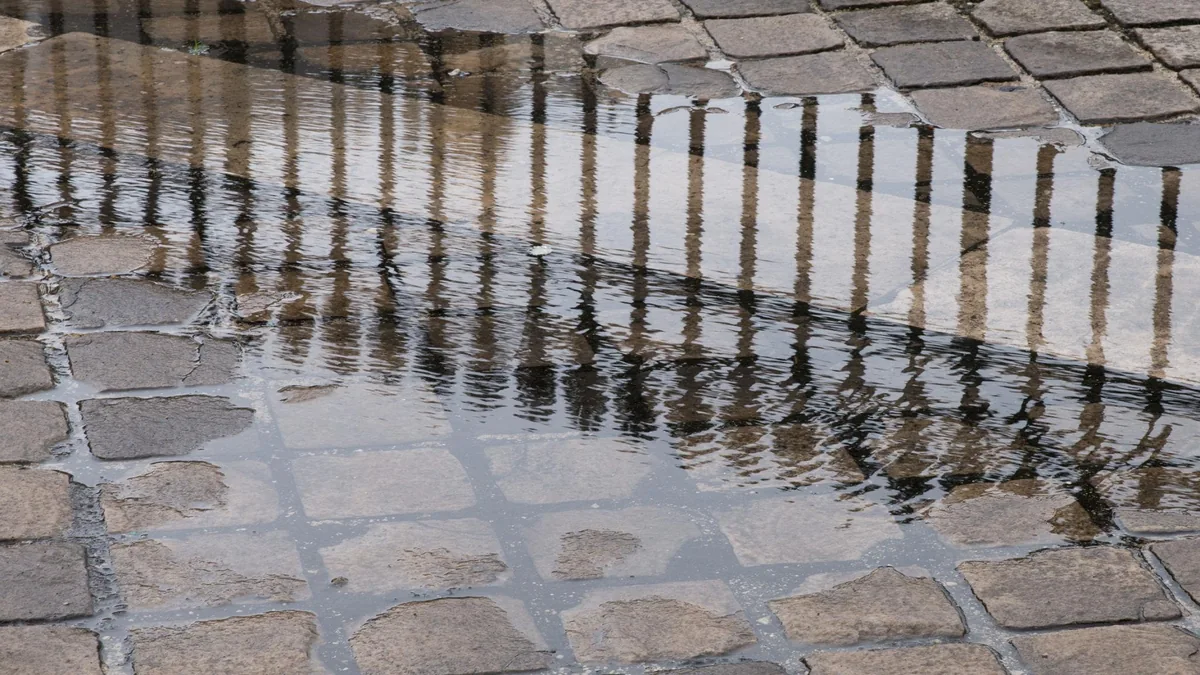
Standing water, soil erosion, and moisture near your foundation are common signs your patio has drainage problems. These warning signs may indicate that rainwater is not moving away from the concrete properly, potentially affecting the patio surface and the soil supporting it.
For homeowners in Fort Mill, SC, patio drainage deserves attention during periods of heavy rainfall and frequent thunderstorms. A patio may appear perfectly normal during dry weather but reveal problems after a storm. Recognizing these early warning signs can help prevent avoidable deterioration, unsafe walking conditions, and more extensive concrete damage.
How Do You Know a Patio Has Drainage Problems?
A patio may have drainage problems if water regularly collects in the same areas, flows toward the house, washes away surrounding soil, or leaves sections of concrete damp long after rainfall.
Other warning signs include uneven patio surfaces, recurring stains, and cracks developing near areas where water accumulates.
Concrete patios are designed to withstand outdoor conditions. However, the surrounding soil and drainage system must also manage rainwater effectively.
When runoff cannot escape, moisture may remain near the surface or enter the supporting materials beneath the slab.
Common signs of patio drainage trouble include:
- Puddles that repeatedly form after rain
- Water flowing toward exterior walls or doorways
- Washed-out soil along patio edges
- Cracks near depressions or low spots
- Uneven or sinking concrete sections
- Persistent algae or dark moisture stains
- Gaps between the patio and surrounding landscaping
- Water accumulating around adjacent foundations
Not every symptom indicates serious damage. A small puddle after a strong storm may disappear naturally without creating problems.
However, multiple warning signs appearing together, especially standing water, erosion, and settlement, deserve closer evaluation.
Understanding what each symptom means can help homeowners determine whether maintenance, drainage improvements, or professional assessment is appropriate.
Standing Water After Rain
Standing water is one of the easiest patio drainage problems to recognize.
When rainfall collects in shallow depressions instead of flowing away, the surface may have insufficient slope, an uneven finish, or areas that have settled over time.
Why does water collect on concrete patios?
Concrete patios generally need an appropriate surface slope to guide runoff toward a suitable drainage area.
If the slope is inconsistent, water may become trapped in low spots.
Other possible causes include:
- Settlement beneath certain patio sections
- Surrounding landscaping that blocks runoff
- Drainage outlets clogged with debris
- Water entering from nearby roofs or downspouts
- Adjacent surfaces directing runoff onto the patio
A patio may also collect water when the surrounding ground becomes higher than the concrete edge.
When should puddles become a concern?
There is no universal drying time that determines whether a patio has a drainage defect.
Rainfall intensity, shade, humidity, surface texture, and temperature all influence how quickly concrete dries.
Instead, homeowners should watch for recurring patterns.
If water consistently remains in the same depression while nearby areas dry, the surface may need evaluation.
Persistent puddles can also increase staining, algae growth, and moisture exposure around existing cracks.
Water Flowing Toward the House
Water moving toward the house is a more urgent drainage warning sign because it may affect the building as well as the patio.
A patio located directly beside an exterior wall should have an appropriate drainage arrangement that prevents unwanted water accumulation against the structure.
Why runoff direction matters
During rainfall, water generally follows the surface grade.
If the patio slopes toward the house, runoff may collect near the foundation or exterior doorway.
Depending on the building’s construction and drainage details, repeated moisture exposure may contribute to:
- Water entering through vulnerable door thresholds
- Dampness near exterior walls
- Saturated soil beside the foundation
- Moisture reaching basement or crawl space areas
- Erosion around nearby landscaping
What about patios below yard level?
Some patios sit below the surrounding lawn or landscape.
These spaces may collect runoff from multiple directions, especially when nearby ground slopes toward the concrete.
A properly designed collection drain or another drainage feature may be necessary when surface grading alone cannot manage the water.
When should homeowners seek an evaluation?
Water regularly approaching exterior doors, collecting against the foundation, or entering the house should be investigated promptly.
The cause may involve the patio slope, landscaping, roof drainage, or a combination of these factors.
Correcting the source of runoff is more effective than repeatedly removing water after every storm.
Soil Erosion Around Patio Edges
Soil washing away from patio edges is another important sign of poor drainage.
Erosion occurs when moving water carries away soil particles, particularly where runoff becomes concentrated.
Over time, this process may expose concrete edges or remove material that helps support the slab.
What does patio edge erosion look like?
Homeowners may notice small channels in the soil, bare patches where grass previously grew, or mulch collecting downhill from the patio.
Other warning signs include:
- Exposed concrete edges
- Gaps between concrete and surrounding soil
- Loose or washed-out landscaping material
- Small holes developing beside the slab
- Water repeatedly flowing along the same edge
How does erosion affect concrete?
Concrete slabs rely on appropriately prepared and stable supporting materials.
When water removes soil near the edges, portions of the slab may become less consistently supported.
If erosion continues beneath the concrete, the slab may experience increased stress when people, furniture, or other loads are placed on it.
This can contribute to cracking or localized settlement.
Is replacing the missing soil enough?
Adding soil may temporarily restore the surrounding landscape, but it does not necessarily correct the drainage problem.
If runoff continues following the same path, the replacement material may wash away again.
Homeowners should identify where the water originates and why it concentrates near the patio before making permanent landscaping changes.
Cracks or Settlement Near Low Spots
Cracks and uneven concrete surfaces can sometimes be associated with drainage problems, especially when they appear near areas where water repeatedly collects.
However, not every concrete crack is caused by poor drainage.
Concrete may crack because of shrinkage, temperature changes, soil movement, excessive loads, or installation conditions.
Drainage is one potential contributing factor.
How moisture can contribute to settlement
When water repeatedly saturates susceptible soil beneath a patio, the supporting material may lose strength.
Concentrated water movement can also wash away loose material, creating areas with reduced support.
If one section of the patio settles more than another, uneven surfaces may develop.
What warning signs should homeowners look for?
Watch for cracks accompanied by changes in the surrounding concrete.
Examples include a slab section sitting lower than its neighbor, a widening joint, or a depression that begins collecting water after previously draining well.
These symptoms may indicate movement beneath the surface.
Can settlement make drainage worse?
Yes. Settlement and drainage problems can reinforce each other.
A concrete section that sinks may create a new low spot where rainwater collects.
That additional water may then reach vulnerable supporting materials, potentially contributing to further movement.
An evaluation should consider both the visible surface condition and the underlying drainage pattern.
When are cracks more concerning?
Cracks combined with noticeable elevation changes, recurring puddles, or soil erosion deserve closer attention.
Rapid movement, significant trip hazards, or water entering nearby structures may require prompt professional assessment.
Staining, Algae, or Persistent Damp Areas
Not every patio drainage problem begins with cracking or settlement.
Sometimes the earliest warning signs involve surface appearance.
Dark stains, recurring algae, and persistently damp sections can reveal where moisture remains longer than expected.
Dark patches on concrete
Concrete often changes color when wet.
However, an area that consistently stays darker than the surrounding surface may receive additional runoff or dry more slowly.
Shade, vegetation, surface porosity, and moisture exposure can all contribute.
Dark discoloration alone does not prove that drainage is inadequate, but recurring patterns are worth investigating.
Algae and organic growth
Algae may develop in areas that remain damp and receive limited sunlight.
The combination of moisture, shade, and organic material creates favorable growing conditions.
On certain concrete finishes, biological growth can make the surface slippery.
Mineral deposits
White or light-colored deposits sometimes appear on concrete surfaces.
One possible cause is efflorescence, which occurs when moisture carries soluble salts through concrete or masonry and leaves deposits as the water evaporates.
Efflorescence can have several causes and does not automatically indicate a structural problem.
However, repeated deposits may justify investigating where moisture is entering or moving through the surface.
Why cleaning may not solve the problem
Cleaning can improve the patio’s appearance, but stains or algae may return if the area remains consistently wet.
Homeowners should consider whether the surface receives runoff from downspouts, nearby landscaping, or another source.
Improving drainage and reducing persistent moisture can help make routine maintenance more effective.
Can Poor Drainage Damage the Patio Base?
Yes. Poor drainage can affect the prepared base and underlying soil that support a concrete patio.
Although homeowners usually notice damage at the surface, problems may begin beneath the slab.
Understanding the patio base
A typical ground-supported concrete patio rests on prepared soil, sometimes with a compacted aggregate base beneath the concrete.
The purpose of this preparation is to provide consistent support for the slab.
The exact materials and construction details depend on site conditions and project requirements.
What happens when the base becomes excessively wet?
Some soils lose strength when repeatedly saturated.
Water may also move through cracks, joints, or exposed edges and carry away loose material.
If the supporting ground becomes uneven, the patio may experience differential settlement.
This means one portion of the concrete moves more than another.
How hidden problems become visible
Base-related concerns may eventually appear as:
- Uneven patio sections
- Widening cracks
- New depressions that hold water
- Gaps along slab edges
- Changes in the level of adjoining walkways
These symptoms can have causes other than drainage, so visual inspection alone may not establish what is happening beneath the concrete.
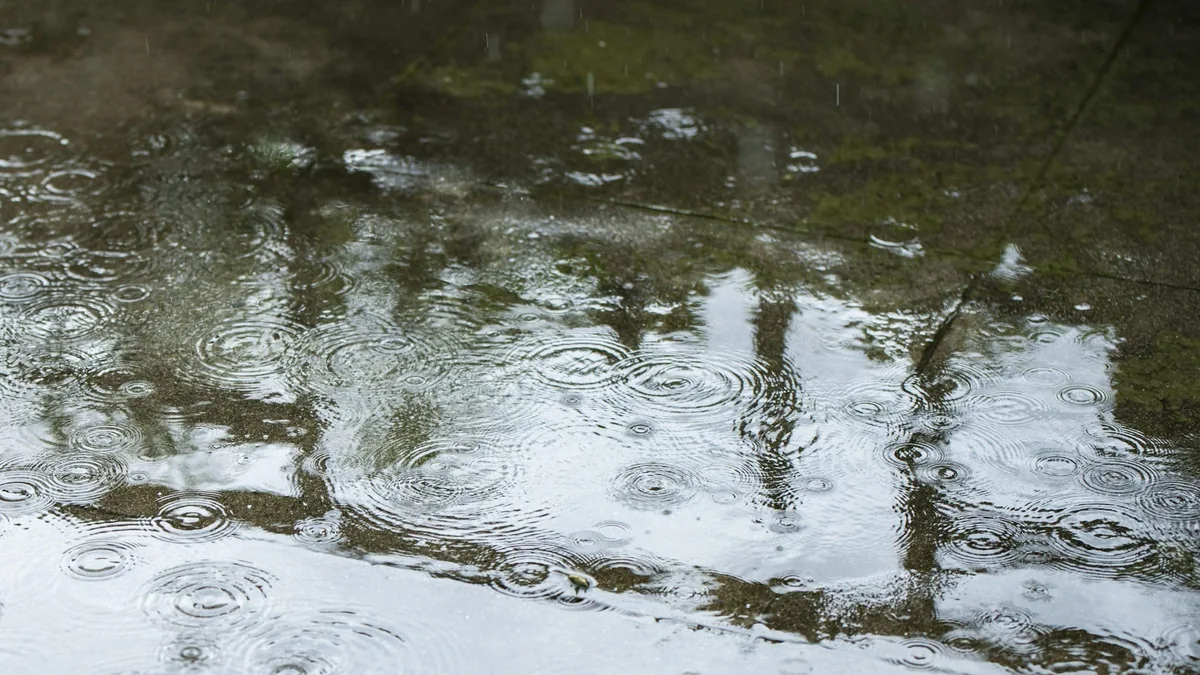
Why early assessment matters
When surface movement is connected to drainage, repairing only the visible damage may leave the underlying cause unresolved.
A professional assessment can help determine whether the supporting materials remain stable and whether runoff is contributing to the problem.
Addressing water movement early may reduce the likelihood of additional deterioration.
What Causes Patio Drainage Problems?
Patio drainage problems often result from several site conditions rather than one isolated issue.
Understanding the possible causes can help homeowners recognize where professional evaluation may be useful.
1. Insufficient or inconsistent slope
A patio needs an appropriate drainage path.
When the surface is too flat or contains unintended depressions, water may collect instead of moving toward a suitable outlet.
The correct slope depends on the surrounding grade, building elevations, accessibility, and other site conditions.
There is no single slope specification suitable for every property.
2. Surrounding landscaping changes
Adding garden beds, retaining borders, soil, or landscaping features may alter how water flows around the patio.
Raised landscape edges can unintentionally block runoff that previously escaped.
Changes to neighboring ground elevations may also direct additional water onto the concrete.
3. Downspouts discharging near the patio
Roof runoff can concentrate significant amounts of rainwater.
A downspout discharging directly onto a patio or beside its edge may overwhelm the existing drainage path.
Depending on site conditions, an appropriate extension or drainage connection may help redirect this water.
4. Clogged drainage features
Some patios rely on channel drains, catch basins, or nearby swales.
Leaves, dirt, mulch, and other debris can restrict these features.
When a collection system becomes blocked, water may back up onto the patio.
5. Soil settlement
If supporting materials settle unevenly, the patio’s original drainage slope may change.
A section that once directed water away from the house may develop a low spot after movement occurs.
6. Runoff from neighboring surfaces
Water may enter the patio from a sloping lawn, adjacent driveway, walkway, or another paved area.
The patio itself may not be the original source of the problem.
A proper assessment should follow the runoff path across the entire affected area.
When Does Drainage Trouble Require Concrete Repair?
Not every drainage concern requires concrete repair.
Some problems involve clogged outlets, landscaping changes, or roof runoff that can be addressed without modifying the slab.
However, repair may become necessary when drainage issues coincide with physical concrete damage.
Minor surface cracks
Small, stable cracks may be candidates for appropriate sealing or repair.
Before repairing them, it is important to determine whether movement or moisture exposure is continuing.
Uneven or settled slabs
When a patio section has noticeably settled, a contractor may evaluate whether leveling or another corrective method is appropriate.
The condition of the supporting soil influences which options are suitable.
Damaged patio edges
Cracking or deterioration near an eroded edge may require attention to both the concrete and the surrounding ground.
Restoring the surface without correcting recurring runoff may allow the problem to return.
Severe cracking or movement
Significant displacement, widespread cracking, or unstable sections may require more extensive repairs.
The extent of the damage should determine the recommended approach.
Why drainage should be addressed alongside repairs
A repaired patio may experience recurring problems if water continues accumulating in the same locations.
Correcting the underlying drainage conditions can help protect the repaired areas.
At Ryanco Concrete Construction, we offer concrete repair services for damaged patios, driveways, and other concrete surfaces. Our services address issues such as cracking and uneven slabs.
Homeowners should seek an evaluation when visible concrete damage occurs alongside persistent water accumulation, erosion, or movement.
Patio Drainage Help in Fort Mill
Patio drainage problems in Fort Mill, South Carolina, can be influenced by rainfall, surrounding property grades, soil conditions, and neighborhood drainage infrastructure.
A patio on a sloped lot may experience different problems from one installed in a relatively level backyard.
The important consideration is where water originates, how it crosses the property, and where it goes after leaving the concrete.
Heavy rainfall and backyard runoff
Fort Mill experiences rainfall throughout the year, including thunderstorms that can produce heavy runoff.
During significant storms, water may travel from lawns, neighboring paved surfaces, and rooftops toward the lowest portions of a yard.
Patios located along these drainage paths may develop recurring puddles or erosion near their edges.
Homeowners should pay particular attention to how water behaves during rainfall rather than evaluating the patio only when it is dry.
Neighborhood drainage considerations
Some properties use swales, drainage easements, stormwater ponds, or underground systems to manage runoff.
These features should not be altered without understanding their purpose and any applicable restrictions.
The Town of Fort Mill maintains a stormwater management program covering stormwater infrastructure, erosion prevention, water quality, and related drainage issues. Responsibility for private drainage facilities may remain with property owners or other responsible parties.
Before making significant grading changes or connecting drainage systems, homeowners should confirm the applicable requirements.
A Fort Mill mailing address does not necessarily mean the property falls within town limits. Some homes are governed by York County.
Why local site conditions matter
Two homes in the same neighborhood may require different drainage solutions.
Differences in lot elevation, landscaping, patio placement, and nearby downspouts can change how runoff reaches the concrete.
For that reason, identifying the actual water path is more useful than assuming every patio needs the same drainage feature.
How Ryanco Concrete Construction Can Help
At Ryanco Concrete Construction, we work with homeowners in Fort Mill and surrounding communities on concrete patios and other residential concrete projects.
Our concrete patio services focus on appropriate preparation, layout, and installation details that support a functional outdoor space.
When evaluating an existing patio, homeowners should consider whether drainage problems are related to the concrete surface, surrounding grade, or another source of runoff.
Recognizing these conditions can help determine whether the situation calls for drainage improvements, concrete repairs, or additional evaluation.
FAQs About Patio Drainage Problems
How do I know if my concrete patio has poor drainage?
Common signs include recurring puddles, water flowing toward the house, soil erosion near patio edges, and persistently damp areas. Cracks or settlements appearing alongside these symptoms may indicate that drainage deserves closer evaluation.
Is it normal for water to pool on a concrete patio?
Small puddles can occur during heavy rainfall, but water repeatedly collecting in the same location may indicate a low spot or inadequate drainage. Persistent pooling should be investigated, especially when it occurs near the foundation.
Can poor patio drainage damage my home’s foundation?
Poor drainage can contribute to excessive moisture around a foundation. The effects depend on soil conditions, construction details, and the amount of water involved. Runoff consistently flowing toward the house should be evaluated promptly.
Does a cracked concrete patio always mean there is a drainage problem?
No. Concrete cracks can result from shrinkage, temperature changes, settlement, loading, or installation conditions. Drainage may be a contributing factor when cracks occur alongside recurring puddles, erosion, or uneven settlement.
Will sealing my patio fix standing water?
No. Concrete sealing can help reduce water absorption and surface staining, but it cannot correct improper slope, blocked drains, or settled concrete. The drainage problem must be addressed separately.
When should I call a contractor about patio drainage?
Professional evaluation is appropriate when water repeatedly moves toward the house, significant erosion develops, concrete sections become uneven, or cracks appear alongside signs of moisture-related movement.
Get Help With Patio Drainage Concerns in Fort Mill
Patio drainage problems often begin with small warning signs that are easy to overlook. A recurring puddle, damp area, or patch of washed-out soil may not seem serious initially, but these conditions can reveal how water is moving around the concrete and its supporting ground.
At Ryanco Concrete Construction, we understand the importance of proper grading, site preparation, and stable concrete surfaces. We work with homeowners in Fort Mill, SC, and surrounding communities on patio construction and concrete repair projects.
If your patio develops recurring puddles, cracks near low spots, or uneven sections, identifying the source of the problem can help you make informed decisions about the next steps.
Not every drainage issue requires extensive concrete work. Some involve surrounding landscaping or runoff patterns, while others may need professional repairs.
Concerned about your concrete patio? Contact Ryanco Concrete Construction at (803) 548-0595 to discuss your patio’s condition and request an estimate.
