
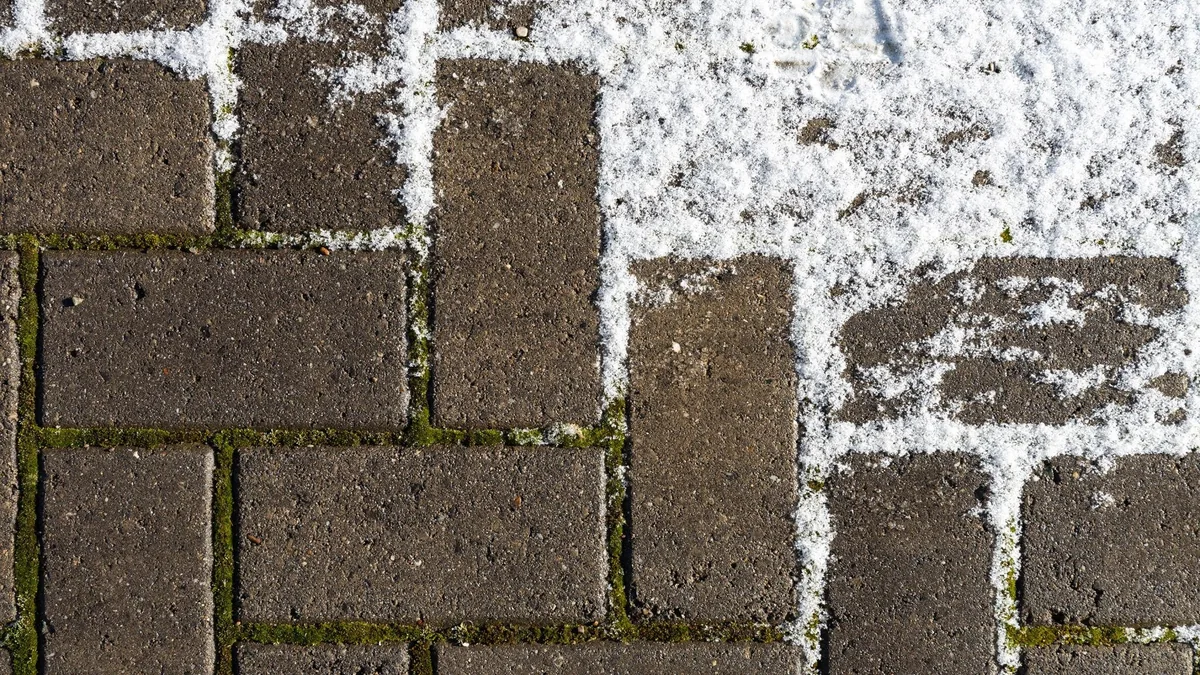
Freeze-thaw cycles can damage concrete when absorbed water freezes, expands, and creates pressure inside the material. Repeated freezing and thawing may gradually weaken vulnerable areas, causing surface scaling, cracking, or spalling. The risk is greater when concrete remains saturated or already has defects that allow moisture to enter.
For homeowners in Rock Hill, SC, occasional freezing temperatures can create winter maintenance concerns for driveways, patios, and walkways. Even without prolonged periods of snow, moisture exposure followed by freezing weather can contribute to deterioration. Understanding how freeze-thaw cycles affect concrete helps homeowners recognize damage early and identify when drainage improvements, sealing, or professional repairs may be appropriate.
How Do Freeze-Thaw Cycles Damage Concrete?
Freeze-thaw cycles damage concrete when water inside its pores freezes and creates pressure that the surrounding material cannot adequately accommodate. Repeated cycles may gradually weaken the concrete, particularly when it becomes critically saturated.
Concrete contains tiny pores that allow some moisture to enter. During freezing weather, water within these pores may turn into ice.
As ice forms, it can generate internal pressure and displace remaining unfrozen water. If the concrete lacks sufficient room to accommodate these changes, microscopic damage may develop.
Over multiple cycles, small areas of deterioration can gradually become visible.
Common effects include:
- Surface scaling or flaking
- Small cracks that develop or expand
- Pieces of concrete breaking away
- Surface roughness or pitting
- Deterioration around joints
- Reduced resistance to additional moisture exposure
However, freeze-thaw damage is not inevitable.
Properly designed exterior concrete can resist repeated freezing conditions, particularly when it contains appropriate air entrainment and is protected from excessive saturation.
The American Concrete Institute explains that intentionally entrained air provides space for pressure relief when moisture freezes inside hardened concrete.
The main concern is not simply cold weather. It is the combination of moisture, freezing temperatures, concrete quality, and repeated exposure.
What Happens When Water Freezes Inside Concrete?
Concrete may appear completely solid, but its internal structure contains microscopic pores and pathways.
These spaces develop as cement hydrates and the concrete hardens.
Some pores can hold water, especially when the surface experiences prolonged rainfall, melting snow, or poor drainage.
Water enters the concrete
Rainwater and other sources of moisture can enter concrete through its pore structure.
Cracks, joints, and deteriorated surface areas may provide additional pathways.
The amount of water absorbed depends on the concrete’s permeability, surface condition, and exposure.
Temperatures drop below freezing
When temperatures become sufficiently cold, some of the absorbed water begins freezing.
Water expands by approximately 9% as it changes into ice, but deterioration involves more than simple expansion.
Ice formation can also create hydraulic and other internal pressures as remaining water moves through the pore network.
Internal pressure develops
If the concrete is highly saturated and cannot relieve these pressures, stress may develop within the hardened cement paste.
Under susceptible conditions, microscopic cracking can occur.
These tiny cracks may not be visible immediately.
The ice melts
When temperatures rise, the ice thaws.
Thawing removes the immediate freezing pressure, but any permanent microscopic damage may remain.
Water can also occupy newly developed cracks or existing openings.
The next freezing event may expose the affected areas to additional stress.
Why air-entrained concrete performs better
Air-entrained concrete contains intentionally created microscopic air voids distributed throughout the cement paste.
These spaces provide nearby pressure-relief locations when freezing occurs.
According to the American Concrete Institute, appropriate air entrainment significantly improves resistance to freezing and thawing.
This is one reason concrete mixture design matters for exterior surfaces exposed to winter weather.
Why Repeated Freezing and Thawing Causes Damage
A single freezing event does not necessarily cause visible concrete deterioration.
Problems are more likely when vulnerable concrete experiences repeated cycles while containing enough moisture for damaging pressures to develop.
Microscopic damage can accumulate
During one freezing event, internal stresses may create extremely small defects.
These defects may remain after the ice melts.
If the concrete becomes saturated again, subsequent freezing may produce additional damage.
Over time, small weaknesses can connect or grow, eventually affecting the visible surface.
Moisture can enter damaged areas
As cracks and surface defects develop, they may allow additional water to enter the concrete.
This can increase moisture exposure in already vulnerable locations.
The result may be a repeating pattern of moisture entry, freezing, and deterioration.
Surface damage may become more noticeable
Early damage can appear as slight roughness or shallow flaking.
With continued exposure, larger areas of the surface may separate.
However, deterioration rates vary considerably.
Concrete mixture quality, curing, drainage, salt exposure, and local weather conditions all influence the outcome.
Why temperature fluctuations matter
Freeze-thaw cycling occurs when concrete experiences alternating freezing and thawing conditions.
These changes can happen during winter periods when overnight temperatures fall below freezing and daytime temperatures rise.
The concrete’s actual temperature and moisture condition determine whether a damaging cycle occurs.
An air temperature below freezing does not automatically mean every concrete surface will experience internal freeze-thaw damage.
What Types of Concrete Are Most Vulnerable?
Some concrete surfaces are more susceptible to freeze-thaw damage because of their material properties, age, or exposure conditions.
Understanding these differences can help homeowners recognize when closer monitoring is appropriate.
Concrete without adequate air entrainment
Exterior concrete exposed to freezing and moisture generally benefits from an appropriate air-void system.
Without adequate air entrainment, saturated concrete may have less capacity to relieve freezing pressures.
This can increase its vulnerability to deterioration.
Concrete with excessive permeability
Concrete that readily absorbs water may reach high moisture levels more easily.
Factors such as an excessive water-cementitious materials ratio, poor consolidation, or inadequate curing can contribute to permeability.
However, surface appearance alone cannot establish the internal quality of a slab.
Poorly cured concrete
Proper curing helps concrete develop the intended strength and pore structure.
When curing is inadequate, the surface may become more susceptible to scaling and environmental exposure.
This is particularly important during the early life of newly placed exterior concrete.
Concrete with existing cracks
Cracks can provide pathways for water to penetrate beneath the surface.
If moisture repeatedly enters these openings, freezing conditions may contribute to further deterioration.
Not every crack indicates freeze-thaw damage, but existing defects can increase exposure.
Concrete exposed to deicing chemicals
Deicing salts can increase the risk of surface scaling and certain forms of chemical deterioration.
The effects depend on the salt type, concentration, concrete condition, and environmental exposure.
Concrete exposed to saltwater and freezing conditions may require additional maintenance.
Concrete with poor drainage
Surface depressions and inadequate grading can allow water to collect.
These conditions may increase the time moisture remains in contact with concrete and enters vulnerable areas.
Good drainage is therefore an important part of reducing freeze-thaw exposure.
How Cracks Allow More Water Into Concrete
Cracks can influence how moisture moves through a concrete surface.
Although concrete naturally contains pores, cracks and open joints may provide additional pathways for water to reach deeper areas.
Water enters existing openings
Rainwater can collect along cracks, especially in low areas.
When water penetrates beneath the surface, it may remain in contact with concrete and supporting materials.
The amount of penetration depends on crack width, depth, moisture exposure, and drainage conditions.
Freezing may place additional stress on damaged areas
If water within vulnerable openings freezes, it may contribute to localized pressure.
However, it is important to distinguish surface freezing from internal freeze-thaw deterioration.
The presence of ice inside a visible crack does not necessarily mean the crack will widen every time temperatures drop.
Damage depends on factors such as moisture availability, confinement, and concrete condition.
Why cracks may expand
Cracks can widen for several reasons, including shrinkage, soil movement, loading, and temperature-related movement.
Freeze-thaw deterioration may contribute when saturated concrete repeatedly experiences damaging freezing conditions.
Homeowners should avoid assuming that every widening crack is caused solely by winter weather.
Cracks near joints deserve attention
Control joints help manage where shrinkage-related cracking occurs.
However, deteriorated or open joints may collect water and debris.
Localized moisture accumulation can increase exposure along slab edges and other vulnerable areas.
When should cracks be evaluated?
Cracks accompanied by surface flaking, widening gaps, uneven elevations, or recurring puddles deserve closer inspection.
The goal is to identify both the visible condition and any underlying causes.
What Are the Signs of Freeze-Thaw Damage?
Freeze-thaw damage can appear in several ways, ranging from minor surface changes to more significant concrete deterioration.
However, these symptoms may also result from other causes.
A visual inspection can identify possible concerns, but it does not always establish the precise reason for the damage.
Surface flaking
Small pieces of concrete may begin separating from the finished surface.
This is one of the more recognizable symptoms associated with freeze-thaw deterioration.
Rough or uneven texture
A previously smooth concrete surface may develop a rough appearance as the outer layer begins deteriorating.
In some cases, portions of aggregate become more visible.
Small pits
Localized surface material loss can create small depressions.
Pitting can have multiple causes, including finishing defects and aggregate-related problems, so it should not automatically be attributed to freezing.
Cracking
New cracks or changes in existing cracks may appear after winter weather.
Freeze-thaw deterioration is one possible contributing factor, but soil movement, shrinkage, and loading should also be considered.
Deterioration near joints
Joints can collect moisture and deicing solutions.
Surface breakdown near these locations may indicate prolonged exposure to damaging conditions.
Loose concrete fragments
Homeowners may notice pieces of concrete separating along edges or corners.
This can indicate spalling or another form of deterioration requiring evaluation.
Changes after winter
Comparing the surface before and after freezing weather can help identify newly developed problems.
Photographs taken periodically may make gradual changes easier to recognize.
When several symptoms appear together, especially flaking, cracking, and moisture accumulation, professional assessment may be appropriate.
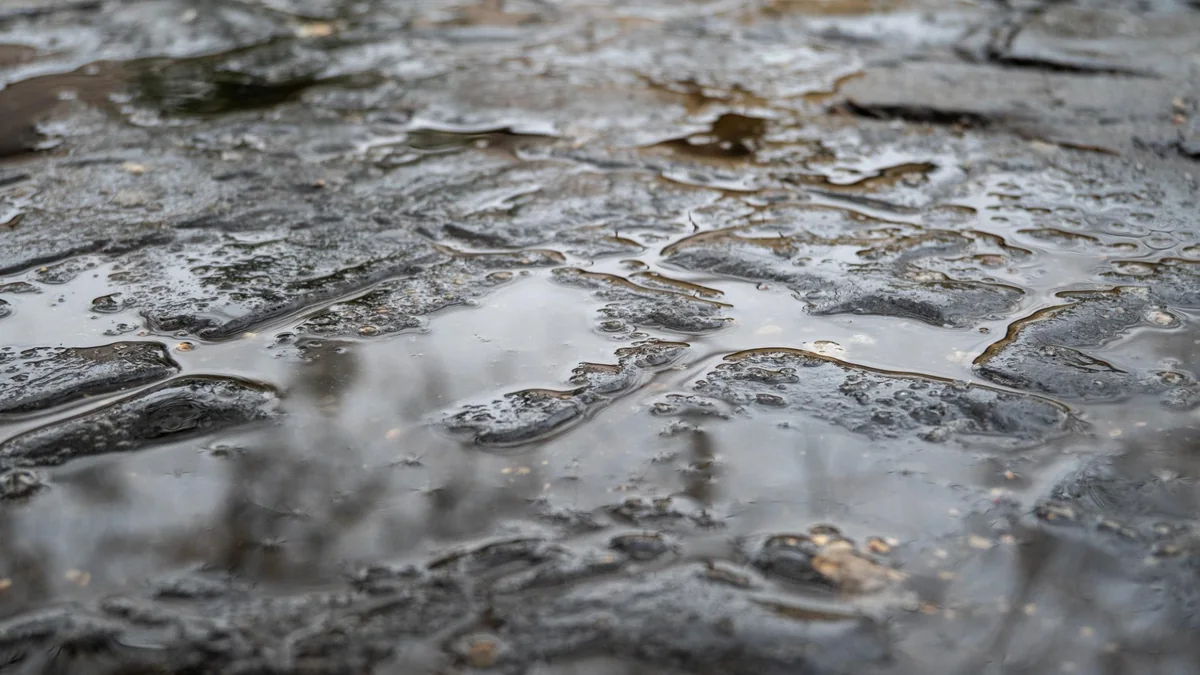
Can Spalling or Scaling Be Caused by Freezing?
Yes. Freeze-thaw exposure can contribute to both scaling and spalling, although these forms of damage are not exclusive to freezing conditions.
Understanding the distinction can help homeowners describe the problem accurately.
What is concrete scaling?
Scaling occurs when the outer surface layer flakes or peels away.
Damage may begin with small patches of loosened material and gradually become more extensive.
Scaling is commonly associated with moisture exposure, freezing conditions, and deicing chemicals.
However, poor curing, excessive finishing water, and inadequate freeze-thaw resistance can also contribute.
What is concrete spalling?
Spalling involves pieces of concrete breaking away from the surface, edges, or other areas.
It may be deeper and more localized than typical surface scaling.
Potential causes include freeze-thaw deterioration, reinforcement corrosion, physical damage, and other stresses.
How are scaling and spalling different?
| Characteristic | Scaling | Spalling |
| Typical appearance | Thin surface layers flaking away | Chunks or localized pieces separating |
| Common locations | Broad exposed surface areas | Edges, corners, joints, or damaged sections |
| Potential causes | Freeze-thaw exposure, deicers, poor curing | Freeze-thaw exposure, corrosion, impact, other stresses |
| Repair considerations | Depends on depth and surface condition | Depends on depth, cause, and underlying concrete stability |
Does surface scaling mean the slab must be replaced?
Not necessarily.
Minor scaling may affect only the outermost portion of the concrete.
Whether repair is appropriate depends on the depth of deterioration and the condition of the underlying material.
Widespread spalling, significant cracks, or unstable sections may require more substantial work.
The visible extent of damage should be evaluated before selecting a treatment.
How Drainage Helps Reduce Freeze-Thaw Damage
Proper drainage helps reduce freeze-thaw damage by limiting how long water remains on or around concrete.
Although drainage cannot prevent freezing temperatures, it can reduce conditions that allow concrete to become excessively saturated.
Surface slope helps water escape
Exterior concrete generally needs an appropriate slope to move rainwater toward a suitable drainage area.
A surface with insufficient slope may develop puddles that remain after rainfall.
The correct grading arrangement depends on the property’s layout, nearby buildings, and local conditions.
Low spots increase moisture exposure
Depressions in concrete can allow water to accumulate.
If the water enters cracks or vulnerable surface areas, subsequent freezing may increase the risk of deterioration.
Persistent puddles can also reveal settlement or other grading problems.
Gutters affect nearby concrete
Roof runoff can discharge substantial amounts of water onto patios, walkways, and driveways.
Downspouts that empty directly onto concrete may increase moisture exposure in concentrated areas.
Where appropriate, directing roof runoff toward a suitable drainage outlet can help reduce unnecessary saturation.
Soil drainage matters too
Water collecting around slab edges may soften susceptible soils or contribute to erosion.
While these problems are not the same as internal freeze-thaw damage, they can affect concrete support and contribute to cracking or settlement.
Drainage improvements should consider the entire property
Simply redirecting water away from one concrete surface may create problems elsewhere.
Runoff should move toward an appropriate drainage area without damaging adjacent landscaping, structures, or neighboring property.
For Rock Hill homeowners, managing rainfall throughout the year can be useful even when freezing conditions occur only occasionally.
Can Concrete Sealing Help Protect the Surface?
Yes. Concrete sealing can help reduce moisture absorption and lower certain risks associated with freeze-thaw exposure.
However, sealing does not make concrete completely waterproof or guarantee that freeze-thaw damage cannot occur.
The level of protection depends on the product, application, concrete condition, and maintenance.
How penetrating sealers work
Some penetrating sealers help repel liquid water while allowing water vapor to move through the concrete.
By reducing water absorption, these products may limit the moisture available for damaging freeze-thaw conditions.
Product suitability depends on the type and condition of the concrete.
Film-forming sealers
Other sealing products create a protective coating over the surface.
These products may also improve the appearance of certain decorative finishes.
However, trapped moisture, inadequate surface preparation, or incompatible products can create performance problems.
Some coatings may also change surface traction when wet.
What sealing cannot fix
Sealing does not:
- Restore missing concrete.
- Repair structural cracks.
- Correct settlement or unstable supporting soil.
- Eliminate standing water caused by improper slope.
- Reverse existing internal freeze-thaw damage.
- Guarantee complete resistance to winter deterioration.
Why the concrete condition matters
Before sealing, the surface should be evaluated for cracks, loose material, excess moisture, and other defects.
Applying a sealer over deteriorating concrete may not produce the intended protection.
At Ryanco Concrete Construction, our concrete sealing services help homeowners protect exterior concrete against moisture exposure, staining, and weather-related wear.
Appropriate sealing can support long-term maintenance, but it should be combined with effective drainage and suitable winter care.
When Does Freeze Damage Need Concrete Repair?
Concrete repair may be appropriate when freezing and thawing have contributed to noticeable surface deterioration, cracking, or damaged sections.
However, not every winter-related surface change requires major repair work.
The appropriate response depends on the extent of the damage and whether the underlying concrete remains stable.
Minor scaling
Small areas of surface flaking may be primarily cosmetic.
Depending on the condition of the concrete, monitoring, surface treatment, or localized repair may be appropriate.
The underlying material should be sound before applying repair products.
Localized spalling
When chunks of concrete separate from a surface, professional evaluation can help determine whether localized repair is suitable.
Repair materials must be compatible with the existing concrete and its exposure conditions.
Cracks that collect water
Cracks can allow additional moisture to enter vulnerable areas.
Some cracks may be appropriate for sealing or filling, while others require investigation because of movement or structural concerns.
Uneven or displaced slabs
Settlement is not necessarily caused by freeze-thaw deterioration.
However, concrete movement may occur alongside soil saturation, poor drainage, or other ground-related problems.
These conditions should be evaluated before selecting a repair method.
Extensive deterioration
Widespread scaling, deep spalling, unstable concrete, or significant cracking may require substantial repairs or replacement.
The correct approach depends on the slab’s condition, the cause of damage, and its intended use.
Why the cause must be addressed
Repairing damaged concrete without considering moisture exposure can allow similar problems to develop later.
Poor drainage, persistent saturation, and deicing chemical exposure may need attention alongside the physical repair.
At Ryanco Concrete Construction, we provide concrete repair services for homeowners dealing with cracked, chipped, uneven, and deteriorated concrete surfaces.
Our services include crack repair, chip repair, leveling, and resurfacing where appropriate for the condition of the slab.
For homeowners in Rock Hill, assessing deterioration after winter weather can help determine whether maintenance, repair, or further investigation is needed.
FAQs About Freeze-Thaw Damage to Concrete
How many freeze-thaw cycles does it take to damage concrete?
There is no fixed number. Damage depends on moisture saturation, concrete quality, air entrainment, deicing chemicals, and exposure conditions. Properly designed exterior concrete can withstand many cycles, while vulnerable concrete may deteriorate sooner.
Can concrete crack after just one freeze?
It is possible under unfavorable conditions, particularly when concrete is highly saturated or already weakened. However, a single freezing event does not automatically cause cracking. Repeated exposure generally increases the concern.
Does all concrete absorb water?
Most conventional concrete contains pores that can absorb some water. The amount depends on its mixture, curing, density, condition, and surface protection. Concrete can resist ordinary weather exposure without necessarily developing freeze-thaw damage.
Can sealing prevent freeze-thaw damage?
Appropriate sealing can reduce liquid water absorption and may lower the risk of deterioration. However, it does not eliminate every moisture pathway or correct existing structural damage. Drainage and concrete quality also matter.
Is freeze-thaw damage common in Rock Hill, SC?
Freeze-thaw damage is possible in Rock Hill because winter temperatures sometimes fall below freezing. However, the region generally experiences fewer sustained freezing periods than colder climates. Risk depends heavily on concrete condition and moisture exposure.
Can freeze-thaw damaged concrete be repaired?
Yes, some damaged concrete can be repaired. Minor scaling, localized spalling, and certain cracks may respond to appropriate treatments. More extensive deterioration may require resurfacing, significant reconstruction, or replacement after professional evaluation.
Protect Your Concrete From Winter Damage in Rock Hill
Freeze-thaw damage develops when moisture, freezing temperatures, and vulnerable concrete conditions combine. While homeowners cannot control the weather, managing drainage, limiting unnecessary moisture exposure, and recognizing early deterioration can help reduce avoidable problems.
At Ryanco Concrete Construction, we work with homeowners in Rock Hill, SC, and surrounding communities to maintain and restore driveways, patios, walkways, and other residential concrete surfaces.
We understand that concrete damage can have several contributing causes, including moisture exposure, soil movement, weather conditions, and everyday use. Identifying the likely cause helps determine whether sealing, localized repair, or more substantial work is appropriate.
If your concrete has developed flaking, spalling, widening cracks, or uneven sections after winter weather, a professional evaluation can help clarify the condition and available options.
Our concrete repair and sealing services are designed to address surface deterioration and support the ongoing maintenance of outdoor concrete.
Concerned about freeze-thaw damage? Contact Ryanco Concrete Construction at (803) 548-0595 to discuss your concrete surfaces in Rock Hill and request an estimate.
