
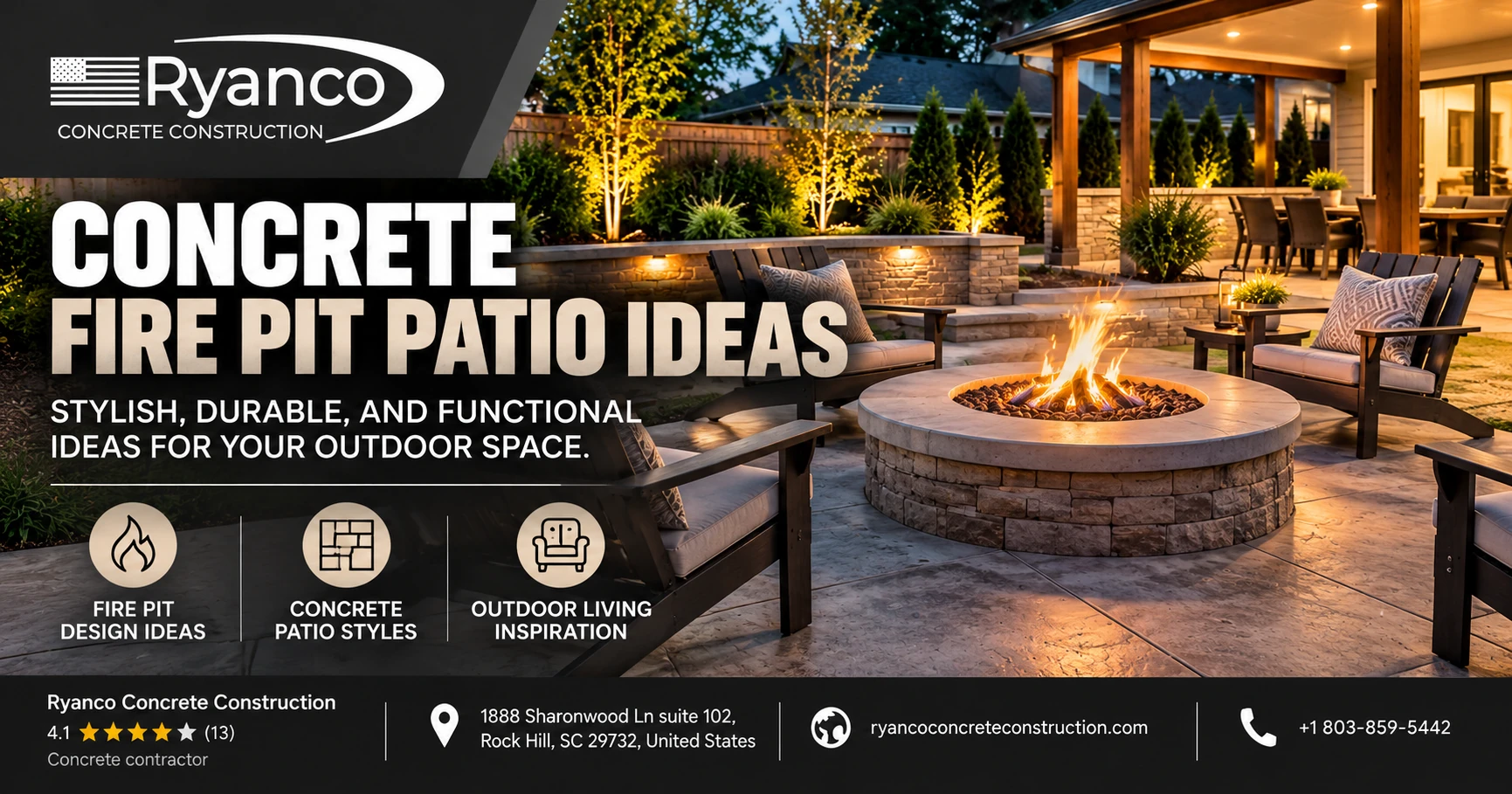
A fire pit can turn a basic patio into a natural gathering space, but the most successful designs start with more than choosing where the fire feature will sit. Seating, walking space, concrete finish, landscaping, nearby structures, and the size of the backyard all influence how comfortable the finished area feels.
Concrete works well as the foundation because it can be shaped around different fire pit layouts and finished in styles ranging from simple broom-textured concrete to stamped patterns, exposed aggregate, borders, and colored surfaces. It can support compact conversation areas as well as larger patios with separate dining, cooking, and fire-side zones.
The best concrete fire pit patio ideas balance appearance with practical use. The fire feature should feel connected to the rest of the backyard without blocking circulation, crowding furniture, or sitting too close to combustible materials.
Homeowners planning the larger outdoor surface can explore Ryanco Concrete Construction’s concrete patio services while using the ideas below to shape the layout and visual direction.
Why Concrete Works Well Around Fire Pits
Concrete gives homeowners flexibility in both patio shape and finish.
A poured patio can be designed around a round, square, rectangular, or linear fire feature rather than forcing the fire pit into a predetermined paving pattern. The slab can also extend beyond the main seating area to create walkways, dining zones, or connections to other backyard features.
Another advantage is design range.
A simple broom finish can create a clean, practical surface. Stamped concrete can introduce the look of stone, slate, brick, or another patterned material. Exposed aggregate adds visible stone and texture, while color and borders can make the fire area feel distinct from the rest of the patio.
Concrete also provides a stable surface for outdoor chairs, side tables, benches, and other furniture.
The material around the fire pit is only one part of safe placement, however. The fire appliance itself still needs to be installed and operated according to its manufacturer’s required clearances and local requirements.
Best Concrete Fire Pit Patio Layout Ideas
One of the simplest designs is a dedicated fire pit area at one end of a larger patio.
The main patio can contain dining furniture, a grill, or an outdoor kitchen, while the fire feature occupies a separate conversation zone. A change in border, texture, or shape can visually distinguish the space without installing a wall between the areas.
Another option is a completely separate fire pit patio connected by a concrete walkway. This works particularly well in larger backyards where homeowners want the fire area to feel more secluded.
For compact yards, the fire pit can become the main focal point. A relatively simple rectangular patio can contain the fire feature toward one side, leaving enough usable space for seating and circulation.
Large properties offer more possibilities. A patio might include a dining zone closest to the house, an outdoor kitchen farther along the slab, and a dedicated fire area at the outside edge.
Think about movement before decorative details. Guests should be able to enter and leave the fire area without squeezing between chairs or walking unnecessarily close to the fire feature.
Circular vs Square Fire Pit Patio Designs
Circular designs naturally create a conversation-focused layout.
A round fire pit positioned near the center of a circular or gently curved patio encourages seating to face inward. Adirondack chairs, lounge chairs, or built-in seating can follow the curve and create a relaxed gathering area.
Circular patios also work well in landscaped backyards because their softer geometry can blend with planting beds and lawns.
Square and rectangular designs usually feel more structured.
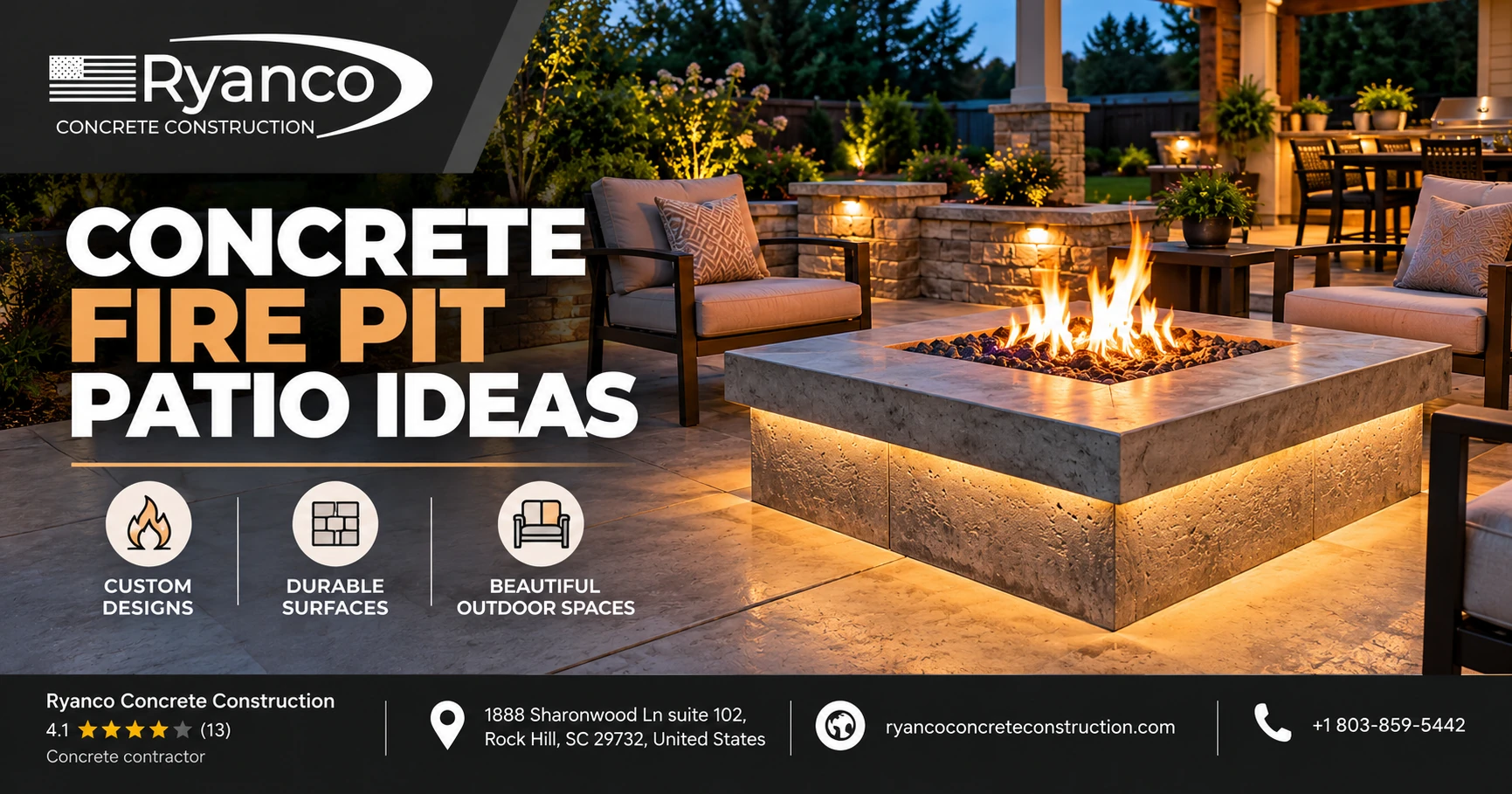
A square fire feature can align with straight patio edges, contemporary architecture, retaining walls, outdoor kitchens, and geometric landscaping. Furniture can be arranged along four sides or grouped into opposing seating areas.
Rectangular fire tables work especially well where space is limited because they can run parallel to a sofa or built-in bench rather than occupying the center of a large circle.
The fire feature and patio do not have to share the same shape. A round fire pit can provide contrast within a rectangular slab, while a square fire feature can create a strong focal point inside a larger circular seating area.
Choose the geometry that works with the house, available backyard space, and furniture you intend to use.
How Much Seating Space Should You Plan Around a Fire Pit?
There is no single seating-distance number that works for every fire pit.
Required clearances depend on the fire feature itself, including its fuel type, heat output, design, and manufacturer instructions. Start with those requirements before planning furniture.
Then account for the physical depth of the chairs or benches.
A comfortable fire pit patio needs enough room for people to sit without feeling crowded and enough space behind or beside the seating for others to move around the gathering area.
Think about chairs in their actual occupied position rather than placing furniture symbols tightly around the fire pit on a drawing. People tend to pull chairs back, turn them slightly, and leave bags or side tables nearby.
Circulation becomes especially important when the fire area sits between the house and another backyard feature. Avoid creating a layout where the shortest path to a pool, garden, or outdoor kitchen passes directly through the active fire-side seating area.
Manufacturer instructions should always take priority over a generic patio dimension.
Stamped Concrete Ideas for Fire Pit Areas
Stamped concrete can give a fire pit area more visual character without requiring separate stone or brick units across the entire patio.
Natural-stone patterns are a common fit because they complement the informal character of a fire feature. Slate, flagstone-inspired textures, and similar patterns can help the area feel integrated with landscaping.
Brick-inspired stamping can work well around traditional homes or properties that already use brick on the exterior.
For a more modern backyard, consider a larger and simpler pattern rather than a highly detailed repeating texture. Broad stone shapes or restrained geometric layouts can keep the fire pit from competing with the pavement.
Another approach is to reserve stamped concrete for the fire-side zone while using a simpler finish elsewhere.
For example, a larger patio might use broom-finished concrete for the dining and walking areas, then introduce a stamped section around the fire pit.
Homeowners interested in patterned or specialty surfaces can explore Ryanco’s decorative concrete options. Ryanco currently lists stamped and exposed-aggregate finishes among its exterior concrete finishing services.
Best Concrete Colors and Finishes for Fire Pit Patios
Neutral concrete colors tend to be the easiest to coordinate with fire features, outdoor furniture, and landscaping.
Warm tan, beige, brown, and sandstone-inspired tones can complement natural stone, wood furniture, and traditional homes.
Gray concrete works well with black or steel fire pits, contemporary furniture, and cooler exterior color palettes.
Charcoal can make an effective border or accent without covering the entire patio in a very dark color.
Exposed aggregate is another option when homeowners want more natural variation. Because the stone itself becomes part of the surface appearance, it can work especially well around planting beds and informal landscapes.
Broom-finished concrete provides a simpler choice. Ryanco describes broom finishing as a textured surface appropriate where slip resistance is useful, while its finishing services also include stamped and exposed-aggregate options.
Try to avoid selecting the patio color in isolation. Compare it with the home exterior, fire feature, retaining walls, furniture, and landscaping so the finished space feels intentional.
How to Create Separate Seating and Walking Zones
A good fire pit patio should make it obvious where people sit and where they walk.
You can create that separation without adding physical barriers.
A border is one simple solution. A darker band of concrete can frame the seating area while the surrounding slab remains lighter.
Pattern changes can accomplish the same thing. A stamped section might define the fire-side conversation zone while a simpler finish marks the main walking path.
The patio shape itself can also create zoning.
A circular extension off a rectangular patio naturally suggests a fire pit destination. A narrow connector between two larger slabs can function as a walkway without requiring signs or edging.
Furniture placement provides another layer of organization. Chairs should face the fire without extending into the primary route between the house and backyard.
If the patio also contains an outdoor kitchen or dining area, try to avoid overlapping circulation routes. Someone carrying food should not have to weave through fire-side chairs to reach the table.
Simple zoning usually works better than creating several competing patterns or color changes.
How to Coordinate Concrete With Stone, Brick, and Landscaping
Concrete does not need to be the only material in a fire pit patio.
Stone can add texture and visual weight around the fire feature. A neutral concrete slab paired with stone veneer or nearby landscape boulders can create a natural transition into the yard.
Brick can connect the patio with a brick home, retaining wall, or garden border.
Wood furniture, pergolas, privacy screens, and fencing can soften the harder surfaces and add warmth.
Landscaping is equally important.
Planting beds can frame the gathering area and prevent a large concrete slab from feeling disconnected from the rest of the yard. Low plantings can preserve sight lines, while trees and taller shrubs can create a sense of enclosure when appropriately located.
Leave room for mature plant size rather than designing only around newly installed landscaping.
Also consider leaf drop, roots, and combustible vegetation when deciding where landscaping belongs in relation to the fire feature.
Repeating materials elsewhere in the yard can create continuity. If the home already has stone accents, for example, using the same general stone family near the fire area can help the new space feel established rather than added later.
What Safety and Clearance Factors Should You Consider?
Fire pit safety should influence the patio layout from the beginning.
First, follow the clearance requirements provided by the fire pit manufacturer. Different wood-burning, propane, and natural-gas units can have different installation and operating requirements.
Keep the fire feature away from combustible structures, furniture, overhangs, vegetation, and other materials that could ignite.
NFPA consumer fire-safety guidance recommends using personal fireplaces and similar outdoor products outdoors and at least 10 feet from a home or anything that can burn. It also emphasizes placing them on a sturdy surface and never leaving a lit unit unattended.
Do not assume that a concrete patio alone makes every location safe. Overhanging branches, pergolas, fences, siding, cushions, umbrellas, and nearby landscaping can still be combustible.
Fuel storage also requires careful planning. Propane cylinders and other fuel components should be installed and stored according to the appliance manufacturer’s requirements and applicable codes.
Local requirements may also affect permanent fire features. Before building one, confirm applicable rules with the local authority having jurisdiction.
Safety planning should happen before the patio dimensions and decorative layout are finalized, not after the concrete has already been placed.
How to Choose a Fire Pit Patio Design That Fits Your Backyard
Start by identifying the size and location of the fire feature you actually plan to use.
Then work outward.
Determine the manufacturer-required clearances, seating area, walking routes, and connections to the house or other outdoor spaces. Once those functional requirements fit comfortably, choose the patio shape.
A smaller backyard may benefit from a simple rectangular patio with a compact fire feature positioned toward one end.
A medium-size property might use a dedicated circular extension for the fire area.
A larger yard can support multiple destinations, such as a dining patio near the house and a separate fire pit gathering space connected by a walkway.
Next, choose the visual style.
Traditional homes may work well with warm colors, stone-inspired stamping, brick accents, or curved layouts. Contemporary properties may suit straight lines, gray palettes, geometric forms, and simple borders.
Keep long-term use in mind. Plan for actual furniture sizes, changing family needs, landscaping growth, and other outdoor improvements you may want later.
Homeowners planning concrete work in the area can also explore Ryanco Concrete Construction’s Fort Mill concrete services. Ryanco currently identifies Fort Mill among the communities it serves and offers patios, flatwork, stamped finishes, and other decorative concrete options.
The strongest fire pit patio design is not necessarily the most elaborate one. A well-proportioned layout, comfortable circulation, suitable clearances, coordinated materials, and one or two thoughtful decorative details can create a space that feels inviting for years.
FAQs
Is concrete a good material for a fire pit patio?
Concrete can provide a stable, customizable patio surface around a properly located fire feature. It can be finished with broom textures, exposed aggregate, color, stamping, or decorative borders depending on the desired appearance.
Should a fire pit patio be round or square?
Either can work. Circular layouts naturally support inward-facing conversation areas, while square and rectangular patios often coordinate well with straight architecture, outdoor kitchens, and contemporary landscaping. Available space and furniture should help determine the shape.
How far should chairs be from a fire pit?
Follow the fire pit manufacturer’s required clearances rather than relying on one universal measurement. The correct distance varies with the unit, fuel type, heat output, and design. Also leave enough room behind the chairs for comfortable circulation.
Can stamped concrete be used around a fire pit?
Stamped concrete can be used as part of a fire pit patio design when the overall installation is appropriate for the fire feature. Stone-, slate-, and brick-inspired patterns can help the gathering area coordinate with landscaping and the home.
What color concrete works well around a fire pit?
Warm earth tones can create a natural appearance, while gray and charcoal tones often suit modern spaces. The best color usually coordinates with the home exterior, fire feature, furniture, stonework, and surrounding landscape.
What should I plan before installing a fire pit patio?
Choose the fire feature first, verify its required clearances, then plan seating, circulation, patio dimensions, drainage, landscaping, and decorative finishes. Ryanco Concrete Construction can help homeowners evaluate concrete patio layouts and finishing options for outdoor living spaces.
