

Concrete is durable, but driveways, patios, sidewalks, walkways, and other slabs still benefit from regular attention. Weather, moisture, vehicle traffic, soil movement, stains, and ordinary use can gradually affect the condition of an outdoor concrete surface.
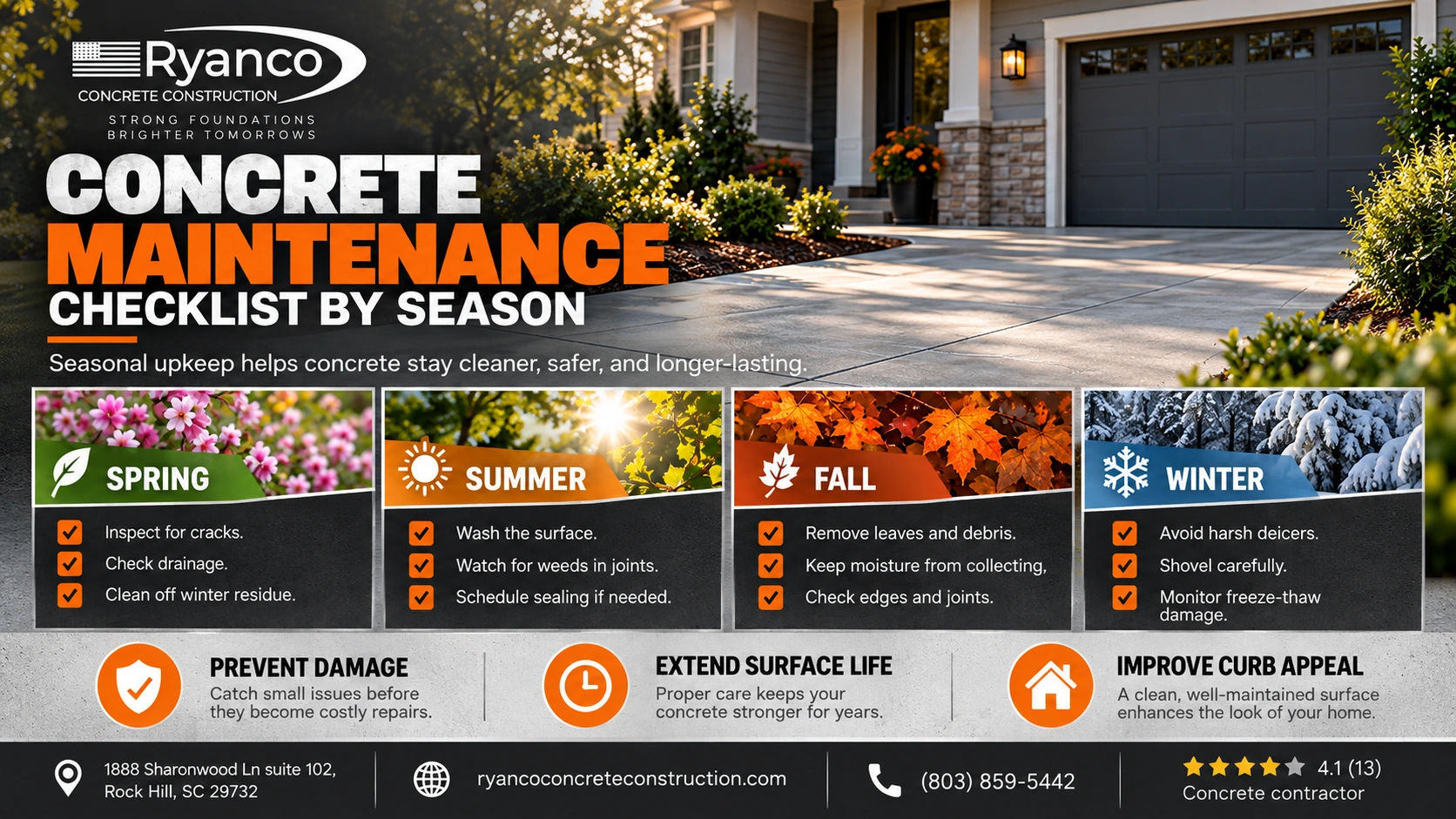
Following a seasonal concrete maintenance checklist makes it easier to notice small changes before they become larger problems. Spring may be a good time to inspect damage that appeared over the colder months, while summer can provide an opportunity for cleaning and surface maintenance. Fall is useful for preparing drainage and clearing debris, and winter calls for extra attention to moisture, ice, and existing cracks.
Maintenance does not mean every crack needs immediate replacement or that every concrete surface needs to be sealed on the same schedule. The goal is to monitor your concrete, keep water moving where it should, maintain a clean surface, and know when visible deterioration deserves professional evaluation.
Why Does Seasonal Concrete Maintenance Matter?
Concrete changes over time as it responds to moisture, temperature, loading, and the conditions beneath the slab.
Cracks can develop for several reasons, including drying shrinkage, movement, inadequate support, drainage problems, and normal changes in temperature and moisture. NRMCA notes that concrete naturally expands and contracts with changes in moisture and temperature and that proper drainage and construction practices can help reduce unwanted cracking.
Maintenance gives you a chance to recognize changes before they become difficult to manage.
For example, a small crack may remain relatively stable for years, while another crack may widen because the slabs on either side are moving. A minor stain may only need cleaning, while standing water next to the same area could point to a drainage issue that deserves attention.
Seasonal inspections can help property owners watch for:
- New or widening cracks
- Flaking or scaling
- Spalling or pitting
- Uneven slabs
- Worn joint material
- Pooling water
- Drainage changes
- Stains
- Vegetation growing in joints
- Damaged edges
- Changes in a sealed surface
Maintenance can also help extend the usefulness of concrete by addressing conditions such as moisture intrusion before deterioration becomes more extensive. Concrete maintenance guidance commonly includes cleaning, sealing, joint maintenance, crack repair, and other relatively minor measures intended to slow deterioration.
Spring Concrete Maintenance Checklist
Spring is a useful time to inspect outdoor concrete carefully.
Instead of immediately pressure washing the driveway or scheduling cosmetic work, walk the property first and look for changes that may have developed since your last inspection.
Inspect cracks. Look at driveways, sidewalks, patios, steps, and other slabs for new cracks or changes in existing ones. A thin, stable crack may be different from a crack that has widened or developed vertical displacement.
Check for flaking or scaling. Look for areas where the surface mortar appears to be peeling or flaking away. NRMCA describes scaling as surface deterioration that can range from small patches to deeper loss exposing aggregate.
Look for uneven slabs. Pay attention to sidewalk sections, driveway panels, and patio areas that appear higher or lower than neighboring concrete.
Inspect joints. Remove loose leaves and debris from joints where practical. Look for missing, cracked, or deteriorated joint material.
Check drainage. After rain, notice where water collects. Water repeatedly pooling along slab edges or in low areas may signal a drainage, grading, or settlement concern.
Clean winter residue. Dirt, organic material, and other debris can be cleaned from suitable surfaces using methods appropriate for the finish.
Look at edges and corners. Concrete edges are often more vulnerable to impact and breakage than the middle of a slab.
Spring inspection is especially helpful because moisture can reveal drainage patterns that are less obvious during dry weather.
Do not assume every change requires major work. Take photographs of questionable areas so you can compare them later in the year.
Summer Concrete Maintenance Checklist
Summer can be a practical time to focus on cleaning, stains, sealing considerations, and monitoring concrete that receives regular use.
Clean the surface as needed. Sweep away dirt and debris before washing. A mild cleaning method may be sufficient for ordinary dirt, while oil, rust, organic stains, or other discoloration may require a product appropriate for concrete.
Avoid assuming that the strongest cleaner is always the best solution. Aggressive chemicals or improper pressure washing can affect certain finishes.
Address spills sooner rather than later. Oil, grease, beverages, leaves, fertilizer, and other materials may become more difficult to remove after remaining on concrete for extended periods.
Inspect high-traffic areas. Check the parts of driveways where vehicles regularly travel and the areas of patios or sidewalks that receive the most foot traffic.
Check sealed surfaces. Look for uneven wear, peeling, cloudiness, or areas where the surface behaves differently when wet. Different sealer systems have different maintenance requirements.
Consider whether sealing is appropriate. Concrete sealing can help suitable surfaces resist moisture penetration, stains, and environmental exposure. NRMCA maintenance guidance identifies reduction of moisture intrusion and freeze-thaw or deicing-salt deterioration among reasons sealers may be used.
Sealing should not be viewed as a repair product, however. A sealer cannot rebuild spalled concrete, level a sunken slab, or correct an active structural crack.
If damage is present, determine whether repairs should be completed before the surface is sealed.
Fall Concrete Maintenance Checklist
Fall maintenance is largely about preparing the property for increased moisture, falling debris, and colder weather.
Clear leaves and organic debris. Wet leaves can hold moisture against concrete and may contribute to staining. Clear accumulated material from patios, walkways, steps, and drainage paths.
Inspect drainage again. Make sure water can move away from concrete rather than consistently collecting near slab edges or joints.
Check cracks before colder weather. Pay attention to cracks that have changed since spring. Water entering openings can contribute to additional deterioration under certain exposure conditions.
Inspect joints and gaps. Debris can fill joints and reduce their ability to function as intended. Vegetation growing in joints may also indicate accumulated soil and moisture.
Look for surface deterioration. Flaking, pitting, spalling, or crumbling areas deserve evaluation before additional weather exposure makes the problem harder to assess.
Review previous repairs. Look at patched or filled areas to see whether they remain intact or whether cracking has returned around them.
Evaluate whether sealing is due. Do not assume every slab requires annual sealing. Product type, concrete condition, exposure, previous treatment, and usage all affect the appropriate maintenance interval.
RyanCo’s concrete sealing guidance likewise notes that sealing schedules vary based on weather exposure, surface usage, and location rather than following one universal timetable.
Fall is also a good time to photograph cracks and uneven areas. Comparing those photos with spring conditions can help determine whether movement is active.
Winter Concrete Maintenance Checklist
Winter maintenance should focus on avoiding unnecessary damage and watching how water and cold conditions interact with existing concrete problems.
Concrete that becomes saturated and then experiences freezing and thawing can be vulnerable to surface deterioration. NRMCA notes that repeated freeze-thaw cycles in saturated concrete can contribute to scaling and that some deicing chemicals can intensify the problem.
Keep drainage paths open. Water should not repeatedly collect in the same cracks, joints, or low sections of pavement.
Be cautious with deicing products. Different deicers can affect concrete differently, and excessive deicer use can contribute to surface deterioration under freeze-thaw conditions. Avoid treating more heavily than necessary simply because ice is present.
Avoid aggressive ice removal. Chipping or striking concrete with sharp metal tools can damage the surface.
Watch existing cracks. You do not need to inspect the driveway after every cold night, but take note if a crack becomes noticeably wider or the slabs begin moving vertically.
Look for scaling. Surface flaking may become more apparent after periods of moisture and freezing exposure.
Monitor trip hazards. Raised or settled sidewalk sections can become more difficult to navigate when wet or icy.
Avoid unnecessary heavy loading on already damaged areas. A badly cracked or unsupported slab may continue deteriorating when exposed to repeated vehicle or equipment loads.
Winter maintenance is primarily about observation and avoiding practices that create additional stress. More extensive cleaning, repair, or sealing may be easier to evaluate when conditions are suitable for the chosen materials and process.
When Should Concrete Be Sealed or Repaired?
Sealing and repair serve different purposes.
Concrete sealing is primarily protective. A suitable sealer can reduce moisture penetration and provide resistance to stains or environmental exposure, depending on the product. RyanCo’s Concrete Sealing service is designed around protecting suitable concrete surfaces from water, staining, UV exposure, and weather-related wear.
Concrete repair addresses existing damage. Cracks, chips, uneven slabs, spalling, or deteriorated areas may need to be evaluated and repaired before protective sealing makes sense.
Consider professional evaluation when you notice:
- Cracks that continue widening
- Significant vertical movement between slabs
- Repeated pooling caused by slab movement
- Spalling or deep surface deterioration
- Large sections of exposed aggregate
- Crumbling edges
- Failed previous repairs
- Uneven concrete creating a trip hazard
- Multiple areas deteriorating at the same time
- Damage that you cannot confidently identify
RyanCo’s Concrete Repair services include crack repair, chip repair, leveling, and resurfacing for damaged concrete surfaces.
For homeowners in Fort Mill, seasonal inspections can be particularly useful because the same driveway, patio, or walkway may experience changing moisture, sun exposure, traffic, and temperature conditions over the course of a year. RyanCo’s Fort Mill service page confirms that both concrete sealing and repair are among its local concrete services.
The goal is not to repair concrete simply because it is no longer visually perfect. It is to recognize deterioration early enough that you still have practical options.
FAQs
How often should I inspect my concrete?
A quick inspection at the beginning of each season can make changes easier to notice, but there is no required inspection schedule for every property. It is also worthwhile to look over concrete after unusual weather, drainage problems, construction activity, or other events that may affect the surface.
Does every concrete crack need to be repaired?
No. Concrete naturally has a tendency to crack, and some small cracks may primarily affect appearance. The cause, width, movement, location, and surrounding condition help determine whether repair is needed.
Should concrete be sealed every year?
Not necessarily. Sealer type, surface condition, traffic, environmental exposure, and previous application all influence how often sealing may be appropriate. Follow the requirements of the specific product and recommendations for your concrete rather than automatically resealing every year.
Can sealing repair existing cracks?
No. Sealing a concrete surface does not repair significant cracks, level uneven slabs, or rebuild deteriorated concrete. Existing damage should be evaluated separately before sealing.
What concrete problems should I look for after winter?
Check for new or widened cracks, surface scaling or flaking, uneven slabs, damaged joints, and drainage changes. Saturated concrete exposed to freeze-thaw cycles can be vulnerable to scaling under certain conditions.
What should I check before winter?
Clear debris, inspect cracks and joints, check drainage, look for deteriorated areas, and determine whether any existing damage should be evaluated before colder conditions arrive.
Can regular maintenance make concrete last longer?
Routine cleaning, moisture management, sealing when appropriate, and timely minor repairs can help reduce or slow certain types of deterioration. The condition of the original installation, base, drainage, loading, and exposure will also affect long-term performance.
Protect Your Concrete Through Every Season With RyanCo Concrete Construction
Concrete maintenance does not need to be complicated. A few seasonal inspections can help you recognize cracks, drainage problems, surface deterioration, stains, and joint issues before they become easier to overlook or more difficult to address.
At RyanCo Concrete Construction, we help homeowners and property owners in Fort Mill and surrounding communities protect and maintain driveways, patios, sidewalks, walkways, and other concrete surfaces.
If your seasonal inspection reveals widening cracks, spalling, uneven slabs, damaged joints, or a surface that may be ready for sealing, our team can evaluate the concrete and discuss practical next steps based on its current condition.
Regular maintenance cannot prevent every crack or eliminate normal concrete aging, but paying attention throughout the year can help you identify problems early and make more informed decisions about repair and protection.
