
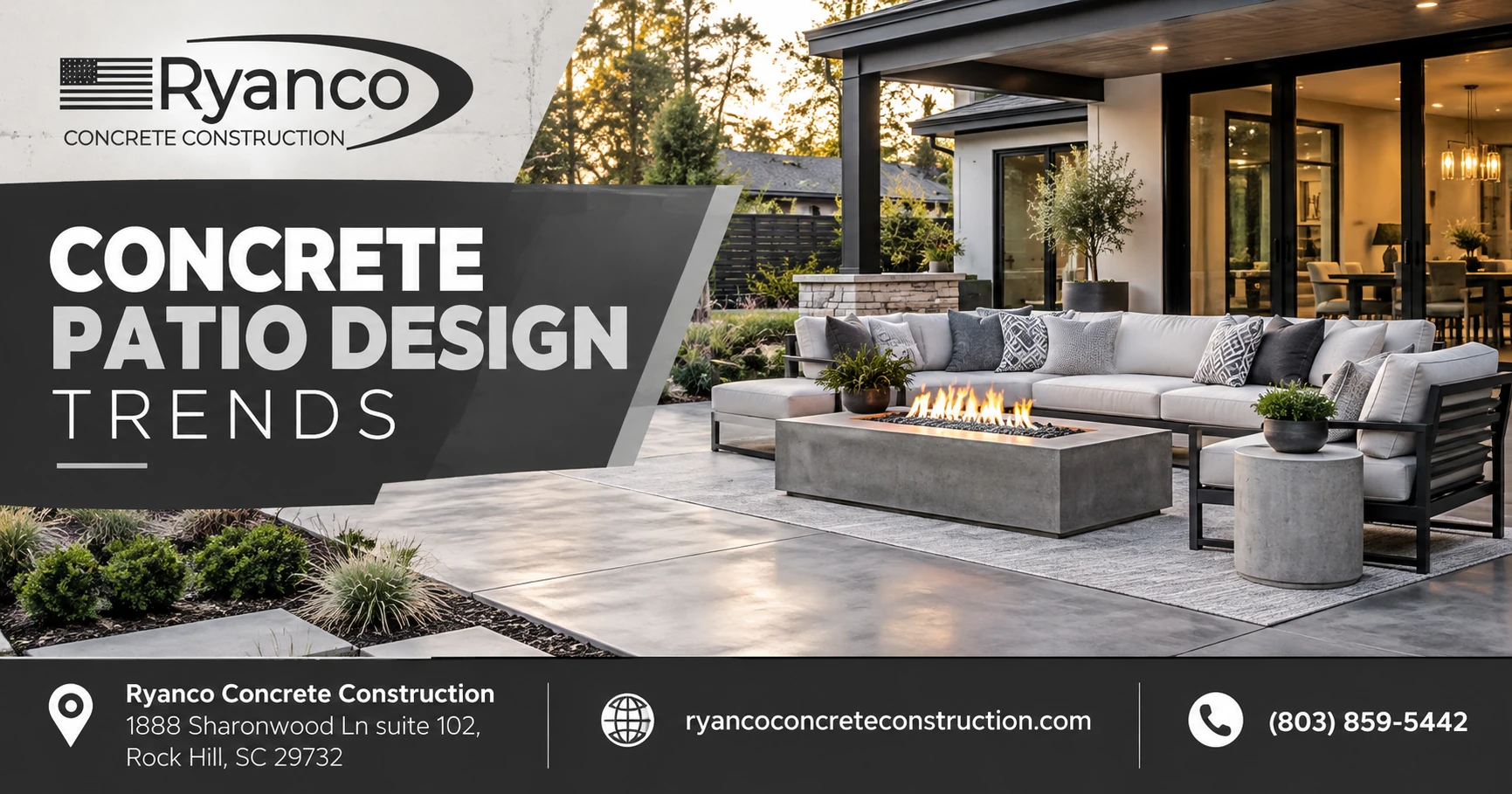
Concrete patio design is moving toward outdoor spaces that feel intentional, comfortable, and connected to the home rather than looking like a plain slab added to the backyard.
Current concrete patio design trends favor warm neutral colors, natural-looking textures, larger and cleaner patterns, subtle borders, and layouts designed around outdoor kitchens, fire features, dining areas, and landscaping. Natural stone and wood-inspired finishes remain popular, while seamless textures are giving homeowners another option for creating visual interest without an overly busy pattern.
The most useful trend, however, is not a particular color or stamp pattern. It is choosing a patio that works with the architecture of the home and remains attractive after the trend cycle changes. A restrained color palette, practical layout, and finish that fits the surrounding landscape can give a patio a current appearance without making it feel dated several years from now.
Homeowners considering a new outdoor space can explore Ryanco Concrete Construction’s concrete patio services while using these ideas as inspiration for the overall design.
What Concrete Patio Design Trends Are Popular Right Now?
One of the strongest patio trends is making concrete look more integrated with the rest of the outdoor living space.
Instead of treating the patio as one large undecorated rectangle, homeowners are using changes in texture, color, borders, furniture placement, and landscaping to create distinct areas for dining, relaxing, cooking, and entertaining.
Natural-looking decorative finishes remain especially relevant. Slate, flagstone, stone, wood-plank, and seamless textures continue to be prominent stamped-concrete options. Seamless textures are particularly useful for homeowners who want the character of stone without highly visible repeating joint patterns.
Cleaner designs are also becoming easier to pair with contemporary homes. Large rectangular patterns, subtle texture, controlled color variation, and simple borders can provide detail without making the surface visually crowded.
At the same time, traditional patterns have not disappeared. Brick, cobblestone, slate, and ashlar-style layouts can still work well when they fit the architecture of the house.
That makes architectural compatibility more useful than chasing a single fashionable pattern.
Which Concrete Colors Are Trending for Patios?
Gray and earth-tone families remain some of the most versatile choices for exterior decorative concrete.
Popular stamped-concrete palettes include light and medium grays, charcoal accents, beige, buff, tan, brown, and other stone-inspired tones. These colors work because they can coordinate with brick, siding, roofing, stone veneer, landscaping, and outdoor furniture without dominating the space.
Warm neutrals are particularly useful when homeowners want the patio to feel connected to a natural landscape. Beige, sandstone, taupe, and muted brown can soften the appearance of a large concrete area.
Cooler grays can create a cleaner, more contemporary look, especially around homes with white, black, blue-gray, or other modern exterior palettes.
Another useful approach is layering color rather than choosing one perfectly uniform shade. Decorative concrete can use base colors with darker or lighter accents to create the natural variation found in stone.
Homeowners should generally choose patio color in relation to permanent elements of the property rather than temporary décor. Siding, brick, stone, roof color, retaining walls, and major landscape features are better reference points than cushions or seasonal furniture that may change frequently.
Are Natural Stone and Wood-Look Finishes Still Popular?
Yes. Natural stone and wood-inspired finishes remain important decorative concrete styles.
Current stamped-concrete resources continue to identify slate, flagstone, fieldstone, wood plank, cobblestone, and similar natural-material patterns among popular choices. Wood-look planks and seamless stone textures are specifically highlighted among current stamped-concrete styles.
The appeal is easy to understand. These finishes allow homeowners to introduce texture and visual warmth while retaining a concrete surface.
Wood-look concrete can complement rustic, farmhouse, or natural outdoor spaces without creating the exact maintenance requirements of a wood deck. A carefully colored wood-grain pattern can also work as an accent within a larger patio rather than covering the entire space.
Stone-inspired finishes tend to be even more versatile. Slate, flagstone, and lightly textured stone patterns can work with traditional, transitional, and contemporary homes depending on the scale and color.
The key is restraint. A convincing natural-material look usually depends on subtle color variation and appropriate scale rather than an exaggerated pattern.
How Are Homeowners Using Large-Format Concrete Patterns?
Large-format designs are helping patios look cleaner and more spacious.
Rather than using many small repeating shapes, homeowners can choose stamps or joint layouts that create the impression of broad stone slabs, oversized rectangles, or large geometric sections.
This approach works especially well on modern and transitional homes because it reduces visual clutter. Furniture, landscaping, planters, and outdoor features can become the main focal points instead of competing with a complicated pavement pattern.
Seamless texture stamps achieve a similar result. They can imitate large areas of slate, granite, or sandstone without creating obvious grout lines. Concrete Network identifies seamless textures as a current popular choice and notes that their shallow patterns can also simplify cleaning compared with deeper stamped designs.
Large-format designs also require attention to proportion. An oversized pattern may overwhelm a very small patio, while a tiny repeating pattern can make a large entertainment area look unnecessarily busy.
The pattern should fit the scale of the patio as well as the architecture around it.
What Border and Accent Designs Are Trending?
Borders are being used less as decoration for decoration’s sake and more as a way to organize the patio visually.
A contrasting border can frame the entire patio, distinguish a dining area, define a fire-feature zone, or create a transition between the patio and a walkway.
The contrast does not need to be dramatic. A light-gray patio with a charcoal-gray border can create definition without making the design look overly elaborate. Likewise, homeowners can keep one color palette while switching the pattern or texture at the perimeter.
Decorative-concrete design resources continue to recommend both contrasting colors and contrasting stamp patterns for patio borders. Borders can also be extended through the patio to visually separate entertainment and relaxation areas.
Accent designs work best when they have a purpose. Too many borders, medallions, color changes, and competing stamp patterns can make a patio feel smaller and more dated.
For a more lasting design, choose one primary finish and use accents selectively.
How Can Decorative Concrete Create a More Custom Look?
Decorative concrete can be customized through color, texture, exposed aggregate, stamping, staining, borders, and combinations of finishes.
Stamped concrete offers especially broad visual flexibility because patterns can imitate stone, brick, slate, cobblestone, and wood. Layered colors and antiquing techniques can add variation that makes these surfaces look less uniform.
Exposed aggregate provides a different aesthetic. Rather than imitating another material, it reveals the stone within the concrete and uses the aggregate itself as part of the design.
Even a simple concrete patio can look customized without an elaborate stamp pattern. A clean broom finish with a decorative border, subtle color, or exposed-aggregate accent can provide enough contrast to make the space feel intentional.
Ryanco Concrete Construction’s decorative concrete services include options homeowners can consider when they want more customization than a standard concrete surface. Ryanco currently lists stamped, stained, polished, textured, and other decorative applications among its offerings.
Which Patio Designs Work Well With Outdoor Kitchens and Fire Features?
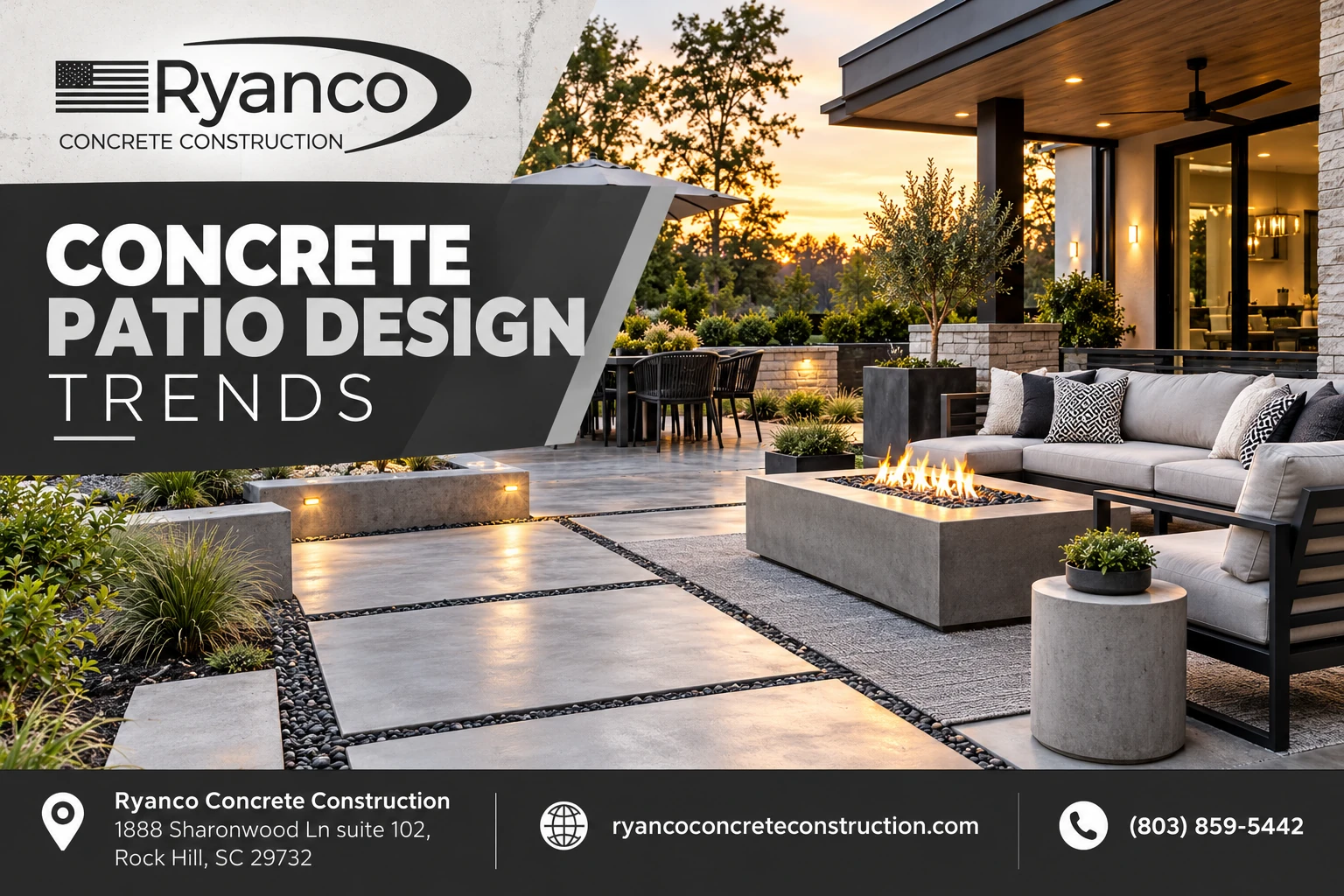
Outdoor kitchens and fire features are changing how patios are laid out.
Instead of designing the concrete first and finding places for everything else afterward, homeowners can plan the slab around the functions the finished patio needs to support.
An outdoor kitchen may require space for counters, appliances, circulation, dining furniture, and access between the house and cooking area. A fire feature needs comfortable seating space and an appropriate relationship to surrounding structures and materials.
Concrete can help visually organize those areas. Borders or pattern changes can distinguish the cooking area from the main seating zone. A larger-format surface can make an outdoor kitchen feel cleaner and less visually crowded.
Furniture placement should also influence joint layout, pattern selection, and texture. Deep decorative grooves may be attractive, but a flatter or subtler texture can make tables and chairs easier to position.
Planning the permanent features first can produce a more functional patio than choosing a decorative pattern before deciding how the space will actually be used.
How Can Landscaping Influence Patio Design?
Landscaping should be part of the patio design rather than something added after the concrete is finished.
Trees, planting beds, retaining walls, lawn edges, garden paths, and views from the house all affect the ideal patio shape and finish.
A heavily landscaped backyard may pair naturally with earth tones, exposed aggregate, flagstone-inspired stamping, or softer curved edges. A structured contemporary landscape may work better with large geometric sections, gray tones, straight borders, and minimal pattern.
Color is another opportunity to connect the patio with the landscape. Warm stone colors can complement mulch, natural stone, and planting beds, while cooler gray finishes can provide contrast against green lawns and foliage.
Planting can also soften large areas of concrete. Instead of creating one oversized uninterrupted slab, a design can use planting beds, built-in landscape edges, or surrounding greenery to break up the hardscape visually.
Drainage and root growth should still be considered during planning. Attractive landscaping should not interfere with the stability or drainage of the patio.
What Low-Maintenance Patio Styles Are Popular?
Low-maintenance design is increasingly about reducing unnecessary complexity.
Simple broom-finished concrete remains practical because it offers a straightforward surface without deep decorative grooves or complicated color systems. For homeowners who want more visual interest, lightly textured or seamless stamped surfaces can create character while remaining easier to clean than some deeply grooved patterns.
Moderate colors can also be easier to live with than extremely light or very dark surfaces because everyday dust and minor staining may be less visually obvious.
A simpler layout with fewer decorative transitions can reduce areas where dirt collects and keep the design visually calm.
Low maintenance does not necessarily mean plain. A patio might combine a simple main field with one contrasting border, or use a subtle stone texture without multiple colors.
Ryanco notes that concrete patios can be created with traditional, stamped, or decorative finishes, allowing homeowners to balance appearance with practical maintenance preferences.
How to Choose a Concrete Patio Style That Fits Your Home
Begin with the house rather than the trend.
Look at the architectural style, exterior colors, brick or stone, roof, doors, windows, and existing walkways. A patio generally feels more intentional when it repeats or complements some of those permanent elements.
Next, consider the landscape. A natural backyard may benefit from organic textures and warm tones. A modern landscape may suit cleaner geometry and cooler neutral colors.
Then think about use. Dining, grilling, entertaining, lounging, fire features, and outdoor kitchens all need adequate space and circulation. The patio should work when furniture and people are actually on it, not only when it is empty.
Choose one dominant design idea. That might be a warm natural-stone look, a clean large-format layout, wood-inspired texture, exposed aggregate, or a simple neutral slab with a contrasting border.
Then add accents selectively.
Homeowners in the area can review Ryanco Concrete Construction’s Fort Mill concrete services when planning a patio around local residential needs. Ryanco currently serves Fort Mill and lists concrete patios and decorative concrete among its services.
Trends can provide inspiration, but the strongest patio design should still look appropriate beside the home several years from now. A timeless base color, proportionate pattern, useful layout, and restrained decorative details can provide a better long-term result than using every current trend at once.
FAQs
What concrete patio colors are popular right now?
Gray, charcoal, beige, buff, tan, brown, and other stone-inspired earth tones remain popular choices. These colors are versatile because they coordinate with common exterior materials and landscaping. Layered or variegated color can also create a more natural appearance.
What stamped concrete patterns are currently popular?
Natural-stone patterns such as slate, flagstone, and ashlar designs remain widely used. Wood-look planks and seamless textures are also current options, with seamless patterns providing a more continuous surface without prominent repeating joint lines.
Is wood-look concrete still in style?
Yes. Wood-plank stamped concrete continues to be used for patios and other outdoor surfaces where homeowners want a wood-inspired appearance without using actual boards. Color selection is especially important if the goal is a realistic wood effect.
Are simple concrete patios becoming more popular?
Simple designs remain highly useful, particularly for homeowners who prefer modern styling or lower maintenance. Neutral colors, seamless textures, large-format patterns, and restrained borders can create a customized patio without a highly detailed surface.
Should a concrete patio match the house?
It does not need to match exactly, but it should generally coordinate with the home’s permanent colors and architecture. Exterior brick, siding, stone, trim, roof colors, and landscaping provide useful references when choosing concrete colors and patterns.
How do I keep a trendy patio from looking dated?
Use trends selectively. Choose a relatively timeless base color and pattern, then introduce personality through borders, furniture, landscaping, lighting, and other features that can change more easily. Ryanco Concrete Construction can help homeowners evaluate decorative and traditional patio finishes that fit both the property and its intended use.
