
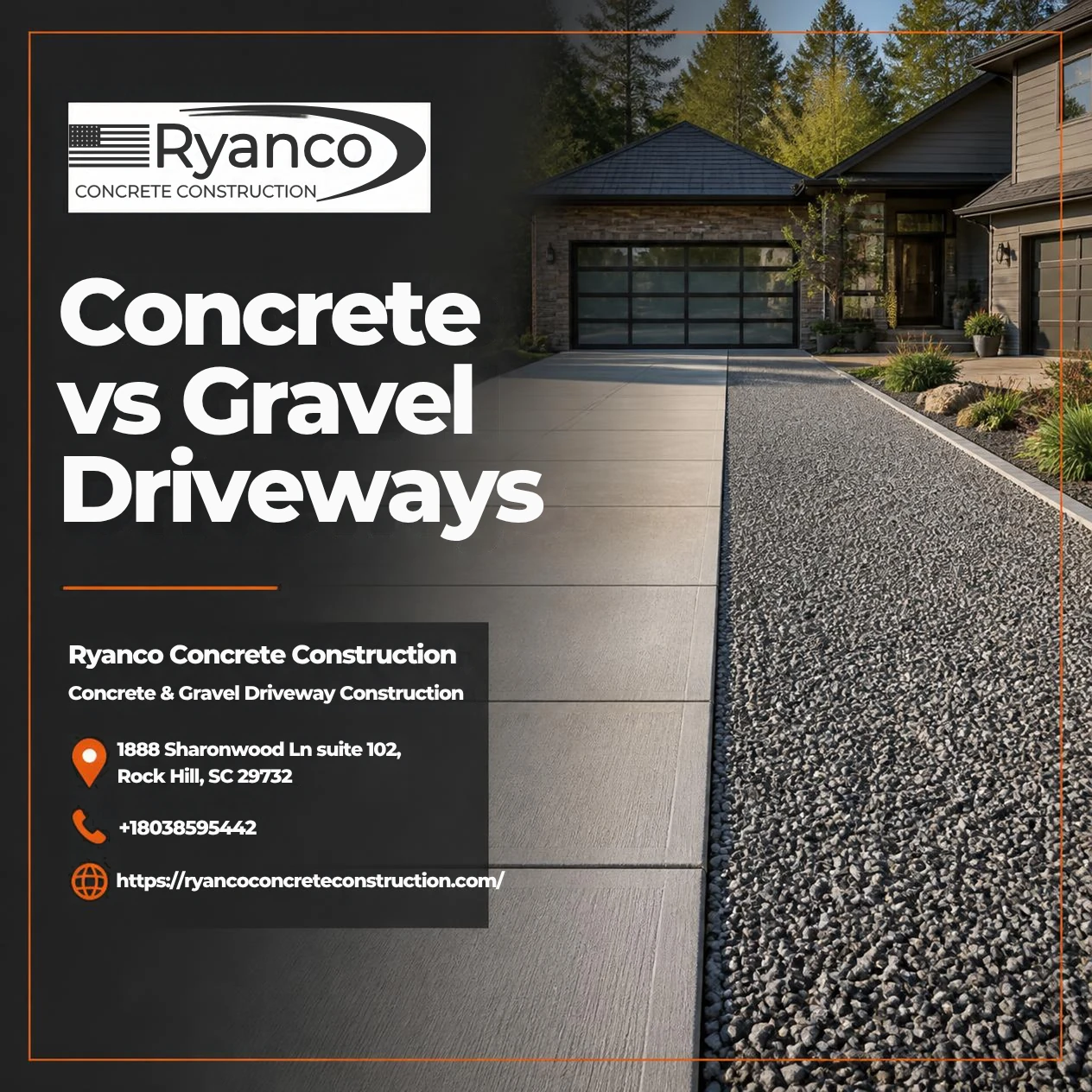
Choosing between a concrete driveway and a gravel driveway usually comes down to six practical questions: What can you spend upfront, how much maintenance are you willing to handle, how long do you want the surface to last, how important is appearance, how does water move across the property, and what types of vehicles will use the driveway?
Concrete provides a solid, finished surface with relatively low routine maintenance. Gravel usually costs less to install, drains differently, and can be easier to modify, but it requires more frequent upkeep to stay level and contained.
For homeowners comparing concrete vs gravel driveways, neither option is universally better. The right choice depends on driveway length, slope, soil conditions, drainage, vehicle use, budget, appearance goals, and how much ongoing maintenance you want to manage.
Concrete vs Gravel Driveways: What Is the Difference?
A concrete driveway is installed as a rigid slab over a prepared subgrade and base. Forms define the shape, concrete is placed and finished, and joints are added to help manage normal shrinkage and movement. Depending on the project, reinforcement, added thickness, drainage features, and decorative finishes may also be included.
A gravel driveway consists of layers of compacted aggregate rather than one continuous slab. A stable gravel driveway usually needs more than loose stone spread over soil. Proper excavation, grading, base material, compaction, and an appropriate top layer all influence how well the surface performs.
Because gravel remains a loose or semi-compacted system, it can shift under tires, rainfall, turning vehicles, and erosion. Concrete remains fixed once cured, although it can crack or settle if the supporting soil or drainage conditions create movement.
If you are considering a permanent poured surface, Ryanco Concrete Construction’s concrete driveway services can help you explore concrete options for your property.
Which Driveway Costs Less Upfront?
The materials are less expensive, and installation may require less labor than forming, placing, finishing, and curing a concrete slab.
However, gravel pricing still depends on the site. A driveway that needs extensive excavation, drainage correction, geotextile fabric, substantial base material, culverts, or multiple loads of aggregate can cost more than a simple gravel installation.
Concrete usually requires a larger initial investment. The final price can be affected by demolition, excavation, base preparation, slab thickness, reinforcement, driveway width, access, finish type, drainage work, and other site-specific needs.
The useful comparison is not simply the initial price per square foot. Homeowners should also consider future grading, additional gravel, weed management, edge maintenance, concrete repairs, sealing when appropriate, and eventual replacement.
Which Option Requires More Maintenance?
Gravel generally requires more frequent maintenance than concrete.
Vehicle traffic can create ruts, washboarding, low spots, and displaced stone. Heavy rain can wash material toward the driveway edges or downhill. Leaves, soil, weeds, and other debris can mix with the gravel over time. Periodic raking, grading, filling, and adding fresh aggregate may be necessary to restore an even driving surface.
Concrete requires less routine reshaping because the surface is fixed. Typical care may include cleaning, monitoring joints and cracks, addressing drainage problems, removing stains, and applying a suitable sealer when appropriate for the installation.
Concrete is not maintenance free. Cracks can develop, joints can deteriorate, and settlement can occur if the base loses support. Repairs may also be more involved than simply adding stone to a gravel driveway.
How Do Concrete and Gravel Compare in Durability?
Concrete and gravel are both durable in different ways.
A properly installed concrete driveway can provide a stable driving and parking surface for many years. Its performance depends heavily on subgrade preparation, base support, slab thickness, joint planning, drainage, curing, and the loads placed on it.
Gravel does not crack the way a rigid slab can. If an area develops a rut or depression, it may often be regraded or replenished rather than removed and replaced. That flexibility can be useful on properties where the ground moves or where access may need to change in the future.
However, gravel does not remain permanently in place. Tires, storms, runoff, snow removal where applicable, and routine use gradually redistribute the material. Over time, stone may need to be replaced and the surface rebuilt in worn areas.
Which Driveway Handles Drainage Better?
Gravel is often viewed as the better-draining surface because water can move through spaces between aggregate. In the right installation, this can reduce the amount of water flowing directly across the driveway surface.
That does not mean every gravel driveway drains well. Compacted fine material, underlying clay, clogged voids, poor grading, or inadequate ditches can cause water to pond or flow through the driveway in damaging ways. Running water can wash away gravel, create channels, and weaken the base.
Concrete sheds water rather than allowing much of it to pass through the slab. This makes slope and drainage planning especially important. The driveway should direct water toward an appropriate outlet rather than toward the home, garage, neighboring property, or areas where erosion can develop.
For either material, drainage should be planned before installation. Swales, culverts, channel drains, grading changes, or other measures may be appropriate depending on the site.
How Do the Two Options Compare in Appearance?
Concrete generally offers a cleaner and more finished appearance. A standard broom finish can create a simple residential look, while decorative options can add color, texture, borders, exposed aggregate, or stamped patterns.
Because concrete forms a defined slab, the edges and driving surface remain visually consistent when the installation is maintained. It can also coordinate with concrete sidewalks, patios, garage aprons, and other hardscape around the home.
Gravel creates a more informal, natural appearance. Different stone colors and sizes can complement rural, wooded, traditional, or rustic properties. On a long driveway, gravel may visually blend into the landscape more easily than a broad paved surface.
Homeowners planning several exterior improvements can review Ryanco Concrete Construction’s residential concrete services to see how a driveway may coordinate with other concrete surfaces.
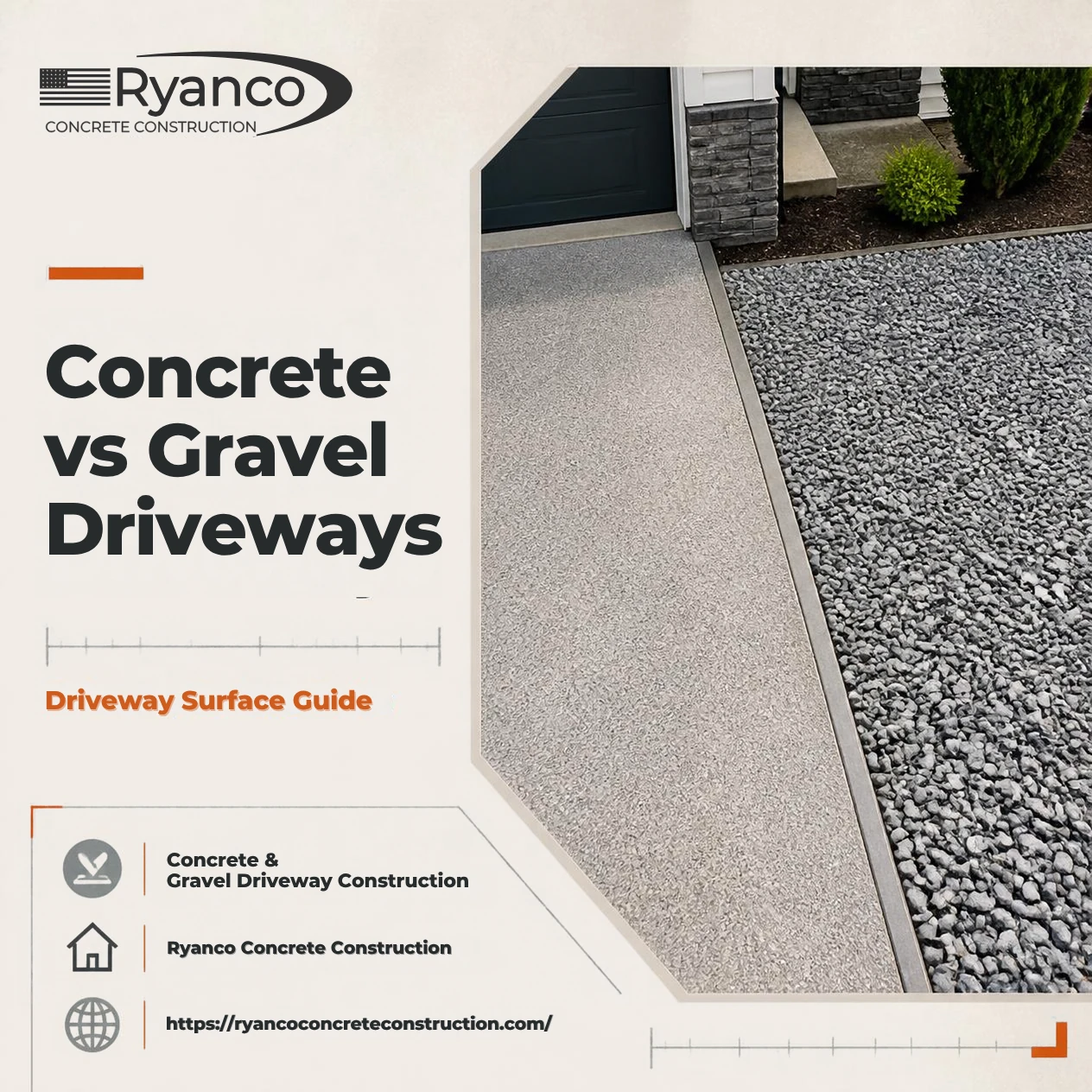
Which Surface Is Better for Heavy Vehicles?
Concrete can perform well under heavy vehicles when the driveway is designed for those loads. Slab thickness, reinforcement, base preparation, concrete strength, joint layout, and edge support all become more important when work trucks, RVs, trailers, boats, or delivery vehicles regularly use the surface.
Gravel can also support heavy vehicles when the base is deep, stable, and well compacted. In fact, aggregate bases are used in many applications specifically because properly compacted stone distributes loads effectively.
The difference is what happens at the surface. Heavy vehicles can displace gravel, create ruts, or push stone outward during turning and braking. Concrete is less likely to rut under normal residential conditions, but overloaded or poorly supported slabs can crack.
Homeowners should tell a contractor what vehicles will regularly use the driveway before choosing a design. The best surface and base for passenger cars may not be appropriate for heavier equipment.
What Are the Main Pros and Cons of Concrete Driveways?
Concrete offers a permanent, stable surface with relatively low routine maintenance. It provides a clean appearance, works well for parking and walking, can support heavy vehicles when designed correctly, and offers several finishing options.
Its main advantages include a firm surface, less routine grading, defined edges, easier snow or debris removal where relevant, and greater design flexibility than loose aggregate. It can also integrate naturally with concrete garage floors, sidewalks, patios, and other flatwork.
The tradeoffs are primarily cost and repairability. Concrete usually requires a larger initial investment than gravel. Cracks or settlements can be more complex to repair, and patched sections may remain visible. Installation also requires careful preparation, finishing, and curing before normal use.
Concrete makes the most sense when homeowners value a finished surface and are comfortable with the higher upfront investment.
What Are the Main Pros and Cons of Gravel Driveways?
Gravel’s biggest advantage is usually lower initial cost. It can be practical for long driveways, large properties, secondary access roads, and homeowners who prefer a natural or informal look.
Gravel is also flexible. Ruts and low areas can often be repaired by grading and adding material. The driveway can sometimes be widened, reshaped, or modified more easily than a concrete slab.
The main disadvantage is ongoing maintenance. Gravel moves. Tires can push it toward the edges, rainfall can wash it downhill, and traffic can create ruts or washboarding. Weed growth and material loss may also require attention.
Loose stone can be tracked into garages or surrounding areas, and walking, cycling, rolling trash bins, or moving equipment across the surface may be less comfortable than on concrete.
Gravel can be a practical choice when lower upfront cost and flexibility matter more than having a permanent paved surface.
How to Choose Between Concrete and Gravel
Start with the property rather than the material.
A short suburban driveway connected to a garage may benefit from the clean surface and lower routine maintenance of concrete. A long rural driveway may make gravel more financially practical, especially if regular grading and stone replacement are acceptable.
Consider slope and drainage carefully. Steep grades or concentrated runoff can move gravel, while concrete requires a clear plan for directing surface water. Soil stability and existing drainage patterns should be evaluated before either driveway is installed.
Next, think about use. Passenger cars, heavy trucks, trailers, RVs, turning movements, and frequent deliveries can all affect base requirements and surface design.
Then compare ownership preferences. Gravel generally saves money upfront but requires more recurring attention. Concrete generally costs more initially but provides a stable surface with less routine reshaping.
Appearance matters as well. Some homeowners want a crisp paved entrance, while others prefer gravel because it fits the scale or character of the property.
For homeowners around Rock Hill, local site conditions should be considered alongside cost and design. Ryanco Concrete Construction’s Rock Hill concrete services provide a starting point for homeowners evaluating concrete work in the area.
The right decision is the material that fits your site, budget, expected vehicle loads, drainage needs, maintenance tolerance, and long-term plans.
FAQs
Is a gravel driveway cheaper than concrete?
Gravel is generally less expensive to install upfront than concrete. However, long-term costs can include periodic grading, additional stone, weed management, drainage corrections, and repairs after erosion. Concrete costs more initially but usually requires less routine surface maintenance.
Does gravel drain better than concrete?
Gravel can allow some water to move through the surface, but drainage depends on the entire driveway system. Poor grading, compacted fines, clay soils, and inadequate ditches can still create runoff or standing-water problems. Concrete sheds water and therefore needs appropriate slope and drainage outlets.
Does concrete last longer than gravel?
Concrete can provide a long-lasting finished surface when properly installed and maintained. Gravel can also remain functional indefinitely, but it typically requires periodic replenishment and grading. The comparison is therefore between a permanent slab and a surface that can be continually renewed.
Is gravel better for a long driveway?
Gravel can be attractive for long driveways because its lower initial cost may make a large project more affordable. The tradeoff is increased maintenance, particularly where slopes, heavy rain, turning vehicles, or regular traffic move the aggregate.
Can heavy trucks use a gravel driveway?
Yes, if the base is properly designed and compacted for the expected loads. Heavy trucks can still create ruts or displace surface stone, particularly during turning or wet conditions. Concrete can also support heavy vehicles when thickness and reinforcement are designed accordingly.
Should I choose concrete or gravel for my driveway?
Choose based on upfront budget, driveway length, slope, drainage, vehicle use, appearance, and maintenance expectations. If you prefer a stable, finished surface with less recurring grading, Ryanco Concrete Construction can evaluate whether a concrete driveway is appropriate for your property.
