

A concrete walkway should do more than provide a path from one part of the property to another. Its shape, width, color, finish, and relationship to the surrounding landscaping can influence how welcoming the home feels and how naturally people move through the outdoor space.
Some homes benefit from a straight walkway that creates a direct connection to the entrance. Others look better with a gentle curve that follows planting beds or works around existing landscape features. Decorative finishes, borders, wider landings, and carefully coordinated colors can make either approach feel intentional.
The best concrete walkway design ideas balance appearance with practical flow. A walkway should be comfortable to use, wide enough for its purpose, properly connected to patios and driveways, and designed around drainage and elevation changes rather than appearance alone.
Homeowners considering new walkways or other exterior slabs can review Ryanco Concrete Construction’s concrete flatwork services for the construction side of the project.
What Are the Best Concrete Walkway Design Ideas?
The best design usually starts with where the walkway needs to lead.
A front walkway should make the route to the entrance obvious. A backyard walkway may connect a patio with a garden, fire pit, pool area, shed, or secondary seating space. Side-yard walkways often need to fit efficiently between the house and property line.
Once the route is established, the concrete can help give the space character.
A simple broom-finished walkway works well for homes where the landscaping or architecture already provides plenty of visual detail. Decorative concrete can add more interest through color, exposed aggregate, stamped textures, or contrasting borders.
Large rectangular sections can create a cleaner, contemporary look. Gentle curves can soften traditional landscapes or move around trees and planting beds. Wider landings at doors, gates, or driveway connections can make transitions feel more comfortable.
Ryanco currently lists walkways among its concrete flatwork applications and offers smooth, broomed, and decorative finish options.
The goal is not to make every walkway elaborate. It is to make the path feel like it belongs with the home and the rest of the landscape.
Straight vs Curved Walkways: Which Layout Works Best?
Straight walkways create a direct, structured approach.
They work particularly well with contemporary homes, symmetrical front elevations, formal landscapes, and properties where the shortest route is also the most logical one. Straight lines can visually reinforce windows, walls, driveways, and other architectural features.
Curved walkways create a softer experience.
A gentle curve can work around a planting bed, follow the edge of a lawn, avoid a mature tree, or gradually reveal the front entrance as someone approaches. Curves often complement traditional, cottage-style, wooded, and natural landscapes.
Concrete walkway design guidance also recognizes curved and widened entry walks as ways to create more visual interest than a narrow straight sidewalk.
The mistake is adding curves without a reason.
A path that repeatedly bends from side to side can make a short trip feel inconvenient and visually forced. If you choose a curve, keep it broad enough that walking still feels natural.
The property should determine the layout. Use a straight route when direct movement fits the architecture and a curved route when it responds to landscaping, grade, or a meaningful focal point.
How Wide Should a Concrete Walkway Be?
Walkway width should reflect how many people will use it and what they will carry along it.
A narrow garden path used occasionally by one person can be more compact than the main walkway leading from the driveway to the front door.
For residential pedestrian paths, at least 3 feet is a common minimum reference, while a 4-foot walkway provides more comfortable space for everyday movement. Concrete Network identifies 48 inches as an ideal residential sidewalk width for accommodating two people side by side and recommends avoiding overly narrow entry walks.
Main entrance walks often benefit from additional width because people may be carrying bags, walking with children, or approaching in pairs.
Widening the walkway near a doorway can also create a more generous arrival area. The same idea works where a walkway meets a driveway, patio, or gate.
Width is not purely aesthetic. Local accessibility, building, HOA, or permitting requirements may affect certain projects, so applicable local rules should be checked before dimensions are finalized.
What Decorative Concrete Finishes Work Well for Walkways?
Concrete walkways can range from straightforward to highly decorative.
A broom finish creates fine texture across the surface and suits homeowners who want a simple, practical appearance.
Exposed aggregate reveals stone within the concrete, adding natural texture and visual variation. It often works well in landscaped settings where homeowners want the walkway to blend with stone, gravel, or planting beds.
Stamped concrete can create patterns inspired by brick, slate, stone, or wood. Ryanco currently offers stamped concrete for walkways as well as patios and driveways.
Colored or stained concrete can help the path coordinate with brick, siding, stone veneer, or an existing patio.
Decorative concrete does not need to cover every inch of the walkway. A simple field with a stamped or colored border can provide enough detail without making the route visually busy.
Ryanco’s decorative concrete services currently include stamped, stained, polished, and other customizable surface options.
For exterior walkways, finish selection should consider traction and maintenance as well as appearance.
How Can Borders and Accent Bands Improve the Design?
Borders give a walkway definition.
A darker concrete border can frame a lighter main surface and make the path look more deliberate. A stamped border can add texture while leaving the center of the walkway relatively simple.
Borders can also help connect different exterior surfaces.
For example, if the driveway includes a charcoal decorative band, repeating that color along the walkway can visually connect the driveway and front entrance.
The same principle applies to patios. A walkway leading toward a backyard patio might repeat the patio border or finish to create continuity.
Accent bands can also mark transition points. A short band where the path meets a driveway, porch, or gate can make the change feel intentional rather than abrupt.
Avoid adding several unrelated borders or accent colors. One consistent detail repeated along the walkway usually creates a stronger design than constantly changing the pattern.
Think of the border as a frame, not the main picture.
What Concrete Colors Work Best for Walkways?
The most successful walkway colors usually relate to permanent materials already on the property.
Light gray provides a clean, simple appearance and works with many architectural styles.
Warm gray can soften the cooler appearance of traditional concrete and coordinate well with stone, brick, and wood.
Tan, beige, buff, and muted brown can blend naturally into landscaped yards and homes with warmer exterior colors.
Charcoal or darker gray works especially well as an accent or border.
A walkway does not need to match the driveway or patio exactly. Using related undertones is often enough to make the surfaces feel connected.
For example, a tan stone exterior could pair with warm-gray concrete containing a subtle brown accent. A white or gray contemporary home might use light-gray concrete with a charcoal border.
Also consider sunlight. Darker concrete can become more visually dominant and absorb more heat in direct sun, while lighter colors typically feel brighter and less visually heavy.
Review actual samples outdoors whenever possible rather than choosing solely from a photograph.
How to Connect Walkways With Patios, Driveways, and Entrances
Connections are where many walkway designs either feel polished or awkward.
Where a walkway meets a driveway, give people a comfortable place to step out of a vehicle and enter the path. A small widened landing can feel much more natural than forcing someone immediately into a narrow sidewalk.
Concrete Network recommends considering driveway-to-entry circulation and notes that wider landings can make entry and exit easier.
At the front door, the walkway should transition comfortably into the porch, steps, or landing.
The same principle applies in the backyard.
A walkway approaching a patio should feel like part of the patio rather than stopping suddenly at its edge. Repeating the same concrete color, border, texture, or joint pattern can help connect the two spaces.
If the surfaces use different materials, create an intentional transition. Concrete beside brick, stone, gravel, or wood can look attractive when the meeting line is planned rather than accidental.
Grade changes also need attention. Steps should appear where people naturally expect them instead of interrupting the route unexpectedly.
How Landscaping Can Improve a Concrete Walkway
Landscaping can turn a plain walkway into a much stronger design feature.
Planting beds can frame straight walkways and soften their edges. Ornamental grasses, groundcovers, and low shrubs work particularly well because they add texture without necessarily blocking the path.
Along curved walkways, landscaping can reinforce the shape. A broad bed on the inside of a curve can make the route feel more natural.
Avoid placing plants so close that mature growth constantly spills across the walking surface.
Trees also need thoughtful placement. Roots can affect nearby hardscape over time, while low branches may interfere with circulation.
Landscape lighting can improve both appearance and nighttime usability. Small path lights placed consistently along the walkway can emphasize its shape without turning the yard into a runway.
Decorative gravel can create another layer of contrast between concrete and planting beds.
The strongest designs usually use landscaping to frame the walkway rather than conceal it. Concrete provides structure; plants provide movement, color, seasonal change, and softness.
What Design Mistakes Should You Avoid?
One common mistake is making the main walkway too narrow.
A path may look proportional on paper but feel uncomfortable when two people try to use it together.
Another problem is creating unnecessary curves. A winding walkway should respond to the property rather than forcing users to take a longer route for decorative reasons.
Too many finishes can also weaken the design.
A stamped field, contrasting border, multiple colors, exposed aggregate section, and decorative medallion may each look attractive individually but compete when used together.
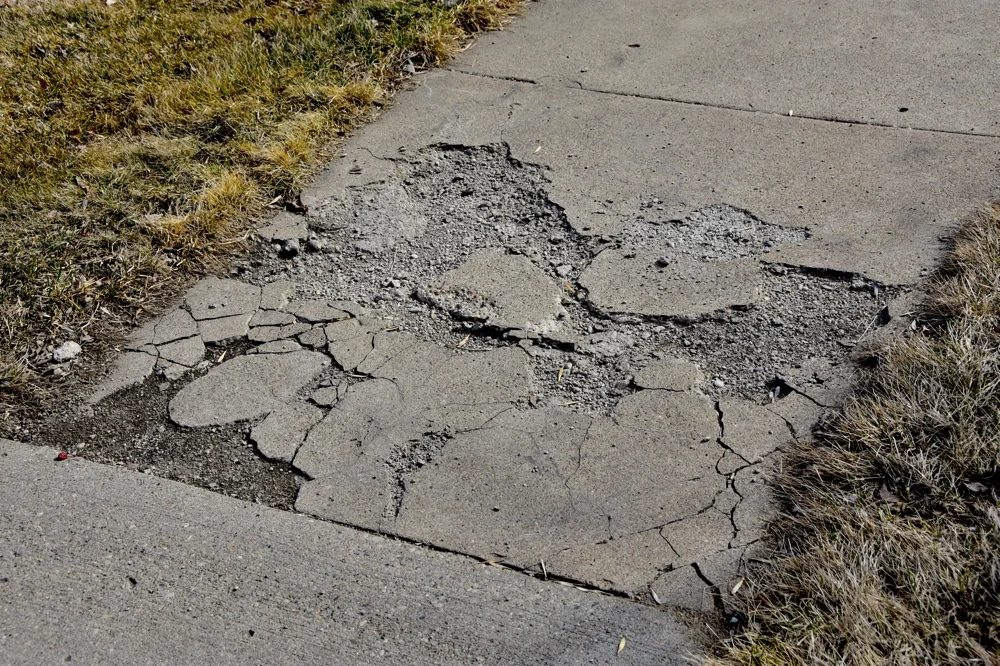
Drainage cannot be ignored. Ryanco notes that improper grading and compaction can contribute to pooling, shifting, cracks, and uneven flatwork.
Avoid placing steps unexpectedly in the middle of a route when the grade can be managed more naturally.
Finally, do not design the walkway without considering the landscape that will surround it. Plants grow, furniture moves, gates swing, and people need space to carry groceries, trash containers, garden tools, or equipment.
A good walkway should continue working after the landscaping matures.
How to Choose a Walkway Style That Fits Your Home
Begin with the architecture.
A modern home may suit a straight walkway with broad rectangular sections, light-gray concrete, restrained joints, and simple planting.
A traditional brick home may work better with gentle curves, warm concrete colors, or a decorative border that references the brick.
A cottage-style or heavily landscaped property may benefit from softer geometry and natural-looking finishes such as exposed aggregate or stone-inspired stamping.
Next, consider the walkway’s importance.
A primary front walk should feel welcoming and visually connected to the entrance. A side-yard utility path can be simpler. A backyard path between a patio and fire pit may emphasize landscape integration more than curb appeal.
Then look at other hardships.
The walkway does not need to duplicate the patio or driveway, but sharing one color, texture, border, or design element helps the property feel coordinated.
For homeowners around Rock Hill, Ryanco Concrete Construction’s Rock Hill concrete services can provide local context when planning walkways or other residential concrete improvements. Ryanco currently identifies walkways and sidewalks among its Rock Hill-area flatwork services.
The best walkway style should make the route easier to use while strengthening the relationship between the house, landscape, and other outdoor spaces.
FAQs
Is a straight or curved concrete walkway better?
Neither layout is universally better. Straight walkways provide a direct, structured route and often complement modern or formal architecture. Curved paths can soften the landscape and work around planting beds, trees, or other site features.
How wide should a front concrete walkway be?
A residential walkway should generally avoid being narrower than about 3 feet, while approximately 4 feet provides more comfortable room for everyday use and two people walking together. The final width should account for the property, intended use, and applicable local requirements.
Can a concrete walkway be stamped?
Yes. Stamped concrete can give a walkway the appearance of stone, brick, slate, or other patterns. Ryanco currently offers stamped concrete for exterior applications including walkways.
What color concrete is good for a walkway?
Light gray, warm gray, tan, beige, and other neutral colors work well with many homes. Instead of choosing a color in isolation, look for undertones already present in the home’s brick, siding, stone, roof, driveway, or patio.
Should my walkway match my driveway?
It does not need to match exactly. Repeating one element such as the concrete color, decorative border, finish, or accent tone can create visual continuity without making both surfaces identical.
How can I make a plain concrete walkway look better?
Color, borders, exposed aggregate, stamping, landscaping, lighting, wider entrance landings, and thoughtful joint patterns can all add interest. Keep the number of decorative elements controlled so the walkway complements the property rather than competing with it.
