
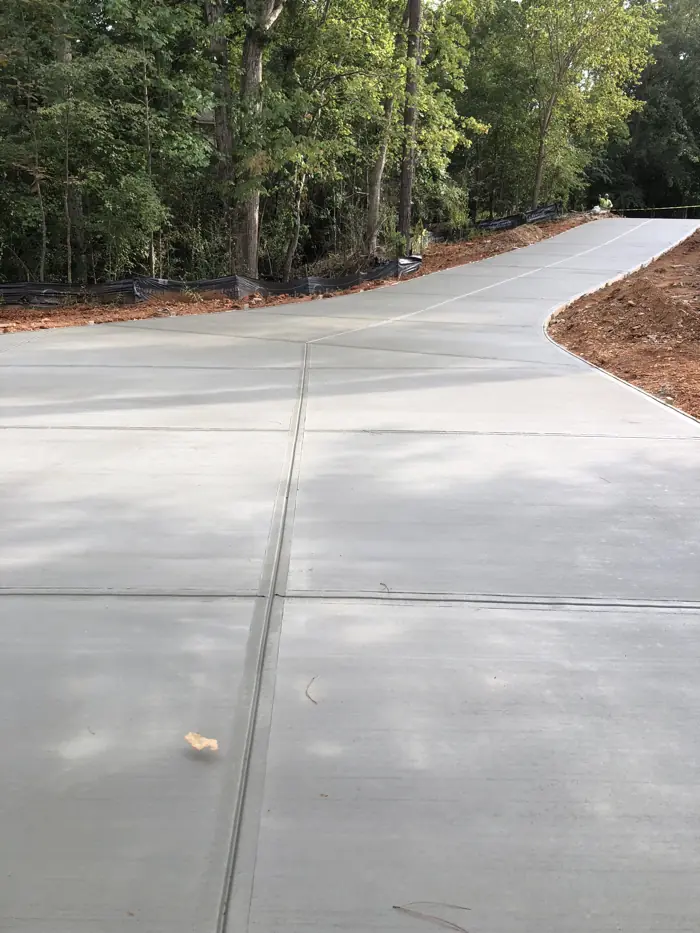
Proper driveway drainage helps protect concrete from standing water, soil erosion, and premature deterioration. The best approach combines appropriate surface slope, controlled runoff, stable grading, and drainage features that move rainwater away from vulnerable areas.
For homeowners in Fort Mill, SC, driveway drainage is particularly important during heavy rainfall and seasonal storms. Without a clear path for water to escape, moisture can collect around the driveway, weaken supporting soil, and contribute to surface problems. Understanding driveway drainage best practices can help homeowners identify potential issues before they become expensive repairs.
Why Does Driveway Drainage Matter?
Driveway drainage matters because concrete surfaces must direct rainwater away from buildings and areas where moisture can cause damage. Without proper drainage, water may collect on the driveway, erode nearby soil, or seep into cracks and joints.
Although concrete is strong enough to support regular vehicle traffic when properly designed and installed, the condition of the supporting ground remains important.
Excess moisture can soften susceptible soils, wash away poorly protected material, and contribute to uneven support beneath the slab.
Effective drainage helps homeowners:
- Prevent puddles from remaining on the driveway.
- Reduce erosion along driveway edges.
- Keep runoff away from foundations and garages.
- Limit water infiltration through existing cracks and joints.
- Protect surrounding landscaping.
- Reduce conditions that contribute to settlement and surface deterioration.
York County recognizes that hard surfaces such as concrete driveways increase stormwater runoff because they prevent much of the rainfall from soaking directly into the ground. Uncontrolled runoff can also contribute to erosion and drainage problems.
Good drainage planning should therefore consider both the driveway itself and the surrounding property.
How Much Slope Should a Driveway Have?
A concrete driveway needs enough slope to allow water to move across its surface instead of collecting in low areas. However, there is no single slope percentage suitable for every residential driveway.
The appropriate slope depends on the property’s natural grade, driveway length, garage elevation, surrounding terrain, and local requirements.
Understanding driveway slope
Slope describes how much the driveway rises or falls over a specific distance.
For example, a 2% slope represents approximately two inches of elevation change over every 100 inches of horizontal distance, or about 2.4 inches over 10 feet.
This is an illustration of how slope is measured, not a required specification for every property.
Longitudinal slope versus cross slope
Driveways may use two types of slope to manage water.
Longitudinal slope follows the driveway’s length, allowing water to travel toward a suitable collection or discharge area.
Cross slope moves water sideways toward an edge or approved drainage feature.
Some properties require a combination of both.
Why steeper is not always better
A steeper driveway may drain quickly, but excessive slope can create vehicle access problems, scraping near garage entrances, or rapid runoff that damages nearby landscaping.
A driveway that is too flat may allow puddles to develop, particularly where construction tolerances, settlement, or small surface depressions interrupt the drainage path.
The goal is to establish a consistent, practical grade that moves water without introducing new problems.
Professional site evaluation helps determine a suitable approach for each property.
Where Should Driveway Water Be Directed?
Driveway runoff should flow toward a suitable drainage area that can receive and manage the water without causing erosion, flooding, or damage.
The correct destination depends on the property’s layout and the available stormwater infrastructure.
Away from the house and garage
Water should not collect against the home’s foundation or flow toward the garage entrance.
If a driveway slopes toward the house, a drainage collection system may be needed to intercept runoff before it reaches the building.
Toward appropriate drainage areas
Depending on the site, runoff may be directed toward an approved swale, collection drain, or other designed stormwater feature.
A swale is a shallow, graded channel that helps carry water across the landscape.
Vegetated swales may also slow runoff and reduce erosion when properly designed.
Away from neighboring properties
Redirecting driveway water across a property boundary can create drainage disputes or damage neighboring landscaping and structures.
Homeowners should avoid creating new concentrated discharge points that send large volumes of water onto adjacent properties.
Into authorized stormwater systems
Some properties have access to drainage infrastructure that can receive driveway runoff, subject to local requirements and system capacity.
Connections to public stormwater systems should not be made without confirming the appropriate authorization.
Stormwater must also be kept separate from sanitary sewer systems.
A useful drainage plan considers where the water travels after leaving the driveway, not simply whether it disappears from the concrete surface.
How Poor Drainage Can Damage Concrete
Poor drainage can affect a concrete driveway in several ways, particularly when runoff repeatedly saturates or removes material supporting the slab.
Soil erosion beneath the edges
Water flowing along an unprotected driveway edge can gradually wash away surrounding soil.
If erosion progresses beneath the concrete, the affected section may lose support.
This can increase the risk of cracking or settlement under vehicle loads.
Subgrade weakening
The subgrade is the soil beneath the driveway’s prepared base.
Some soils lose strength when excessively wet. Repeated saturation can affect the stability of the pavement structure, particularly when drainage and compaction are inadequate.
Uneven settlement
Where soil becomes unstable or material is washed away, sections of the driveway may settle differently.
This can produce low spots, uneven joints, or changes in the surface slope that trap even more water.
Moisture entering cracks
Existing cracks and joints can allow water to enter the underlying pavement structure.
While not every crack causes serious damage, repeated moisture intrusion can contribute to additional deterioration when combined with weak supporting soil or vehicle loading.
Erosion around adjacent surfaces
Poor driveway runoff management may also affect nearby sidewalks, planting beds, retaining walls, and lawn areas.
Addressing the overall drainage pattern can help protect more than the concrete driveway alone.
Can Standing Water Cause Cracks or Surface Damage?
Standing water does not automatically cause concrete to crack. However, persistent puddles can reveal drainage problems that contribute to deterioration over time.
Concrete can tolerate ordinary exposure to rainfall. The concern is prolonged moisture accumulation combined with other conditions, such as inadequate slab support, existing cracks, or poor grading.
Water infiltration
Water can enter cracks, control joints, and damaged areas.
If underlying soil becomes saturated or loses material through erosion, the concrete may experience uneven support.
Vehicle weight can then place additional stress on affected sections.
Surface staining and deposits
Standing water may leave behind dirt, mineral deposits, or organic material.
These conditions can cause discoloration and make the driveway more difficult to maintain.
Slippery surfaces
Persistent moisture can encourage algae or other biological growth in shaded areas.
These deposits can create slippery conditions for pedestrians, especially where the concrete has a relatively smooth finish.
Identifying recurring puddles
Homeowners should pay attention to puddles that repeatedly form in the same location.
A shallow area that dries shortly after rainfall may not indicate serious structural trouble. However, water that remains for extended periods deserves closer inspection.
The important question is why the water is collecting.
Sometimes the problem involves debris blocking an existing drain. In other cases, the driveway may have an inadequate slope, a settled section, or runoff entering from elsewhere on the property.
When Are Trench Drains or Channel Drains Useful?
Trench drains and channel drains can be useful when driveway grading alone cannot safely move water away from buildings or other vulnerable areas.
These drainage systems collect surface runoff through a narrow opening or grate and transport it toward a suitable discharge location.
Driveways sloping toward a garage
One common application is a driveway that slopes downward toward a garage.
A properly designed channel drain near the garage entrance may intercept surface water before it reaches the building.
However, the drain must have sufficient capacity and a suitable outlet.
Low points along the driveway
A drain may help collect runoff at a low point where changing the pavement slope is impractical.
This can be especially relevant when existing structures, property boundaries, or road elevations limit grading options.

Driveways receiving runoff from surrounding land
Some driveways collect water from adjacent lawns, sloped yards, or other paved surfaces.
A collection drain may help manage this additional runoff when the drainage system is designed for the expected flow.
Important drainage design considerations
Installing a trench drain involves more than placing a grate in the concrete.
The design should account for:
- Expected water volume during rainfall.
- Drain location and elevation.
- Appropriate grate strength for vehicle traffic.
- Pipe sizing and outlet location.
- Sediment and debris accumulation.
- Maintenance access.
- Local drainage requirements.
A channel drain without a functional outlet may simply become another place for water to collect.
Drainage improvements should always address the complete water path from collection to discharge.
How Gutters and Downspouts Affect Driveway Drainage
Gutters and downspouts play an important role in driveway drainage because they control rainwater flowing from the roof.
When roof runoff empties directly onto a concrete driveway, it can create concentrated water flow that the driveway’s existing slope may not handle effectively.
Downspouts discharging onto concrete
A downspout positioned beside a driveway may release large amounts of water during storms.
Repeated concentrated runoff can contribute to puddles, staining, and erosion along the concrete edges.
Where appropriate, downspout extensions or properly designed drainage pipes may help direct this water toward a suitable discharge area.
Clogged gutters
Leaves, dirt, and debris can prevent gutters from carrying water efficiently.
When gutters overflow, water may fall directly onto the driveway or adjacent landscaping.
Regular gutter maintenance can help reduce unnecessary runoff concentration.
Underground downspout drainage
Some homes use underground pipes to carry roof runoff away from buildings and paved surfaces.
These systems require proper pipe slope, suitable outlets, and periodic maintenance.
A blocked or damaged underground pipe may cause water to back up near the driveway.
Coordinating roof and driveway drainage
A driveway drainage plan should consider nearby roof surfaces, gutter discharge points, and surrounding landscape grades.
Managing these water sources together is generally more effective than treating each problem separately.
What Signs Point to a Driveway Drainage Problem?
Drainage problems are not always obvious during dry weather. Many become noticeable only after significant rainfall.
Homeowners should inspect their driveways during and after storms, provided conditions are safe.
Common warning signs include:
Puddles that repeatedly form in the same areas
Standing water after rainfall may indicate a low spot, settlement, or insufficient surface slope.
Watch whether the puddle disappears promptly or remains long after nearby pavement has dried.
Soil washing away along driveway edges
Exposed roots, small channels in the soil, or disappearing landscaping material may indicate concentrated runoff.
This erosion can eventually affect the support beneath the concrete.
Water flowing toward the garage
Rainwater moving toward the garage door is an important warning sign.
Even if water has not entered the building, a significant storm may overwhelm an inadequate drainage path.
Cracks accompanied by low spots
Cracking and uneven pavement can develop for several reasons, including soil movement, loading, and construction conditions.
However, cracks occurring near recurring puddles may indicate a drainage-related support problem.
Sediment or debris accumulation
Dirt, mulch, and leaves repeatedly collecting in the same driveway location can reveal the direction and concentration of runoff.
Wet soil beside the driveway
Persistently saturated ground near the driveway edge may indicate poor drainage, a blocked outlet, or water entering from another part of the property.
Water entering nearby structures
Moisture appearing in a garage, basement, or other adjacent space during rainfall requires attention.
The source should be identified rather than assuming the driveway is solely responsible.
Recognizing these patterns early can make it easier to address drainage problems before deterioration becomes more extensive.
When Is Concrete Repair Needed?
Concrete repair may be appropriate when drainage problems have contributed to cracking, uneven surfaces, damaged edges, or localized deterioration.
However, repairs should not begin without considering the underlying water problem.
Sealing a crack or patching a damaged area may improve the surface, but the issue can return if runoff continues to undermine the driveway.
Minor cracks and surface damage
Small, stable cracks may be candidates for appropriate sealing or repair.
The condition of the surrounding concrete and the source of moisture should be evaluated before selecting a repair method.
Uneven concrete sections
When driveway sections settle, they can create depressions that collect water.
Depending on the severity and underlying support conditions, corrective work may involve leveling, localized reconstruction, or other repairs.
Eroded driveway edges
If water has removed supporting material along a driveway edge, restoring surface appearance alone may not address the problem.
The affected base or soil may need attention, along with improvements to runoff control.
Widespread deterioration
Extensive cracking, repeated settlement, or significant loss of support may require more substantial corrective work.
The appropriate solution depends on the condition of the concrete and the cause of the damage.
At Ryanco Concrete Construction, we help homeowners evaluate damaged concrete surfaces and identify practical repair options.
Homeowners can learn more about our concrete repair services when cracking, settlement, or surface deterioration requires professional attention.
The priority should be addressing both the visible damage and the conditions contributing to it.
Driveway Drainage Planning in Fort Mill
Driveway drainage planning in Fort Mill, South Carolina, should account for the property’s natural slope, surrounding development, rainfall patterns, and existing stormwater infrastructure.
Residential properties may have different drainage conditions depending on their location, subdivision layout, and nearby roads.
A driveway on a sloping lot may require a different approach from one situated on relatively level ground.
Managing runoff during heavy rainfall
Fort Mill receives rainfall throughout the year, and thunderstorms can produce periods of concentrated runoff.
Driveways should be planned with an appropriate drainage path that accounts for water reaching the concrete from neighboring landscape areas, rooftops, and other paved surfaces.
Homeowners should pay particular attention to areas where several drainage paths converge.
Understanding local stormwater considerations
The Town of Fort Mill maintains a stormwater management program that addresses runoff, erosion prevention, stormwater infrastructure, and water quality.
Some residential drainage changes may require review or coordination with the appropriate local authority.
The responsible jurisdiction matters because properties with Fort Mill mailing addresses may fall inside town limits or within unincorporated York County.
For work affecting drainage infrastructure, homeowners should verify applicable requirements before changing discharge locations or making connections.
Neighborhood drainage systems
Some Fort Mill communities rely on shared drainage infrastructure, including stormwater ponds, swales, and other collection features.
The Town of Fort Mill explains that responsibility for some neighborhood stormwater facilities may belong to the HOA or individual property owners, depending on the infrastructure’s location and ownership.
Homeowners should avoid altering shared drainage routes without confirming the applicable restrictions.
Planning before concrete installation
Drainage decisions are easier to incorporate before the driveway is poured.
At Ryanco Concrete Construction, we consider grading, site preparation, and driveway layout when discussing new concrete projects with homeowners.
A practical planning process involves reviewing existing elevations, identifying the intended runoff direction, and recognizing any drainage features that may be needed.
For more information about driveway construction options, visit our concrete driveway services.
Homeowners can also explore our Fort Mill service area to learn about the communities we serve.
FAQs About Concrete Driveway Drainage
What is the best slope for a concrete driveway?
The best slope depends on the property’s grade, driveway length, garage elevation, and drainage requirements. A consistent slope should direct water away from vulnerable areas without creating access or erosion problems. There is no universal slope suitable for every driveway.
Why does water keep pooling on my concrete driveway?
Recurring puddles may result from insufficient slope, settled concrete, blocked drains, or low spots in the surface. Runoff from gutters or nearby landscaping can also contribute. Identifying the source helps determine the appropriate solution.
Can a driveway drain prevent flooding near my garage?
A properly designed channel or trench drain can help intercept runoff before it reaches the garage. However, its effectiveness depends on drain capacity, placement, maintenance, and a suitable discharge outlet. Severe runoff may require additional drainage improvements.
Does sealing a concrete driveway fix drainage problems?
No. Concrete sealing may help limit moisture absorption and surface staining, but it does not correct improper grading, blocked drains, or soil erosion. Drainage problems should be addressed separately.
Can poor drainage cause a concrete driveway to sink?
Yes. If uncontrolled water flow erodes material beneath the slab or weakens susceptible supporting soil, portions of the driveway may settle. Other factors, including inadequate compaction, can also contribute to settlement.
Should I repair driveway cracks before fixing drainage?
The correct order depends on the severity of the damage. In many situations, identifying and correcting the drainage problem first helps prevent similar damage from developing after repairs. A professional assessment can determine whether immediate concrete repairs are also necessary.
Protect Your Driveway With Proper Drainage Planning
Water management is an important part of keeping a concrete driveway functional and maintaining stable conditions around the property. Appropriate grading, clear runoff paths, and properly designed drainage features can help prevent standing water, soil erosion, and avoidable deterioration.
At Ryanco Concrete Construction, we understand that every property has different drainage challenges. Whether your driveway is located on a sloped lot, collects runoff near the garage, or develops recurring puddles after rainfall, understanding the cause is the first step toward finding a practical solution.
We work with homeowners in Fort Mill and surrounding communities on concrete driveway projects, considering site conditions, preparation, and grading as part of the planning process.
If your existing driveway has visible damage or you are preparing for new concrete work, discussing drainage considerations early can help you make more informed decisions.
Contact Ryanco Concrete Construction at (803) 548-0595 to discuss your driveway project and request an estimate.
