
Choosing between exposed aggregate and stamped concrete usually comes down to how you want the finished surface to look, feel, and perform. Both are decorative concrete finishes, but they create very different results. Exposed aggregate highlights the stone within the concrete for a naturally textured appearance, while stamped concrete uses patterns and color to imitate materials such as stone, brick, slate, or wood.
For homeowners comparing exposed aggregate vs stamped concrete, the better finish depends on budget, design preferences, traction needs, maintenance expectations, and where the concrete will be installed. A patio may prioritize appearance and comfort underfoot, while a driveway or walkway may place more emphasis on texture, durability, and everyday use.
Neither finish is automatically better for every project. Understanding how they differ in appearance, cost, maintenance, repairs, and design flexibility can make it easier to choose the right decorative concrete finish for your property.
Exposed Aggregate vs Stamped Concrete: What Is the Difference?
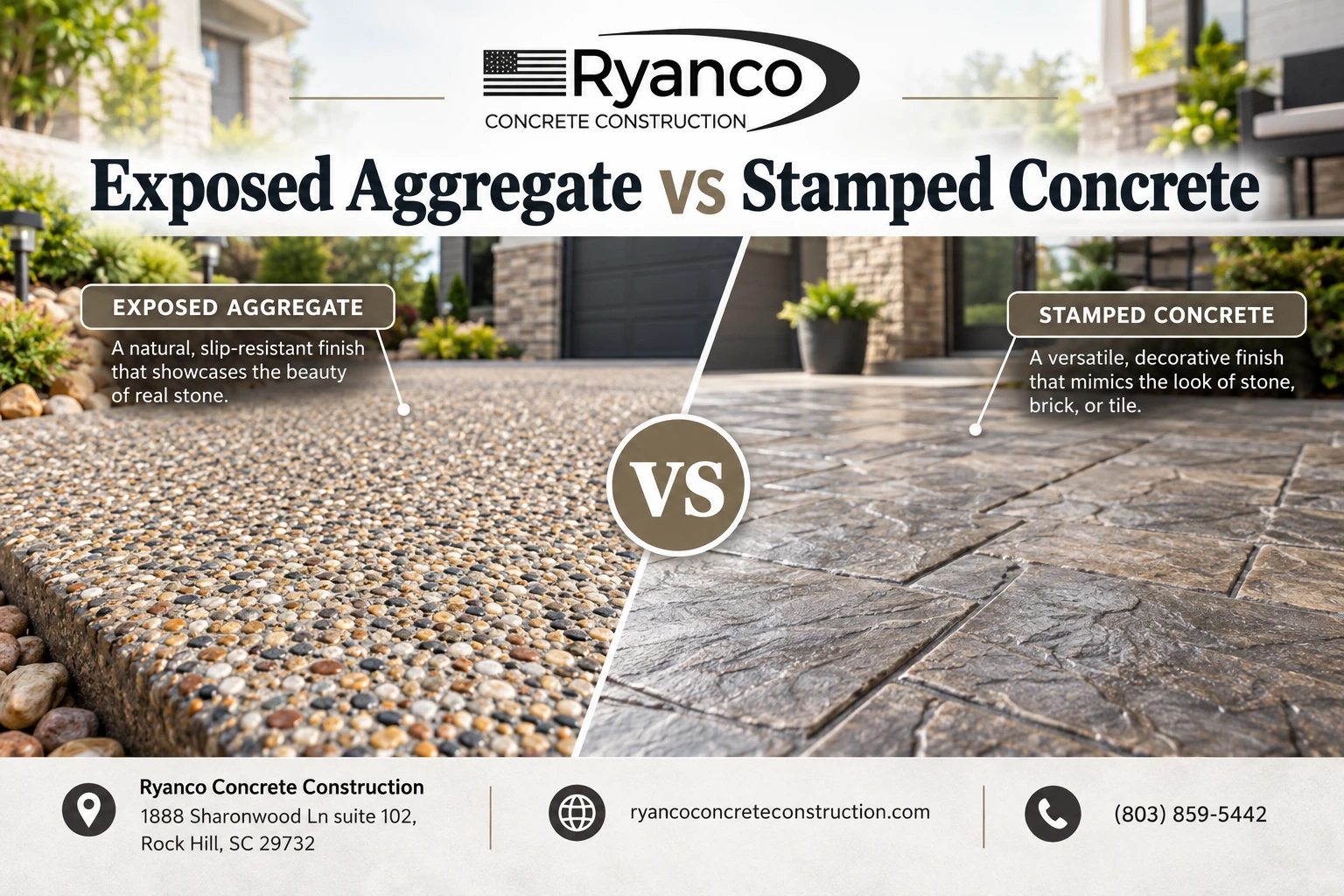
Exposed aggregate is created by revealing the decorative stone near the surface of the concrete. During installation, the top layer of cement paste is removed or delayed so the aggregate beneath becomes visible. The result is a textured surface where the color, size, and shape of the stone become part of the finished design.
Stamped concrete starts with freshly placed concrete that is colored or otherwise prepared for a decorative finish. Texturing mats or stamping tools are then pressed into the surface to create patterns that can resemble flagstone, brick, slate, cobblestone, wood planks, or other materials.
Both finishes begin with concrete, so the quality of the slab beneath the decorative surface still matters. Proper base preparation, placement, joint planning, curing, and drainage all influence long-term performance.
The key difference is visual. Exposed aggregate showcases real aggregate within the slab, while stamped concrete creates a designed pattern on the surface.
Homeowners exploring either finish can review Ryanco Concrete Construction’s decorative concrete services for more information about decorative options.
Which Option Offers More Design Variety?
Stamped concrete generally offers more design variety because homeowners can combine patterns, colors, borders, and textures.
A stamped patio might imitate large natural-stone slabs, traditional brick, random flagstone, or another patterned material. Different color combinations can be used to add contrast, create borders, or make the surface look more like the material being represented.
Exposed aggregate offers a different type of customization. Its appearance depends heavily on the aggregate used. Stone size, color, shape, and blend can dramatically change the finished surface. A mix with light river stone creates a different effect from a darker or more varied aggregate blend.
Exposed aggregate tends to provide a more organic appearance, while stamped concrete gives homeowners more control over the specific pattern or architectural style.
If highly customized patterns are the priority, stamped concrete may offer more possibilities. If you prefer a natural texture where the stone itself becomes the visual feature, exposed aggregate may be more appealing.
How Do the Two Finishes Compare in Appearance?
Appearance is one of the biggest reasons homeowners choose either finish.
The exposed aggregate has a textured, natural look. Because the stones within the surface are visible, the finish has built-in variation in color and shape. It often works well around landscapes, garden paths, pool areas, driveways, and patios where homeowners want a decorative surface that does not look overly formal.
Stamped concrete can create a more intentionally designed appearance. Patterns can resemble stone, brick, slate, or other materials, and color can be adjusted to complement the home, landscaping, or nearby hardscape.
The visual difference also affects how each surface ages. Exposed aggregate naturally contains variation, so small changes in color or wear may be less visually obvious. Stamped concrete depends more heavily on pattern definition and color consistency, making fading or surface wear potentially more noticeable over time.
The better look is subjective. Some homeowners prefer the natural character of visible stone, while others want the structured pattern and broader style choices that stamped concrete provides.
Which Surface Provides More Texture and Traction?
Exposed aggregate generally has a naturally textured surface because the tops and edges of the aggregate are visible. That texture can provide useful traction for exterior areas that may become wet.
The exact feel depends on the aggregate and how aggressively the surface is exposed. Some exposed aggregate finishes are relatively comfortable underfoot, while deeper exposure or larger stone can create a rougher surface.
Stamped concrete can also be textured, but traction varies considerably by pattern, finishing method, and sealer. A deeply textured stone pattern may provide more grip than a smoother stamped design. Some sealers can change how the surface feels when wet, so the complete finish system should be considered rather than the pattern alone.
This matters for walkways, pool-adjacent areas, sloped surfaces, and other locations where footing is important.
A decorative finish should balance appearance with function. The surface needs to suit the way people will actually walk, drive, or spend time on it.
Which Option Costs More?
The cost difference between exposed aggregate and stamped concrete depends on the design, materials, labor, and site conditions.
Stamped concrete can cost more when the project includes multiple colors, complex patterns, decorative borders, specialty release products, detailed hand finishing, or complicated layouts. The stamping process also requires careful timing because the pattern must be applied while the concrete is at the appropriate stage of setting.
Exposed aggregate also requires specialized finishing. Contractors must expose the aggregate evenly without removing too much surface paste or creating inconsistent areas. Decorative aggregate selections may also affect material cost.
Project size, demolition, site access, grading, slab thickness, reinforcement, drainage, and base preparation can influence either option more than the finish alone.
Instead of comparing only a decorative finish price, homeowners should request complete estimates for the finished project. That makes it easier to compare the actual installed cost of each option under the same site conditions.
How Do Maintenance Requirements Compare?
Both exposed aggregate and stamped concrete benefit from routine cleaning and periodic inspection, but their maintenance priorities can differ.
Exposed aggregate may be sealed to help protect the surface and enhance the appearance of the aggregate. Dirt can collect within the textured surface, so occasional cleaning may be needed to keep the stone looking defined.
Stamped concrete may also be sealed, particularly when color enhancement or surface protection is desired. Over time, the sealer can wear in high-traffic areas. Color and pattern definition may also benefit from appropriate maintenance.
Neither finish eliminates normal concrete concerns. Cracks, drainage problems, joint deterioration, stains, or movement can still occur because the decorative finish sits on a concrete slab.
Homeowners should also avoid assuming that more frequent sealing automatically produces better results. The correct maintenance schedule depends on the specific sealer, exposure, traffic, weather, and condition of the surface.
Following the installer’s maintenance recommendations is usually more useful than applying a one-size-fits-all schedule.
Which Finish Is More Durable?
Both finishes can be durable because both are part of a concrete surface. The slab design and installation quality usually have a major influence on longevity.
Exposed aggregate can handle regular exterior use well when it is properly installed. Because the aggregate itself forms part of the visible surface, there is no stamped pattern to lose definition. However, excessive wear or surface deterioration can loosen aggregate or change the texture.
Stamped concrete can also provide long-term service when the slab, color system, texture, curing, and sealer are properly managed. Surface wear may gradually affect color or pattern definition, especially in heavily used areas.
Neither finish prevents cracking caused by movement, poor support, drainage problems, or other underlying conditions. Proper joints and base preparation remain important regardless of the decorative treatment.
For durability, homeowners should pay as much attention to how the concrete is designed and installed as they do to the finish selected.
How Do Repairs Differ Between the Two?
Repairs can be challenging with either decorative finish because matching an existing surface is not always simple.
With exposed aggregate, a patch may contain aggregate that differs in color, size, distribution, or exposure from the surrounding area. Even when a similar stone is used, matching an older weathered surface can be difficult.
Stamped concrete presents a different matching challenge. A repair may need to reproduce both the original pattern and the color. If the stamp pattern, release color, stain, or finishing technique is not matched closely, the repaired section can remain visible.
Small cracks do not always require full replacement, but the proper repair depends on the cause, width, movement, and condition of the surrounding slab.
Before repairing either finish, the underlying issue should be evaluated. If settlement, erosion, drainage, or base movement caused the damage, a cosmetic repair alone may not prevent the problem from returning.
Which Option Works Better for Patios, Walkways, and Driveways?
Both finishes can work for patios, walkways, and driveways, but the priorities change with the application.
For patios, stamped concrete is often considered when homeowners want a defined pattern or a surface that coordinates closely with an outdoor living design. Exposed aggregate can provide a more natural look and pronounced texture.
For walkways, traction and comfort underfoot become especially important. Exposed aggregate offers natural texture, while stamped concrete can provide a patterned path with varying levels of surface texture depending on the design.
For driveways, both appearance and vehicle use matter. Exposed aggregate can create a textured entrance, while stamped concrete can provide a more decorative statement. Finish selection should also account for turning traffic, tires, drainage, and maintenance.
Homeowners in the Rock Hill area can review Ryanco Concrete Construction’s Rock Hill concrete services when considering decorative concrete for local residential projects.
The best finish should match both the visual goal and the way the surface will be used every day.
How to Choose the Right Decorative Concrete Finish
Start with appearance, but do not stop there.
If you want a natural, stone-rich surface with visible texture, exposed aggregate may fit your project. If you want concrete that imitates a specific material or provides a coordinated pattern and color scheme, stamped concrete may be a better design match.
Next, think about traction. Areas that frequently get wet or have a slope may need more attention to texture. Discuss the planned exposure level, stamp pattern, and sealer with your contractor so appearance does not come at the expense of practical footing.
Maintenance preferences also matter. Both finishes may require cleaning and sealing depending on the installation, but stamped concrete may need more attention to maintaining color and decorative definition.
Consider repair expectations as well. Neither finish is invisible to repair, and matching aged decorative concrete can be difficult. Good installation and drainage are therefore especially important from the beginning.
Finally, compare complete project estimates rather than focusing only on the decorative finish. The slab, site preparation, access, drainage, dimensions, reinforcement, and design complexity can all affect cost.
Ryanco Concrete Construction also offers stamped concrete services for homeowners who want to explore patterned decorative finishes in more detail.
The right choice is the finish that balances appearance, texture, maintenance, cost, and the actual demands of the space.
FAQs
Is exposed aggregate cheaper than stamped concrete?
It can be, but not always. Stamped concrete may cost more when it includes detailed patterns, several colors, borders, or complex hand finishing. Exposed aggregate pricing also varies based on aggregate selection, finishing requirements, project size, and site preparation.
Is exposed aggregate more slip resistant than stamped concrete?
Exposed aggregate generally provides noticeable surface texture that can improve traction. Stamped concrete can also be textured, but traction varies according to the pattern, finishing method, and sealer. The intended use of the surface should guide the final texture choice.
Does stamped concrete require more maintenance?
Stamped concrete may require more attention to color and sealer condition, especially where appearance is a major priority. Exposed aggregate also benefits from cleaning and may be sealed to protect and enhance the surface. Maintenance needs depend on exposure and use.
Which finish is better for a patio?
Either can work well. Stamped concrete offers more pattern and color options, while exposed aggregate provides natural stone texture and a less formal appearance. The right finish depends on the patio design, desired feel, traction needs, and maintenance expectations.
Can exposed aggregate crack?
Yes. Exposed aggregate is still concrete, so cracking can occur from shrinkage, settlement, movement, poor support, drainage problems, or other stresses. Proper base preparation, joint planning, curing, and drainage can help manage the risk.
Should I choose exposed aggregate or stamped concrete?
Choose based on the look you want, where the surface will be installed, traction needs, maintenance preferences, and budget. Ryanco Concrete Construction can help evaluate decorative concrete options and explain how each finish may perform for your specific project.
