
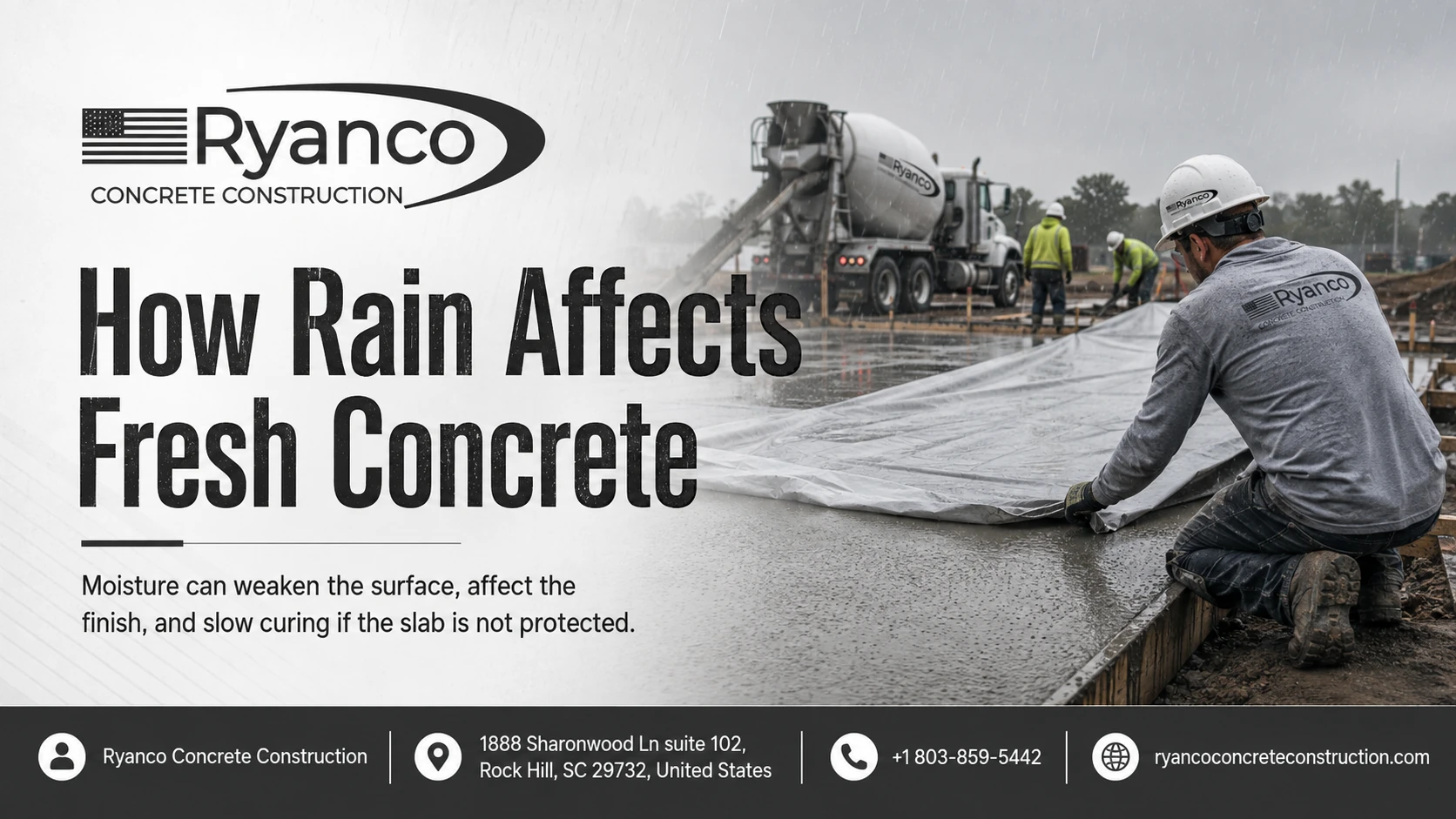
Rain does not automatically ruin newly poured concrete, but the timing and intensity of the rainfall matter. Concrete is especially vulnerable while the surface is still fresh and before it has developed enough strength to resist disturbance. Heavy rain shortly after placement can wash cement paste from the surface, affect the finish, create discoloration, or interfere with proper curing.
A light rain after concrete has progressed further may have little effect, while a sudden downpour immediately after finishing can cause more noticeable problems. Homeowners should avoid assuming that every wet surface needs replacement. Instead, look for visible changes and have questionable areas evaluated by a concrete professional.
How Does Rain Affect Fresh Concrete?
Rain can affect fresh concrete by adding unwanted water to the surface and physically disturbing concrete that has not hardened enough to resist it.
The severity depends on when the rain begins, how hard it falls, how long it lasts, and how far the concrete has progressed after placement. Concrete that was poured only moments earlier is generally more vulnerable than concrete that has already begun setting.
Rainwater can interfere with the carefully proportioned mixture near the surface. If significant water becomes incorporated into fresh concrete or washes across an unfinished surface, it may contribute to a weaker or less durable surface layer.
Rain can also affect appearance. A freshly finished driveway, patio, sidewalk, or slab may develop rough areas, marks, uneven coloring, or changes in texture after exposure.
These possibilities do not mean rain always causes serious damage. The condition of the concrete after the storm is more important than the simple fact that rainfall occurred.
What Happens If It Rains Right After Concrete Is Poured?
Rain immediately after concrete placement creates greater concern because the material has had very little time to begin hardening.
If concrete is still being placed or finished, rainfall can disturb the surface and introduce additional moisture where it is not wanted. Heavy drops can leave marks, wash away some surface material, or interfere with the finish contractors are trying to create.
A strong downpour can be especially problematic when water begins pooling on top of the slab. Trying to finish that excess water into the concrete can create additional surface issues, which is why contractors monitor weather conditions carefully before and during placement.
If rain occurs shortly after your concrete is poured, avoid walking on the surface or trying to fix marks yourself. Allow the contractor to determine whether protection is needed and evaluate the concrete after conditions improve.
Can Rain Damage Fresh Concrete?
Yes, rain can damage fresh concrete, although the amount of damage varies considerably from one situation to another.
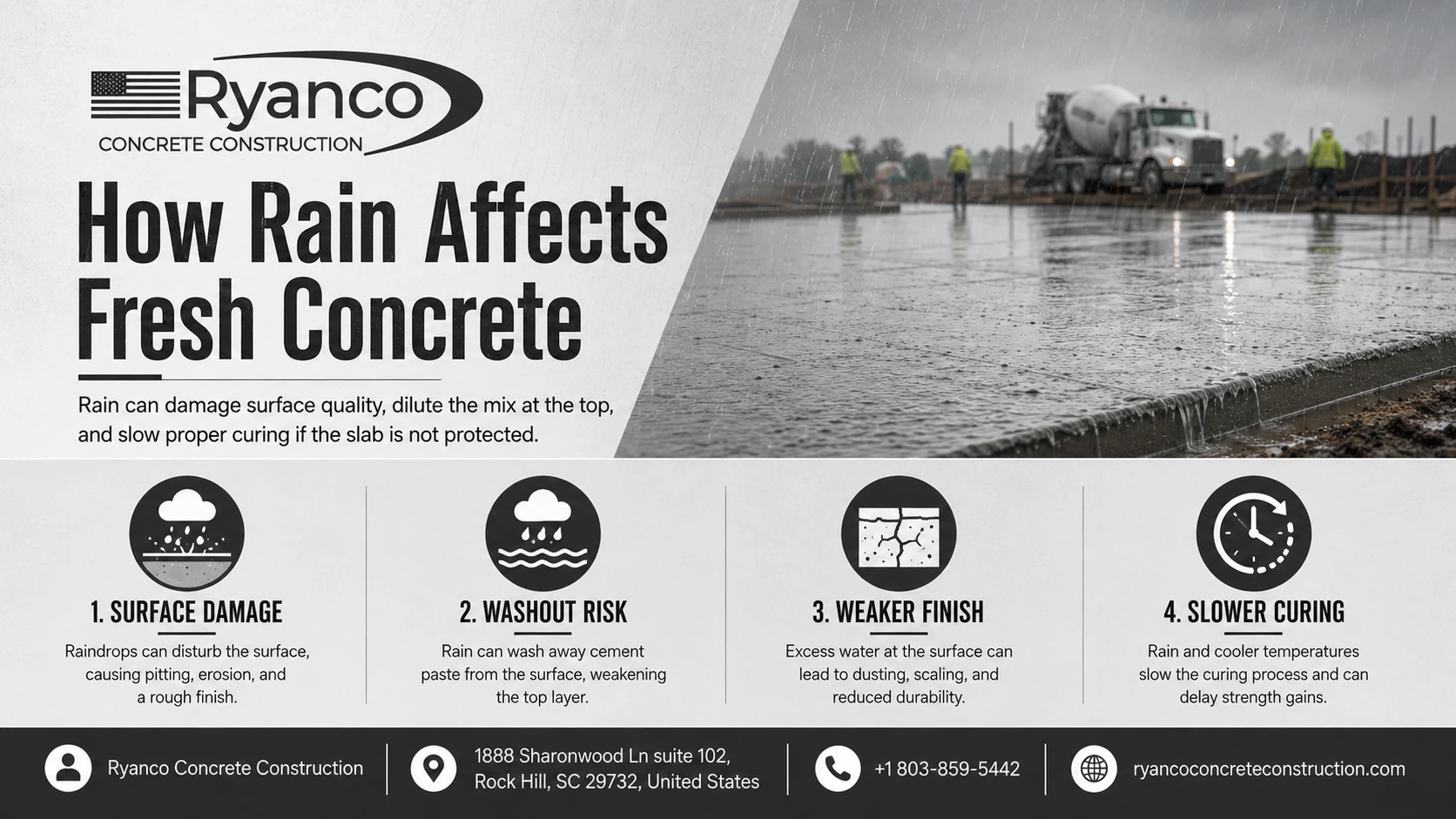
Potential problems include surface erosion, weakened surface paste, irregular texture, discoloration, and visible rain marks. More significant exposure during a vulnerable stage can also raise questions about the durability of the finished surface.
Timing is a major factor. Rain falling while concrete is very fresh presents different concerns from rain that occurs after the material has already developed enough resistance at the surface.
Rain intensity matters as well. A brief, light shower may have far less impact than heavy rainfall that strikes the surface forcefully or leaves standing water.
That is why homeowners should not decide whether concrete is damaged based solely on the weather event. A professional evaluation can help determine whether changes are cosmetic or whether concrete repair should be considered.
What Does Rain-Damaged Concrete Look Like?
Rain-related damage can appear differently depending on when the rain occurred and how much the surface was disturbed.
Homeowners may notice rough or uneven areas where an originally smooth or consistent finish was expected. Small pits, visible rain marks, streaking, washed areas, or differences in color can also appear.
In some situations, the surface may seem dusty, soft, or more prone to deterioration after it has cured. Other projects may show only minor cosmetic differences that do not necessarily indicate a major structural problem.
Pay particular attention to sections that look noticeably different from the surrounding concrete. Widespread surface erosion, flaking, scaling, or unusual deterioration deserves professional attention.
Avoid attempting to diagnose the concrete only by photographs or surface color. Concrete appearance can change during curing, and not every variation means the slab has been damaged by rain.
Does Rain Affect Concrete Curing?
Rain can affect concrete during the curing process, but its impact depends heavily on when the exposure occurs.
Immediately after placement, excess rainwater can disrupt fresh surface material before the concrete has gained enough strength. That early period is generally where unwanted rainfall creates the greatest concern.
Once concrete has progressed further, moisture itself is not automatically harmful. Proper concrete curing involves maintaining conditions that allow the material to continue developing strength.
The problem is uncontrolled rainfall on concrete that is still vulnerable, not simply the presence of water at every stage.
Homeowners should therefore avoid relying on a universal rule about how many hours concrete must remain completely dry. Project characteristics, environmental conditions, mix design, finishing, and curing methods can all influence how the concrete responds.
Follow your contractor’s instructions regarding protection, foot traffic, vehicle use, and other activity while the concrete continues curing.
Can Concrete Be Repaired After Rain Damage?
Yes. Some rain-related concrete problems can be repaired, although the appropriate solution depends on the type and severity of the damage.
Minor appearance issues may not require significant corrective work. More noticeable surface deterioration may call for professional concrete repair after the slab has been evaluated.
A contractor will typically consider whether the problem is limited to the surface or indicates a deeper concern. The size of the affected area, intended use of the concrete, overall condition, and expected performance can all influence the recommendation.
Possible solutions vary, so homeowners should avoid applying coatings, patching compounds, or other materials simply to hide the appearance before the concrete has been assessed.
If a new driveway, patio, sidewalk, or slab looks significantly washed, rough, weak, or damaged after rainfall, document the condition and contact the contractor responsible for the work or another qualified concrete professional.
Can Concrete Sealing Help Protect the Surface?
Concrete sealing can help protect properly cured concrete from future moisture exposure and other environmental conditions, but sealing is not a way to protect freshly placed concrete from an approaching rainstorm.
New concrete first needs appropriate placement and curing. A sealer is generally considered later, after the concrete has reached the condition required for the specific sealing product and application.
Once appropriate, concrete sealing can reduce the amount of water that readily enters the surface and may help make ongoing maintenance easier.
However, a sealer cannot reverse damage that already occurred when concrete was fresh. If rainfall has left the surface weak, eroded, or otherwise questionable, the concrete should be evaluated before sealing.
Homeowners considering sealing should also follow product and contractor recommendations because preparation and application requirements vary between concrete surfaces and sealing systems.
How Can Rain Damage Be Prevented?
The most effective approach is careful planning before concrete is poured.
Professional contractors monitor the forecast and consider whether expected rainfall creates unnecessary risk. When conditions are uncertain, they may adjust the placement schedule rather than starting a project that cannot be adequately protected.
Site preparation also matters. Contractors should manage standing water and make sure the base is suitable before concrete placement begins.
Protection may be available when unexpected weather develops, but covering fresh concrete requires care. Protective materials should not damage or rest improperly against a vulnerable finished surface.
Homeowners can help by giving contractors unobstructed access to the work area and avoiding activities that interfere with temporary protection.
Most importantly, do not attempt to remove rainwater by working it into fresh concrete yourself. Concrete finishing and weather protection should be handled by professionals who can respond according to the condition of the material.
What Rock Hill Homeowners Should Know About Rain and Concrete
For Rock Hill homeowners, the decision to pour concrete should account for the immediate forecast and the conditions expected during the important period after placement.
A driveway, patio, sidewalk, or slab can be affected differently depending on drainage, exposure, shade, site preparation, and how quickly changing weather reaches the property. Conditions may also vary considerably between job sites, which is why evaluating the actual project matters more than relying on a general rule.
If rain reaches newly placed concrete, start by allowing the contractor to inspect the finished surface once conditions permit. Minor appearance changes may need a different response than extensive erosion or deterioration.
For concrete that has already developed damage, RyanCo Concrete Construction can evaluate whether concrete repair is appropriate. For sound, cured concrete, concrete sealing may also be worth discussing as part of a longer-term surface protection and maintenance plan.
The key is matching the solution to the actual condition of the concrete rather than assuming rainfall automatically means the slab must be replaced.
FAQs
Does rain immediately after pouring concrete ruin it?
Not necessarily. Rain immediately after placement creates greater risk because the concrete is still vulnerable, but the actual outcome depends on rainfall intensity, duration, surface condition, and how far the concrete had progressed. A professional should inspect the surface if significant rain occurred.
What are the signs that rain damaged fresh concrete?
Possible signs include rough areas, pitting, rain marks, washed surfaces, inconsistent texture, discoloration, or unusual surface deterioration. Some appearance changes can be cosmetic, so evaluation may be needed before deciding whether repair is necessary.
Can rain interfere with concrete curing?
Rain can interfere with fresh concrete when it occurs early enough to disturb the surface or introduce unwanted water. Once concrete has progressed further, exposure has different implications. Contractors evaluate timing and concrete condition rather than treating all rainfall the same way.
Can rain-damaged concrete be repaired?
Some rain-related problems can be repaired. The appropriate solution depends on whether damage is cosmetic, limited to the surface, or more significant. A concrete professional should evaluate the affected area before repairs or coatings are applied.
When can new concrete safely be exposed to rain?
There is no single timeline that applies to every project. Concrete mix, weather, project type, finishing, and curing conditions influence how quickly the material becomes less vulnerable. Follow the contractor’s project-specific guidance rather than relying on a universal number.
If newly poured concrete on your Rock Hill property was exposed to rain and the surface does not look right, RyanCo Concrete Construction can evaluate its condition and help determine whether monitoring, concrete repair, or another solution makes sense. Professional evaluation can help separate minor cosmetic changes from problems that deserve corrective work.
