
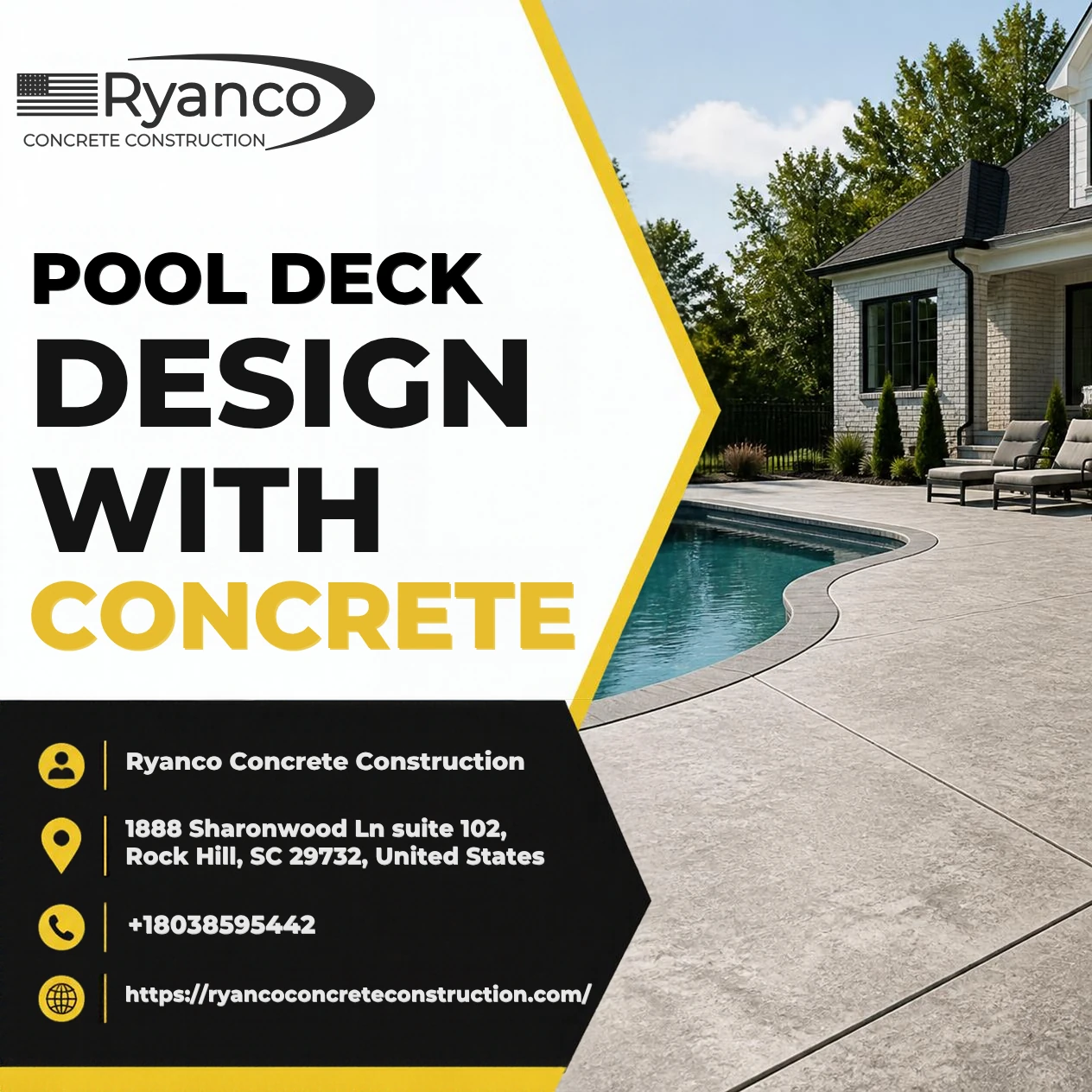
A well-designed concrete pool deck should do more than frame the water. It needs to feel comfortable under bare feet, provide dependable traction when wet, move water away from the pool area, and fit the style of the home and landscape.
That balance is what makes pool deck design with concrete different from designing an ordinary patio. Color, texture, finish, drainage, and heat exposure all affect how the surface performs. A beautiful finish can become frustrating if it gets excessively hot, holds water in deep textures, or becomes slick after sealing.
Concrete gives homeowners many ways to balance those needs. Broom finishes, exposed aggregate, textured overlays, color, stamping, and decorative borders can all create different looks while preserving practical function. The right combination depends on sun exposure, pool use, surrounding materials, maintenance expectations, and how the deck feels when people are walking barefoot.
Why Concrete Works Well for Pool Decks
Concrete works well around pools because it can be shaped to fit the pool, surrounding landscape, steps, seating areas, and walkways while providing a continuous surface.
It also offers broad finishing flexibility. A pool deck can stay simple with lightly textured concrete or become more decorative through color, exposed aggregate, stamped patterns, borders, or resurfacing systems. This makes it possible to coordinate the deck with brick, stone, siding, outdoor kitchens, retaining walls, and other backyard features.
Concrete can also be designed around practical requirements. The slab can be sloped for drainage, textured for traction, and finished in lighter colors that are generally more comfortable in direct sun than darker surfaces. Concrete Network notes that light-colored pool deck surfaces reflect more solar radiation and can remain more comfortable on bare feet than darker paving.
Homeowners exploring appearance options can review Ryanco Concrete Construction’s decorative concrete services while planning the overall pool area.
What Makes a Concrete Pool Deck Safer?
Safety starts with recognizing that pool decks are regularly wet.
The surface should provide traction under bare feet, drain effectively, avoid unnecessary trip hazards, and remain comfortable enough that people are not tempted to rush across it. A highly polished or overly smooth decorative finish may look attractive but can be a poor fit for a constantly wet area.
The CDC’s Model Aquatic Health Code, written for public aquatic facilities, requires pool decks to have slip-resistant, textured finishes suitable for wet and dry bare-foot traffic. Residential requirements differ by jurisdiction, but the principle is useful for homeowners: traction should be treated as a design requirement, not an afterthought.
Lighting and layout also matter. Steps, elevation changes, deck edges, furniture, planters, and equipment should not create confusing walking paths.
A safer design gives swimmers obvious routes between the pool, house, seating, and other backyard features while keeping the main walking surface clear.
Which Concrete Finishes Offer Better Traction?
Several concrete finishes can create useful texture around a pool.
A broom finish is one of the simplest options. Fine grooves are created across the surface while the concrete is still workable, producing texture without a complicated decorative pattern.
Exposed aggregate creates traction by revealing the stone within the concrete. The result has a more pronounced texture and a natural appearance that can work well with landscaping.
Textured overlays are another option, particularly when resurfacing existing concrete. Some systems are designed specifically for pool environments and combine texture with lighter colors.
Stamped concrete can also work, but pattern depth and sealer choice deserve careful attention. Deep grout lines or aggressive textures can be uncomfortable under bare feet and may collect water. Concrete Network recommends avoiding overly deep stamped textures around pools for those reasons.
Ryanco’s concrete finishing services currently include broom, stamped, exposed aggregate, and protective sealing options that homeowners can compare for exterior concrete.
How Does Pool Deck Texture Affect Slip Resistance?
Texture increases the amount of surface variation beneath a person’s foot, which can improve traction compared with a very smooth finish. Around a pool, that becomes especially important because water reduces friction between bare feet and the walking surface.
More texture is not always better.
A very rough finish may improve grip but become uncomfortable on bare feet. Deep grooves can also trap water, dirt, and pool debris. The goal is enough texture to support traction without creating an unpleasant walking surface.
Sealers can affect the equation as well. Some film-forming sealers can make decorative concrete more slippery when wet unless the system includes an appropriate traction additive. Concrete Network specifically recommends textured finishes, exposed aggregate, textured overlays, or slip-resistant additives where better traction is needed around pools.
Homeowners should therefore evaluate the complete finish system rather than choosing texture based only on appearance.
What Concrete Colors Work Best Around Pools?
Light and medium colors are usually the most practical starting point for sunny pool decks.
White, cream, beige, sand, light tan, and lighter gray tones can reflect more sunlight than dark colors and often feel visually appropriate near water. They can also create a brighter, more open appearance around the pool.
Concrete Network identifies white and light beige as popular pool-deck choices partly because they reflect sunlight and can remain cooler underfoot.
That does not mean every pool deck should be pale. Medium gray, muted taupe, warm stone colors, and subtle multi-tone finishes can create depth while remaining easier to coordinate with the house and landscape.
Choose colors by looking at permanent surroundings. Brick, siding, roofing, stone veneer, coping, retaining walls, and major landscape materials provide better references than temporary furniture.
If you want darker colors, consider using them as borders or accents instead of across the entire walking surface.
How Can You Reduce Heat Buildup on a Concrete Pool Deck?
Color is one of the easiest design choices to control.
Lighter concrete surfaces generally absorb less solar energy than darker finishes. That can make a noticeable difference around a pool where people frequently walk barefoot.
Specialized cool-deck coatings and textured overlays can provide another option. Some systems use light colors and surface texture to reflect more sunlight and reduce heat buildup compared with darker surfaces.
Pergolas, umbrellas, trees located at appropriate distances, and covered seating areas can reduce how much of the deck sits in direct sun all day.
Do not assume any exterior surface will remain cool in intense summer sun. Even light concrete can become hot. The goal is to reduce unnecessary heat gain through color, finish, shade, and layout.
When possible, place high-use barefoot zones where the design can take advantage of afternoon shade.
How Should Drainage Be Planned Around the Pool?
Drainage should be part of the pool deck layout before decorative details are selected.
Water should move away from the pool structure and surrounding buildings toward appropriate drainage points rather than collecting in low areas. Ponding water increases slipping risk, encourages staining and organic growth, and can contribute to problems beneath the slab.
Surface texture affects how much slope may be needed to move water efficiently. The CDC’s Model Aquatic Health Code uses greater minimum slopes for more heavily textured public pool-deck finishes than for smoother ones, illustrating the relationship between texture and drainage.
Residential designs should follow applicable local requirements and site-specific grading conditions rather than copying a public-facility standard directly.
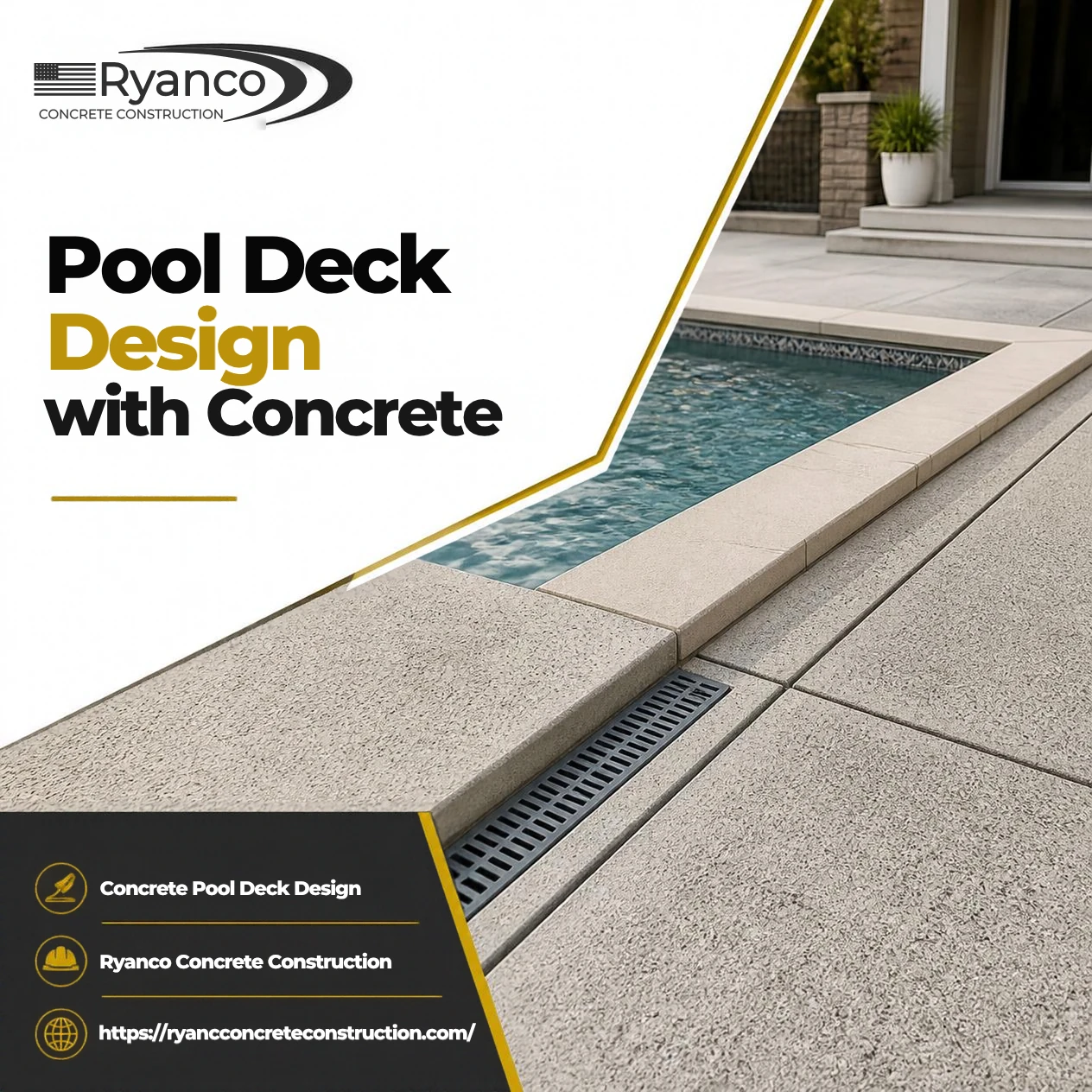
Drains, swales, deck edges, landscaping, and patios should all be considered together. The best design moves water predictably without creating steep or uncomfortable walking areas.
What Decorative Concrete Options Work for Pool Decks?
Decorative concrete can add visual interest without turning the deck into an overly complicated surface.
Colored concrete is one of the simplest options. A subtle base color can coordinate the deck with the house while keeping the overall design calm.
Exposed aggregate introduces natural stone texture and variation. It can work especially well in landscaped or traditional backyards.
Stamped concrete can create the look of slate, stone, brick, or other patterns, although shallow textures are generally more comfortable around pools than deeply grooved designs.
Borders are another useful design tool. A contrasting band can frame the pool, separate a lounge area, or connect the deck visually with nearby walkways.
Modern pool decks can also stay intentionally simple. Light neutral concrete with subtle texture and clean joint lines can create a contemporary appearance without elaborate decorative treatments.
The strongest decorative choice is often the one that complements the pool rather than competing with it.
How Do You Balance Safety With Appearance?
Start with performance requirements, then build the design around them.
Choose a surface that provides appropriate wet traction. Make sure the texture remains comfortable under bare feet. Plan drainage before adding decorative borders or patterns. Consider how much direct sun the deck receives and whether the selected color will make the surface unnecessarily hot.
Once those decisions are made, appearance becomes easier to refine.
A broom finish can be colored instead of left plain gray. Exposed aggregate can use a stone blend that complements the house. A stamped surface can use lighter colors and shallower textures. Borders can add contrast without covering the entire deck in a complicated pattern.
A well-designed pool deck should look intentional because its color, texture, drainage, and layout work together.
How to Choose the Right Concrete Finish for Your Pool Area
Begin with the way your household uses the pool.
If children, frequent swimmers, or large groups use the area regularly, traction and straightforward circulation may deserve more emphasis than elaborate decorative detail. If the pool is mainly part of a quieter entertaining space, visual coordination with landscaping and outdoor furniture may carry more weight.
Next, evaluate sun exposure. Areas receiving intense afternoon sun may benefit from lighter colors, shade planning, or a cooling overlay.
Then consider maintenance. Highly textured surfaces can hold more debris, while glossy sealers may require traction additives. Choose a finish you are comfortable cleaning and maintaining.
Look at the entire backyard instead of the deck alone. Pool coping, house materials, patios, retaining walls, outdoor kitchens, and planting beds should feel related rather than designed separately.
Homeowners in the area can also review Ryanco Concrete Construction’s Rock Hill concrete services when planning decorative or finished concrete around a residential outdoor space.
The best pool deck design with concrete balances four priorities: safe footing, effective drainage, comfortable surface temperatures, and an appearance that fits the property.
FAQs
Is concrete slippery around a pool?
Concrete can become slippery when wet, particularly if the surface is very smooth or certain sealers are used without traction additives. Textured finishes, exposed aggregate, broom finishes, and properly selected overlay systems can improve traction.
What concrete finish is best around a pool?
There is no single best finish for every pool. Broom finishes, exposed aggregate, textured overlays, and appropriately designed stamped surfaces can all work. The right choice depends on traction, barefoot comfort, appearance, maintenance, and drainage.
What color concrete stays cooler around a pool?
Lighter colors such as white, cream, beige, sand, and light gray generally reflect more sunlight than dark colors and can remain more comfortable underfoot. Shade and specialized cooling overlays can further reduce heat buildup.
Is stamped concrete a good choice for pool decks?
Stamped concrete can work around pools when the pattern, texture, sealer, and drainage are selected carefully. Deep grooves and aggressive textures may be uncomfortable under bare feet or collect water, so subtler patterns are often more practical.
Does a concrete pool deck need drainage?
Yes. Pool decks should be graded so water moves toward appropriate drainage areas instead of ponding near the pool, home, or high-traffic walking zones. The exact drainage design depends on the property and applicable local requirements.
How should I choose a pool deck finish?
Compare traction, barefoot comfort, color, heat exposure, maintenance, drainage, and how the finish coordinates with the rest of the backyard. Ryanco Concrete Construction can help homeowners evaluate decorative and finishing options for concrete surfaces around outdoor living areas.
