
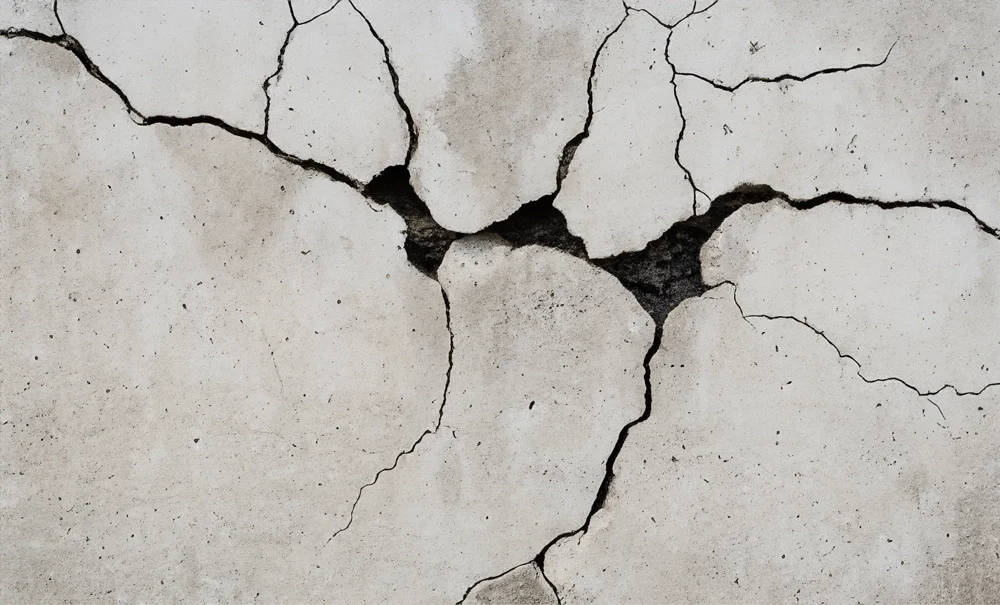
Concrete has a reputation for being indestructible. It holds up skyscrapers, highways, patios, and driveways. So when you notice a crack forming across your slab, it can feel a little dramatic.
“Is my foundation failing?”
“Is this normal?”
“Do I need to rip the whole thing out?”
Take a breath.
Concrete cracks are common. In fact, most concrete will crack at some point. The real question isn’t if it cracks. It’s why it cracked—and whether it needs repair.
This guide walks you through everything from tiny hairline fractures to major slab damage, including what causes cracks, when to worry, how to fix them, and when replacement makes more sense.
Why Concrete Cracks and Why You Shouldn’t Ignore It
Concrete may look solid and unmoving, but it’s constantly responding to its environment. Temperature changes, moisture, soil movement—all of these influence how it behaves over time.
Some cracks are harmless. Others are warning signs.
Knowing the difference can save you thousands of dollars.
Why Concrete Cracks are Common
Concrete is strong in compression but weaker in tension. When stress exceeds its tensile strength, cracks form.
It’s not necessarily a failure. It’s physics.
Why Timely Repairs Matter
Small cracks let in water. Water expands when it freezes. That expansion widens cracks. Over time, minor gaps can become major structural concerns.
Ignoring early warning signs often turns simple repairs into expensive replacements.
What Causes Cracks in Concrete?
Let’s break down the most common culprits.
- Shrinkage During Curing
As concrete dries and cures, it shrinks slightly. Without proper control joints, that shrinkage creates tension cracks. - Excess Water in the Mix
Too much water weakens the concrete structure and increases shrinkage. - Freeze-Thaw Cycles
Water seeps into pores. It freezes. It expands. Crack formation follows. - Temperature Expansion and Contraction
Concrete expands in heat and contracts in cold. Without room to move, stress builds. - Lack of Control Joints
Control joints are intentional weak spots that guide cracking. Without them, cracks appear randomly. - Subgrade Settlement and Soil Movement
If the soil beneath shifts or erodes, the slab loses support and cracks under uneven pressure.
Do All Concrete Cracks Need Repair?
Short answer? No.
But some absolutely do.
Hairline vs. Structural Cracks
Hairline cracks (less than 1/8 inch) are often cosmetic.
Structural cracks are wider, deeper, and may indicate movement below.
When Cracks Are Just Cosmetic
If the crack:
- Is thin
- Is not growing
- Shows no vertical displacement
- Doesn’t leak water
It may simply need monitoring.
Warning Signs of Serious Structural Damage
Pay attention if you see:
- Uneven slab sections
- Vertical displacement
- Water pooling
- Cracks that widen over time
Cracks Wider Than 1/2 Inch
Cracks over 1/2 inch wide typically require more than simple filler. They may signal subgrade problems.
Signs of Ongoing Movement or Foundation Issues
Look for:
- Reappearing cracks after repair
- Doors or windows sticking
- Interior drywall cracks
That’s when professional evaluation becomes critical.
What is the Best Way to Fix Cracked Concrete?
The best method depends on crack size and cause.
Choosing the Right Repair Method Based on Crack Size
- Under 1/4 inch: Liquid crack filler
- 1/4 to 1/2 inch: Vinyl patching compound
- Over 1/2 inch: Patching compound or structural repair
Tools and Safety Equipment You’ll Need
Before starting, gather:
- Wire brush
- Broom
- Wet/dry vacuum
- Putty knife or trowel
- Caulking gun
- Hammer and chisel
- Gloves
- Safety glasses
- Dust mask
Preparation is half the job.
Materials for Small vs. Large Cracks
Small cracks:
- Liquid crack filler
- Vinyl patching compound
Large cracks:
- Concrete patching compound
- Foam backer rod
- Latex bonding adhesive
- Concrete mix
How to Repair Small and Large Concrete Cracks
How to Repair Small Cracks (Under 1/4 Inch)
- Clean the crack thoroughly
- Remove dust and debris
- Apply crack filler
- Smooth the surface
- Allow proper curing time
Small repairs are often DIY-friendly.
How to Repair Larger Cracks (1/2 Inch or Wider)
- Undercut into a V-shape
- Clean and rinse
- Insert foam backer rod if deep
- Apply bonding adhesive
- Fill with patching compound
- Smooth and level
- Allow extended curing time
Proper preparation ensures longevity.
Repairing Damaged Slabs, Steps, and Walkways
For more severe damage:
- Remove loose or damaged concrete
- Install forms
- Mix and pour new concrete
- Screed and finish
- Blend with existing surface
Matching texture and finish takes skill.
Is It OK to Put Cement Over Cracked Concrete?
It depends.
When Resurfacing Works
Resurfacing works if:
- Cracks are stable
- No structural movement exists
- Surface damage is minor
When Overlaying Will Fail
Overlaying fails when:
- The slab is shifting
- Cracks are widening
- Water infiltration continues
Covering structural problems doesn’t fix them.
How to Cover Up a Cracked Concrete Patio Properly
Options include:
- Resurfacing products
- Concrete overlays
- Decorative coatings
If the base slab is stable, resurfacing can extend lifespan.
If not, full replacement may be smarter.
How Long Will a Concrete Crack Repair Last?
That depends.
Factors That Affect Longevity
- Quality of prep work
- Type of repair material
- Moisture exposure
- Soil stability
A rushed repair won’t last.
Proper Curing and Sealing
Concrete cures best between 50–90°F.
Follow manufacturer curing guidelines. After curing, apply sealer.
Reseal every 2–3 years.
Maintenance Tips to Prevent Future Cracks
- Improve drainage
- Avoid de-icing salts
- Remove weeds
- Schedule inspections
- Reseal regularly
Prevention is cheaper than repair.
Cost of Concrete Crack Repair vs. Replacement
DIY Repair Costs
- Small repairs: $50–$200
- Large DIY patching: $200–$500
Professional Repair Costs
- Minor crack repair: $300–$800
- Structural slab repair: $1,000–$3,000+
When Replacement Is More Cost-Effective
If:
- The slab is severely settled
- Cracks are extensive
- Repairs exceed 50% of replacement cost
Replacement may provide better long-term value.
Key Takeaways
- Concrete cracks are common
- Not all cracks require immediate repair
- Early intervention saves money
- Preparation determines repair longevity
- Structural issues require professional evaluation
Concrete may be tough—but it’s not invincible.
Catching problems early protects both appearance and structural integrity.
Don’t Patch It Twice—Fix It Right the First Time
Trust RyanCo Concrete Construction for Lasting Results
At RyanCo Concrete Construction, we don’t believe in temporary band-aids. Whether you’re dealing with hairline cracks, slab settlement, or major structural damage, our team evaluates the root cause—not just the surface symptom.
We provide honest recommendations, precise repairs, and high-quality concrete solutions designed to last. From driveway crack repair to full slab replacement, we help you protect your investment and avoid repeat problems.
If your concrete is showing signs of stress, let’s address it properly.
