
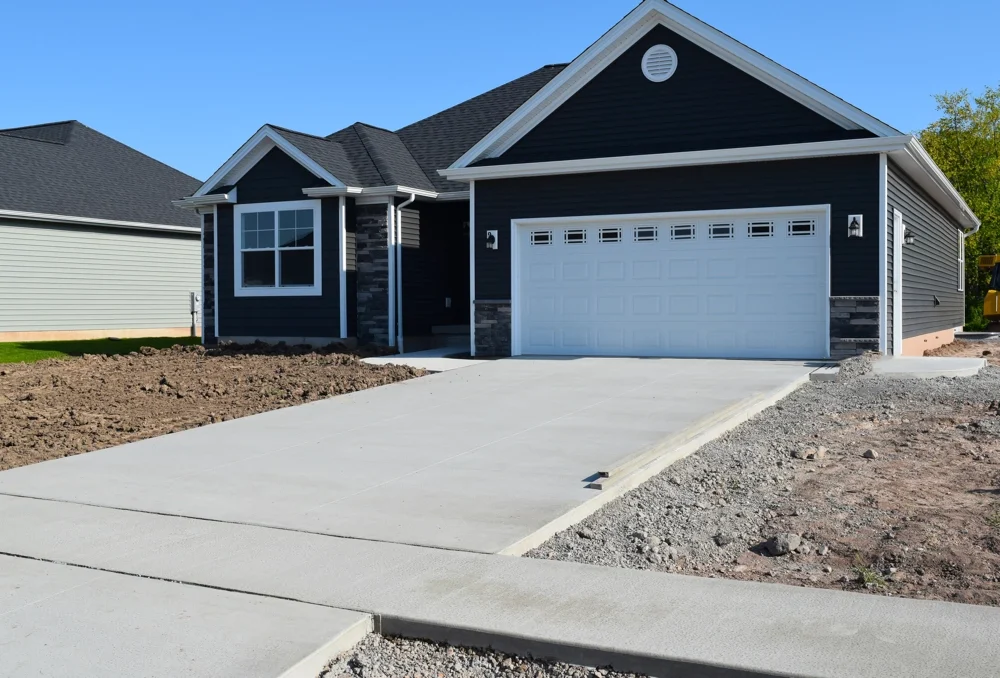
The best concrete for driveways, patios, and sidewalks is the mix and finish built for the way each surface will be used. Driveways usually need stronger concrete, while patios and sidewalks need stable placement, drainage, and safe traction. For homeowners comparing best concrete for driveways patios and sidewalks, strength is only one part of the decision. Base preparation, thickness, reinforcement, joints, curing, and finish all affect lifespan. A quality mix can still fail if installed poorly. Good planning helps prevent cracks, settlement, slippery areas, and early surface damage later too.
What Is The Most Durable Concrete Mix For Driveways?
The most durable concrete mix for driveways is usually 4,000 PSI concrete or stronger, installed at the proper thickness over a compacted stone base. Driveways carry cars, trucks, turning tires, and repeated daily load, so they need more strength than sidewalks or light patios.
Why PSI matters
PSI means pounds per square inch. It measures compressive strength.
For most residential driveways, 4,000 PSI is a dependable standard. If the driveway will support heavier trucks, trailers, or equipment, the slab may need additional thickness or reinforcement.
Why thickness matters
A common driveway slab is 4 inches thick. Heavier use may call for 5 or 6 inches. Thickness helps distribute vehicle weight across the base.
A strong mix will not compensate for a thin slab, soft soil, or poor drainage. Good concrete driveway installation starts with the ground beneath the slab.
Why the base matters
A compacted stone base supports the concrete and helps water move away. If the base shifts, the slab can crack or settle even when the mix itself is strong.
Is Reinforced Concrete Better For Residential Projects?
Reinforced concrete is often better for residential projects that carry weight, cover large areas, or sit on soil that may move. Reinforcement does not make concrete crack-proof, but it helps control cracking and hold the slab together.
Common reinforcement options
Residential concrete may use rebar, welded wire mesh, or fiber reinforcement. Rebar and wire add internal support. Fibers are mixed through the concrete to reduce shrinkage cracking.
Where reinforcement helps
Reinforcement is useful for driveways, garage slabs, larger patios, shed pads, and walkways that see heavy use. It is also helpful where soil movement or water exposure is a concern.
For concrete installation in Rock Hill, SC, reinforcement may be worth discussing because clay soil, moisture, and seasonal weather can affect outdoor slabs.
Installation matters
Reinforcement must be placed inside the slab, not left on the ground. If it is positioned poorly, it provides less benefit.
What Concrete Strength Is Recommended For Patios?
Most residential patios perform well with 3,000 to 4,000 PSI concrete. Patios usually do not carry vehicles, but they still need enough strength for furniture, grills, foot traffic, planters, and outdoor living.
Standard patio strength
A 3,000 PSI mix may be suitable for a basic patio when the base is stable and the slab is installed correctly. Many contractors prefer 3,500 or 4,000 PSI for extra durability, especially for larger patios.
When stronger concrete is needed
A patio may need a stronger design if it supports a hot tub, outdoor kitchen, fireplace, heavy planters, or roof structure. These features add concentrated weight.
The slab should be designed for the load before the concrete is poured. Adding heavy features later can cause cracking or settlement.
Patio drainage
Patios should slope away from the home. Poor drainage can create puddles, staining, settlement, and foundation concerns.
A strong concrete mix is helpful, but proper slope and base preparation are just as important. Professional concrete patio installation should account for both strength and water control.
Should I Choose Stamped, Broom-finished, Or Exposed Aggregate Concrete?
Choose broom-finished concrete for practical traction, stamped concrete for decorative appearance, and exposed aggregate for texture with visual detail. Each finish can work well when it matches the surface, budget, and maintenance expectations.
Broom-finished concrete
Broom finishing is common for driveways, sidewalks, and patios. The surface is brushed while the concrete is setting, creating fine lines for traction.
It is affordable, durable, and practical. It is often the best choice for homeowners who want a clean surface without decorative maintenance.
Stamped concrete
Stamped concrete can resemble stone, brick, slate, or pavers. It works well for patios, walkways, and decorative sections.
It costs more because it requires patterning, coloring, sealing, and careful timing. It may also become slippery if sealed incorrectly. Homeowners who want a decorative surface can explore stamped concrete options before choosing a finish.
Exposed aggregate concrete
Exposed aggregate reveals small stones in the surface. It provides texture, traction, and a more decorative appearance than plain concrete.
When comparing best concrete for driveways patios and sidewalks, choose the finish based on safety first, then appearance. Exposed aggregate concrete can be a strong option when texture and visual detail both matter.
What Type Of Concrete Lasts The Longest Outdoors?
Outdoor concrete lasts longest when the mix is designed for exposure and the slab is installed correctly. The best outdoor concrete is not only strong. It also needs good drainage, control joints, curing, and a stable base.
Air-entrained concrete
Air-entrained concrete contains tiny air pockets that help the slab handle freeze, thaw, and moisture stress. Outdoor slabs can benefit from this protection, especially in changing weather.
Control joints
Concrete shrinks as it cures. Control joints guide cracking into planned lines instead of random patterns.
Joint spacing and depth matter. Poor joint placement can lead to wide, uneven cracks. Learn more about common causes of cracking in Cracking in Concrete: Causes and Solutions.
Curing and drainage
Concrete needs time and moisture to gain strength. If it dries too fast, the surface may weaken.
Water should also drain away from the slab. Standing water can weaken the base, stain the finish, and shorten lifespan. For concrete installation in Rock Hill, SC, drainage planning is essential.
Is Fiber-reinforced Concrete Worth The Extra Cost?
Fiber-reinforced concrete can be worth the extra cost when crack control, surface durability, and added internal support matter. It is a useful upgrade for many driveways, patios, sidewalks, and slabs.
How fibers work
Small fibers are mixed throughout the concrete before placement. They help reduce shrinkage cracking as the concrete cures.
Synthetic fibers are common for residential flatwork. Steel fibers may be used in heavier-duty applications.
What fibers can and cannot do
Fibers help improve performance, but they do not guarantee a crack-free slab. Concrete can still crack from soil movement, poor drainage, heavy loads, weak base preparation, or bad joint spacing.
Fibers are not always a substitute for rebar or wire mesh. Some projects may benefit from both.
When fiber is a smart upgrade
Fiber reinforcement may be smart for large patios, sidewalks, driveways, and areas with temperature changes.
Ask your contractor whether fiber belongs in your specific mix design.
What Concrete Finish Provides The Best Slip Resistance?
Broom-finished concrete usually provides the best practical slip resistance for residential driveways, patios, and sidewalks. Exposed aggregate also provides strong traction. Smooth concrete and heavily sealed stamped concrete can be slippery when wet.
Driveway traction
A broom finish works well for driveways because it gives tires and shoes better grip. This matters on slopes, shaded areas, and wet surfaces.
Sidewalk traction
Sidewalks should be safe for daily walking. A light or medium broom finish is usually enough. The surface should not be too slick or too rough.
Edges, slopes, and transitions should be finished carefully to reduce trip hazards. Proper concrete sidewalk installation should consider safety, drainage, and daily use.
Patio traction
Patios can use broom, stamped, or exposed aggregate finishes. If the patio is near a pool, hot tub, or damp shaded area, choose traction over appearance.
Stamped patios should use a sealer with a traction additive when needed.
Good concrete installation should consider safety, not just how the surface looks on day one.
Choose Concrete That Fits The Job
The right concrete depends on the surface, load, finish, soil, drainage, and budget. I help homeowners choose practical concrete options instead of using one standard answer for every project.
At RyanCo Concrete Construction, I focus on proper base preparation, clear recommendations, and clean finished work. If you are planning concrete installation in Rock Hill, SC, I can help you compare driveway, patio, and sidewalk choices that fit your home and long-term expectations. To discuss your project, contact RyanCo Concrete Construction today.
Key Takeaways
The best concrete for driveways patios and sidewalks depends on load, location, finish, base, and drainage. Driveways usually need stronger concrete, proper thickness, and reinforcement. Patios need the right strength, slope, and finish for outdoor use. Sidewalks need safe traction and stable placement. Broom finishes are practical, stamped concrete adds style, and exposed aggregate adds texture. Strength matters, but durability depends most on preparation, joints, curing, water control, and skilled concrete installation. RyanCo Concrete Construction can help you choose confidently and avoid avoidable replacement costs over time.
